
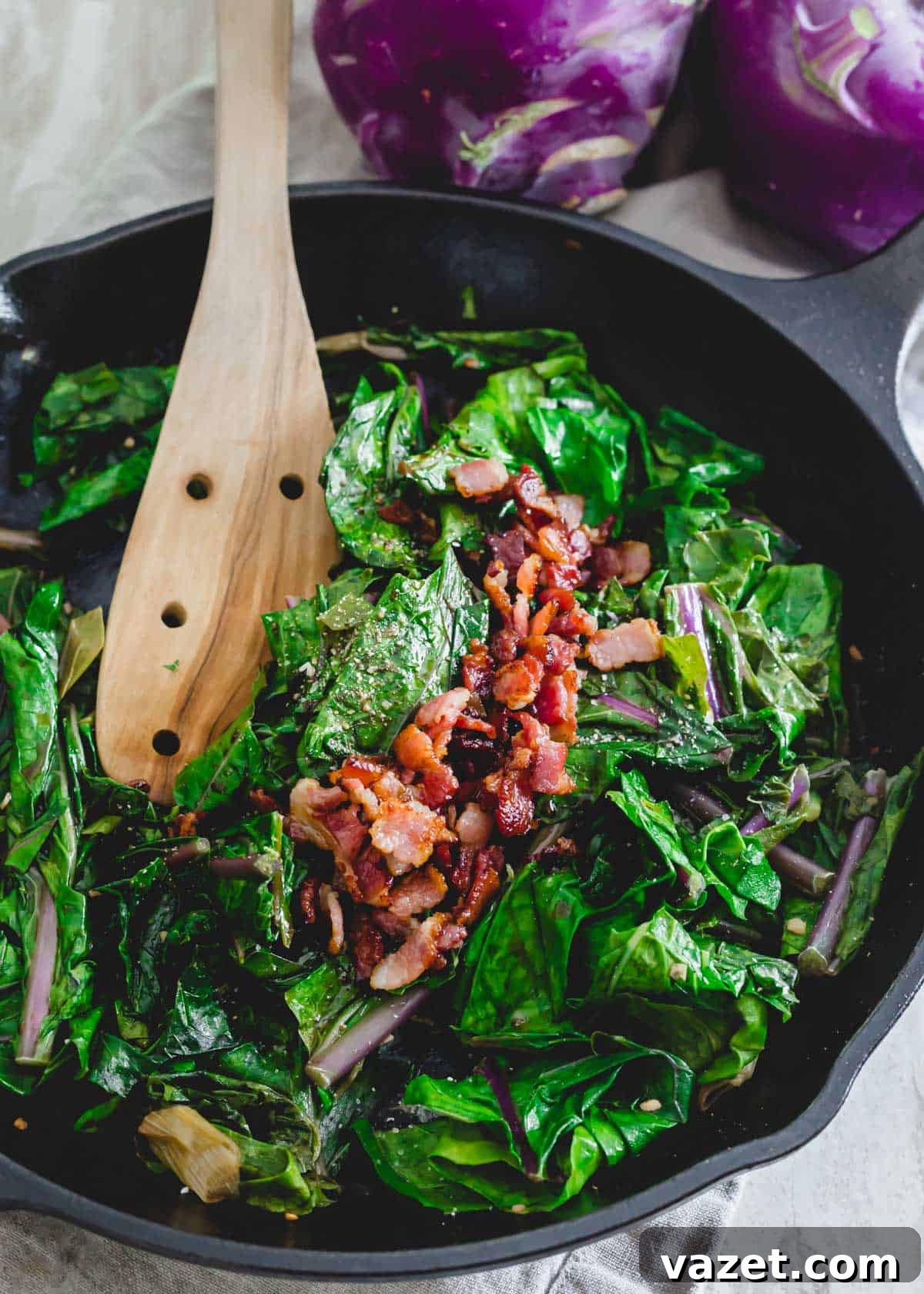
Transforming the humble kohlrabi into a culinary delight, sautéing its vibrant greens offers a fantastic way to utilize this unique vegetable entirely. This simple yet sophisticated side dish combines the subtle bitterness of kohlrabi greens with the savory crunch of bacon, the aromatic notes of scallions and garlic, all brought together by a delicate touch of sweet balsamic vinegar. The result is a quick-to-prepare, incredibly flavorful, and nutrient-rich addition to any meal, proving that no part of the kohlrabi should go to waste.
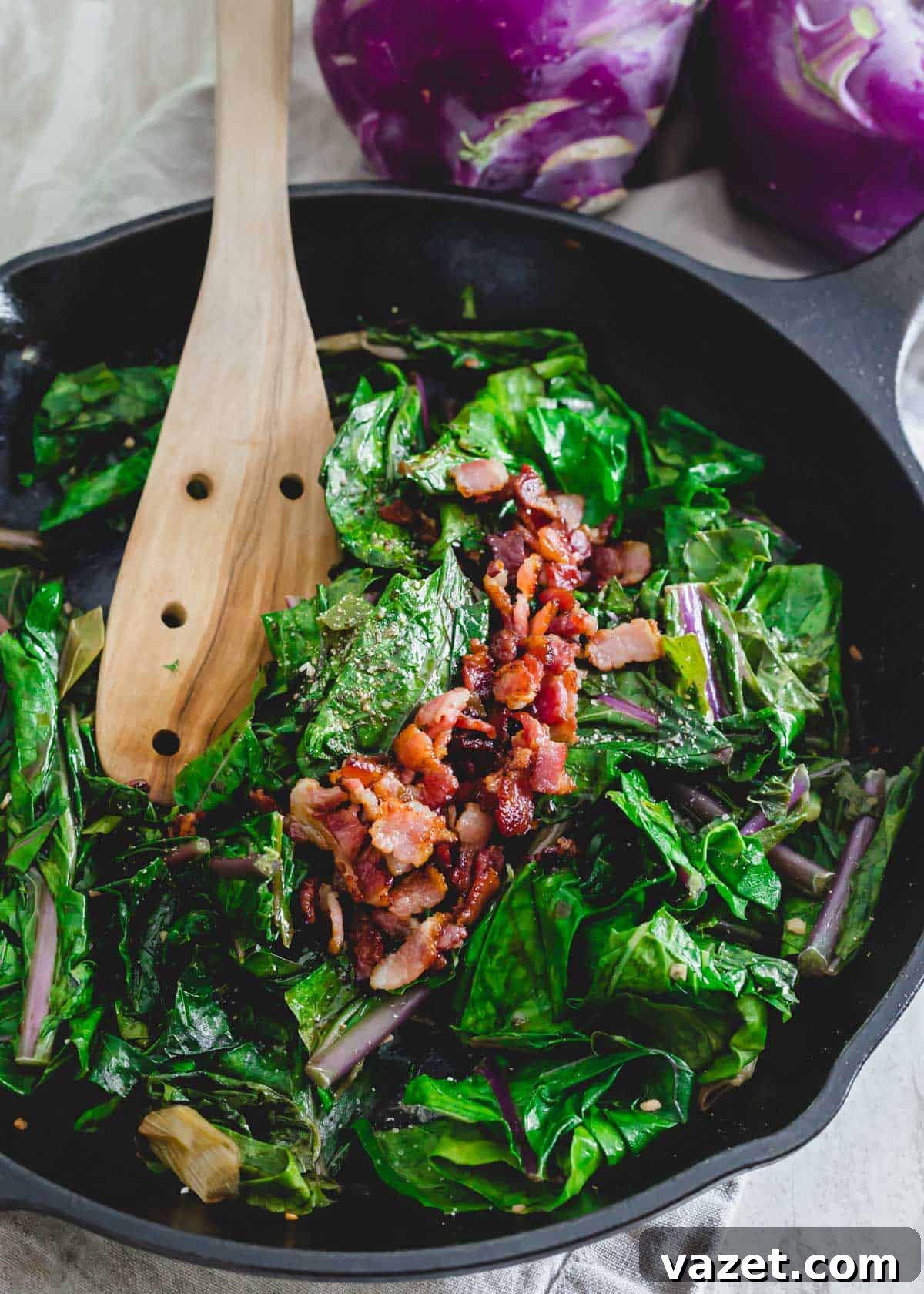
Having previously explored the versatile kohlrabi bulb in recipes like roasted kohlrabi and creative kohlrabi noodles forming the base of a crunchy Thai-inspired salad, it’s high time we shine a spotlight on its often-overlooked greens. This article unveils a delightful and **simple recipe for sautéing kohlrabi greens**, encouraging a complete, zero-waste approach to cooking this unique vegetable.
If your palate appreciates the robust flavors of leafy greens, especially those with a pleasing hint of bitterness such as dandelion greens, then you are in for a treat. This recipe provides an excellent opportunity to savor the entire kohlrabi, from its crisp bulb to its nutrient-dense leaves.
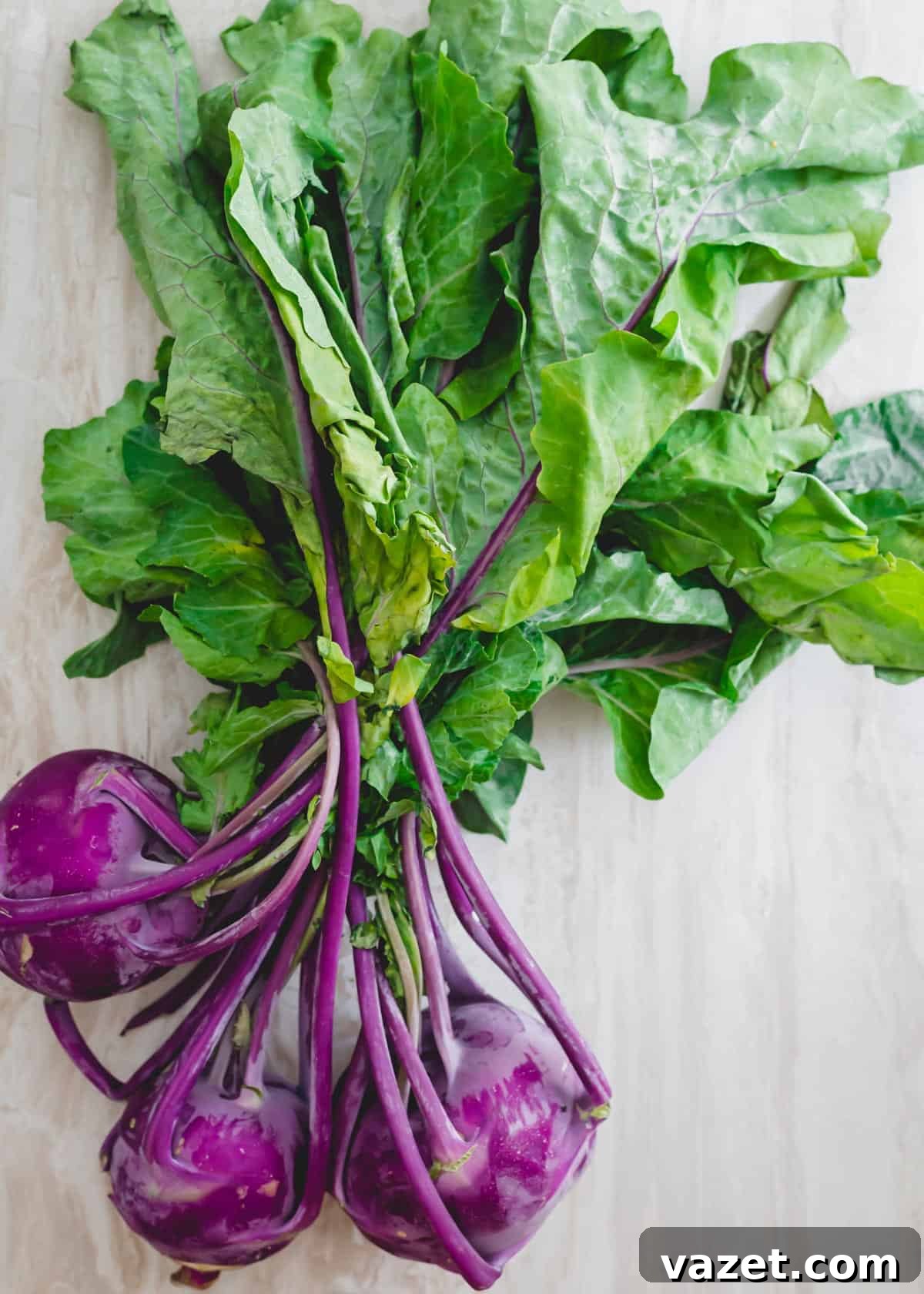
Kohlrabi, whether the striking purple or the more common pale green variety (their taste is remarkably similar), can often be found with its greens still attached at health food stores like Whole Foods or your bustling local farmer’s market. The key to successful cooking lies in selecting fresh, vibrant greens. Look for leaves that are bright in color and show no signs of wilting or yellowing. These fresh, lively greens are perfect for this easy sauté recipe.
Our method involves cooking these slightly bitter greens down in a skillet until they become wonderfully tender, infusing them with the rich, smoky notes of crispy bacon, the sharp zest of scallions, the pungent depth of garlic, and a finishing splash of balsamic vinegar that adds a crucial balance of sweetness. The interplay of these flavors elevates the greens into an outstanding side dish.
Beyond their incredible taste, these sautéed greens offer the satisfying feeling of making the most of your produce purchase, ensuring that no part of this nutritious vegetable goes to waste. They serve as a fantastic accompaniment to a wide variety of main courses. For quick and easy weeknight meals, I particularly enjoy pairing them with simple proteins such as air fryer brats or air fryer sausage, creating a wholesome and effortless dinner.
Discovering Kohlrabi Greens: A Nutritional Treasure
Kohlrabi, often referred to as a “German turnip,” is a fascinating member of the Brassica oleracea family, which also includes cabbage, broccoli, and kale. While the bulbous stem is commonly enjoyed raw in salads, roasted, or puréed into soups, its leafy greens are frequently discarded. This oversight is a missed opportunity, as kohlrabi greens are not only edible but also remarkably nutritious and flavorful.
These greens are a powerhouse of vitamins and minerals, boasting significant amounts of Vitamin C, Vitamin K, and various B vitamins, along with essential minerals like potassium, manganese, and iron. They are also rich in dietary fiber and antioxidants, contributing to overall health and well-being. Incorporating kohlrabi greens into your diet is a simple yet effective way to boost your nutrient intake and embrace a more sustainable, whole-vegetable cooking philosophy.
A Culinary Gem: Can You Truly Eat Kohlrabi Greens?
It’s a question worth asking, given that kohlrabi greens are not typically sold separately from the bulb itself. This often leads to confusion about their edibility. But the answer, unequivocally, is yes! Despite a relative scarcity of recipes specifically highlighting them, these slightly bitter and incredibly nutritious greens are a delightful addition to your culinary repertoire.
The key to enjoying kohlrabi greens is their freshness. They are at their peak when still firmly attached to the kohlrabi bulb, displaying a vibrant green hue and a crisp, lively appearance. Visually, they share similarities with collard greens, though typically with slightly narrower leaves. If the greens appear wilted, yellowing, or otherwise past their prime, it’s best to discard them for optimal taste and texture.
Generally, the smaller the kohlrabi bulb, the more tender and milder its greens will be. When preparing kohlrabi greens for cooking, begin by cutting the stems off where they meet the bulb. Then, trim off any woody or overly thick bottom portions of the stems that lack leaves. The remaining leafy parts, including the thinner sections of the stems, are all perfectly suitable for consumption.
Unveiling the Flavor Profile: What Do Kohlrabi Greens Taste Like?
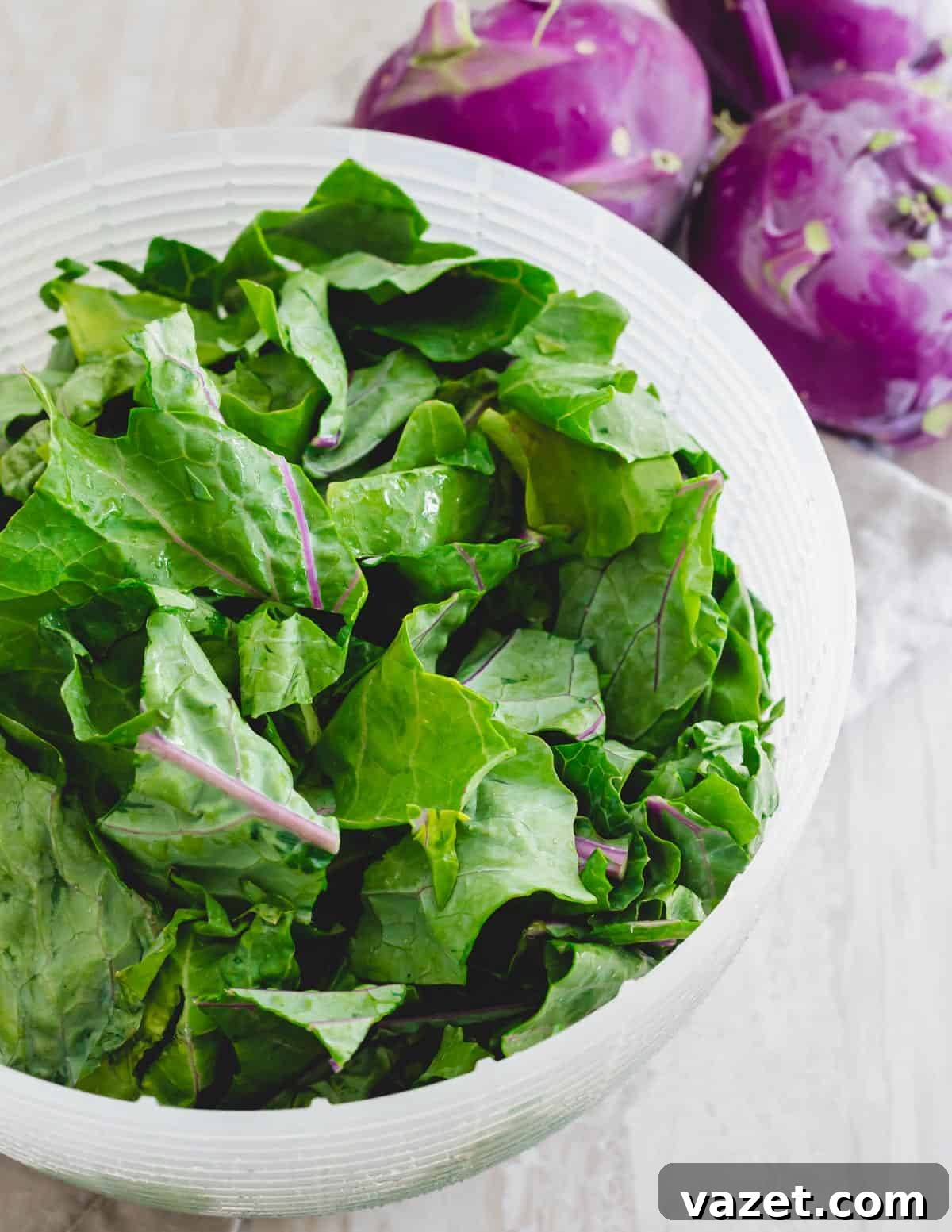
When assessing the spectrum of leafy greens, kohlrabi greens gracefully land somewhere in the middle ground, offering a balanced and appealing flavor. They possess a discernible, yet not overpowering, bitterness that is far less intense than that of dandelion greens. At the same time, they are significantly more robust and textured than the very mild and tender Swiss chard.
Their taste and texture, particularly when prepared as in this sautéed recipe, are often likened to those of beet greens or collard greens. They offer an earthy depth with a slight peppery note, which mellows beautifully during the cooking process. As noted earlier, selecting smaller kohlrabi bulbs often yields more tender and milder-tasting greens, providing a gentler introduction for those new to their flavor.
Cooking kohlrabi greens transforms their raw, sometimes fibrous texture into a tender, succulent bite. The heat helps to soften the leaves and temper their inherent bitterness, making them more palatable and enjoyable. This transformation is part of what makes sautéing such an ideal cooking method for these particular greens.
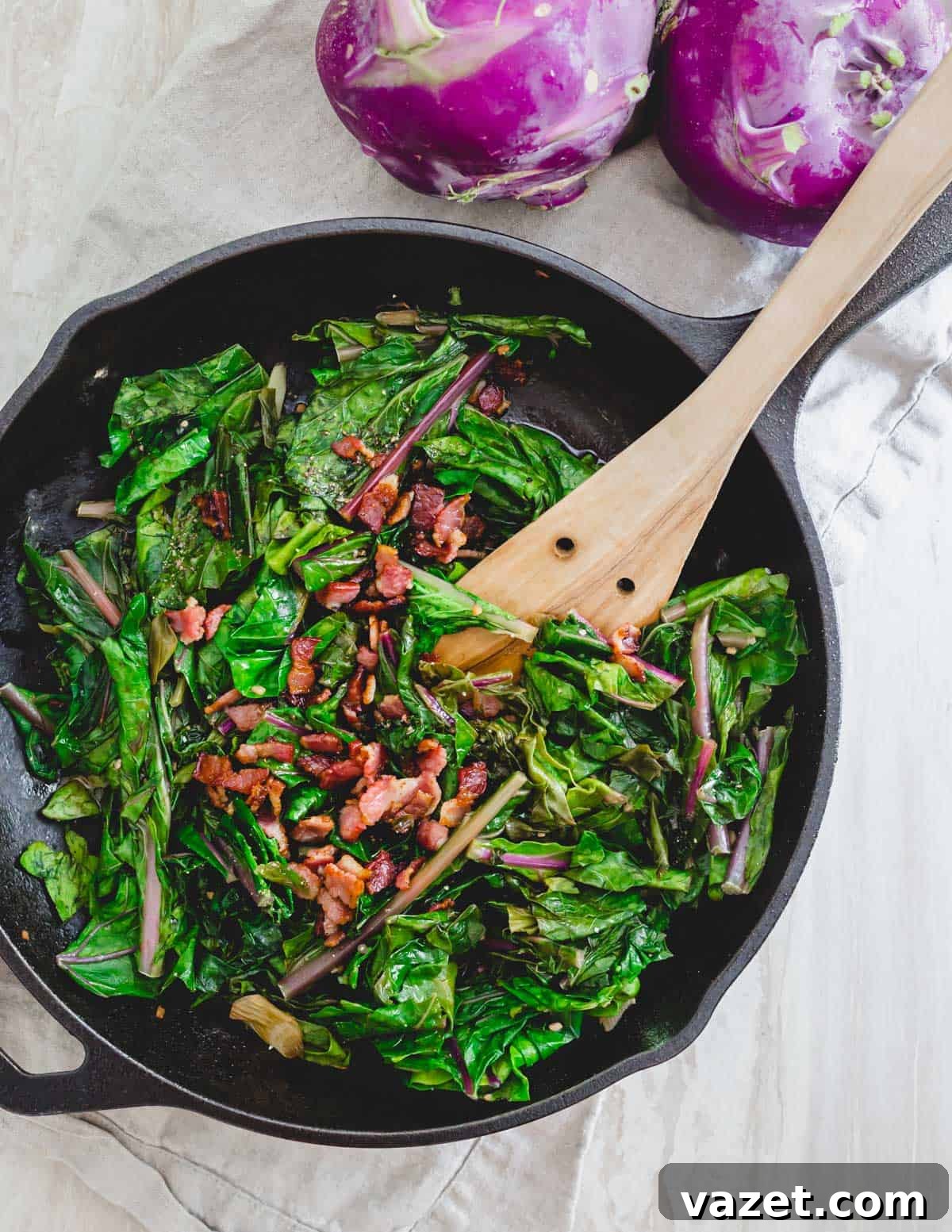
The Art of Sautéing: The Best Way to Enjoy Kohlrabi Greens
While some tender baby leafy greens can be enjoyed raw (think young spinach or delicate kale), kohlrabi greens are truly at their best when cooked. Although very young, tender kohlrabi leaves might be palatable raw, most kohlrabi found in markets features larger, more mature leaves, similar to those depicted here. These robust leaves develop a far more appealing texture and flavor profile after being cooked until tender.
Among various cooking methods, sautéing in a skillet, as detailed in this recipe, stands out as one of the finest ways to prepare kohlrabi greens. This technique allows for quick cooking, achieving tender leaves while retaining a slight structural integrity, and it perfectly complements the addition of flavorful ingredients like bacon and aromatics. Steaming is another excellent option, offering a lighter approach that preserves their natural taste and nutrients.
Beyond simple sautéing or steaming, kohlrabi greens exhibit great versatility. They can be wilted into a hearty soup, much like this intriguing kohlrabi soup, where the leaves are added towards the end. They also make a fantastic addition to pasta dishes – consider swapping them in for kale in a creamy red lentil pasta recipe. Their flavor holds up well in stocks, curries, or even a simple stir-fry, serving as an excellent substitute for greens like bok choy.
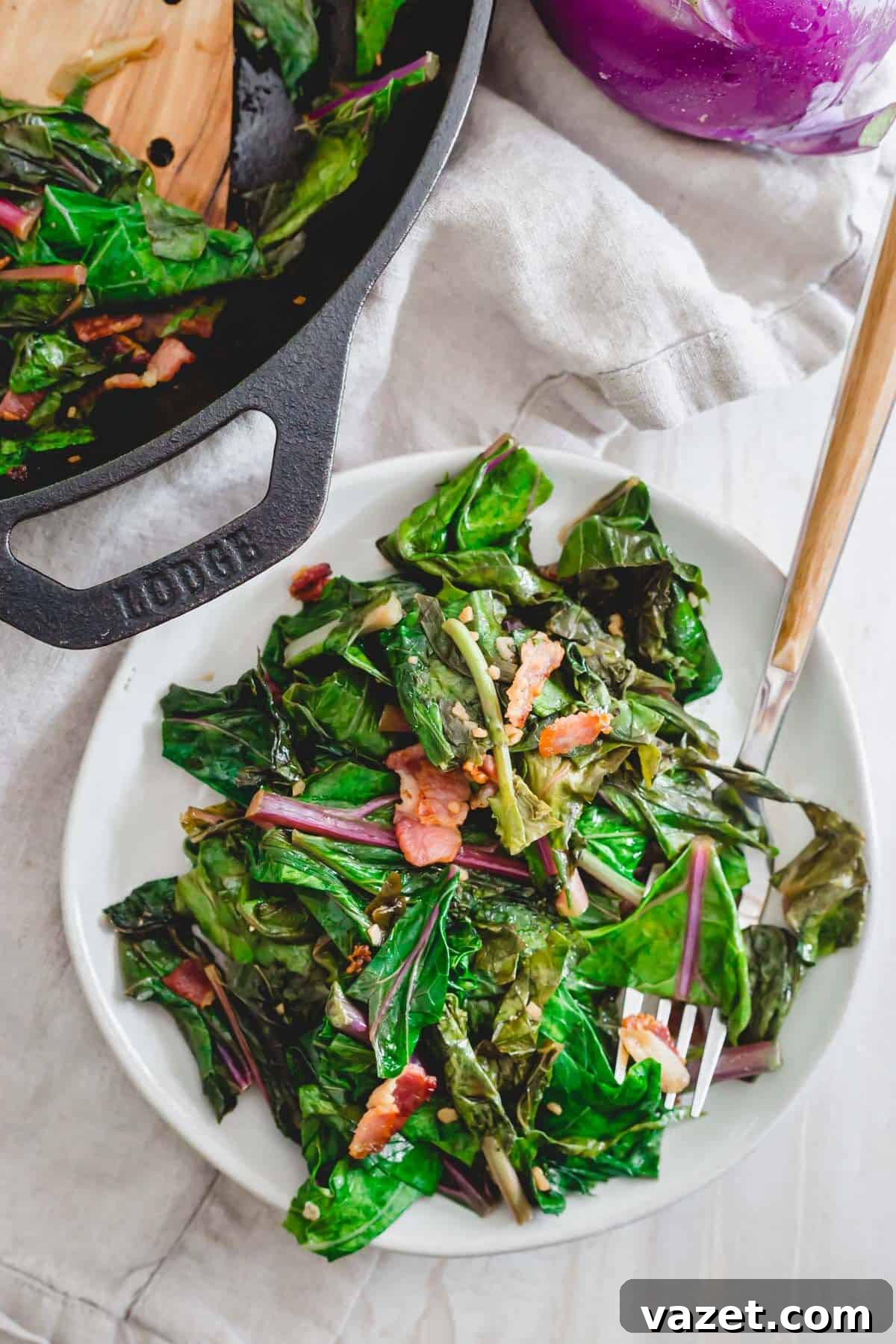
Essential Ingredients for Sautéed Kohlrabi Greens with Bacon
Crafting this flavorful side dish requires a thoughtful combination of fresh ingredients that complement and enhance the natural taste of the kohlrabi greens. Here’s a closer look at what you’ll need:
- Kohlrabi Greens: You’ll need the greens from approximately 3 large kohlrabi bulbs, or an equivalent amount from smaller ones. Ensure they are fresh, bright, and thoroughly washed, dried, and roughly chopped, with any woody stem ends removed. These form the wholesome foundation of our dish.
- Bacon: Two slices of organic or pastured uncured bacon, finely chopped, are essential. The bacon not only provides a wonderful crispy texture but also renders savory fat, which serves as the primary flavorful cooking medium for the greens and aromatics.
- Scallions: One large scallion, roughly chopped, adds a mild oniony flavor that pairs beautifully with the greens and garlic. If scallions are unavailable, a small amount of finely diced yellow or red onion can be substituted, though scallions offer a subtler taste.
- Garlic: No sautéed leafy green dish is complete without the pungent, aromatic essence of garlic! Mince two large cloves, or use about one tablespoon of pre-minced garlic, to infuse the dish with its irresistible aroma and flavor.
- Broth or Water: Two tablespoons of liquid are crucial to help the greens wilt down effectively in the pan. Vegetable or chicken broth will impart extra depth of flavor, but water works perfectly well to create the necessary steam.
- Balsamic Vinegar: A final splash of two tablespoons of good quality balsamic vinegar is the secret ingredient that elevates this dish. Its sweet acidity cuts through the richness of the bacon and balances the slight bitterness of the greens, creating a harmonious and vibrant flavor profile.
- Salt and Pepper: To taste. Essential for seasoning and bringing all the flavors into focus.
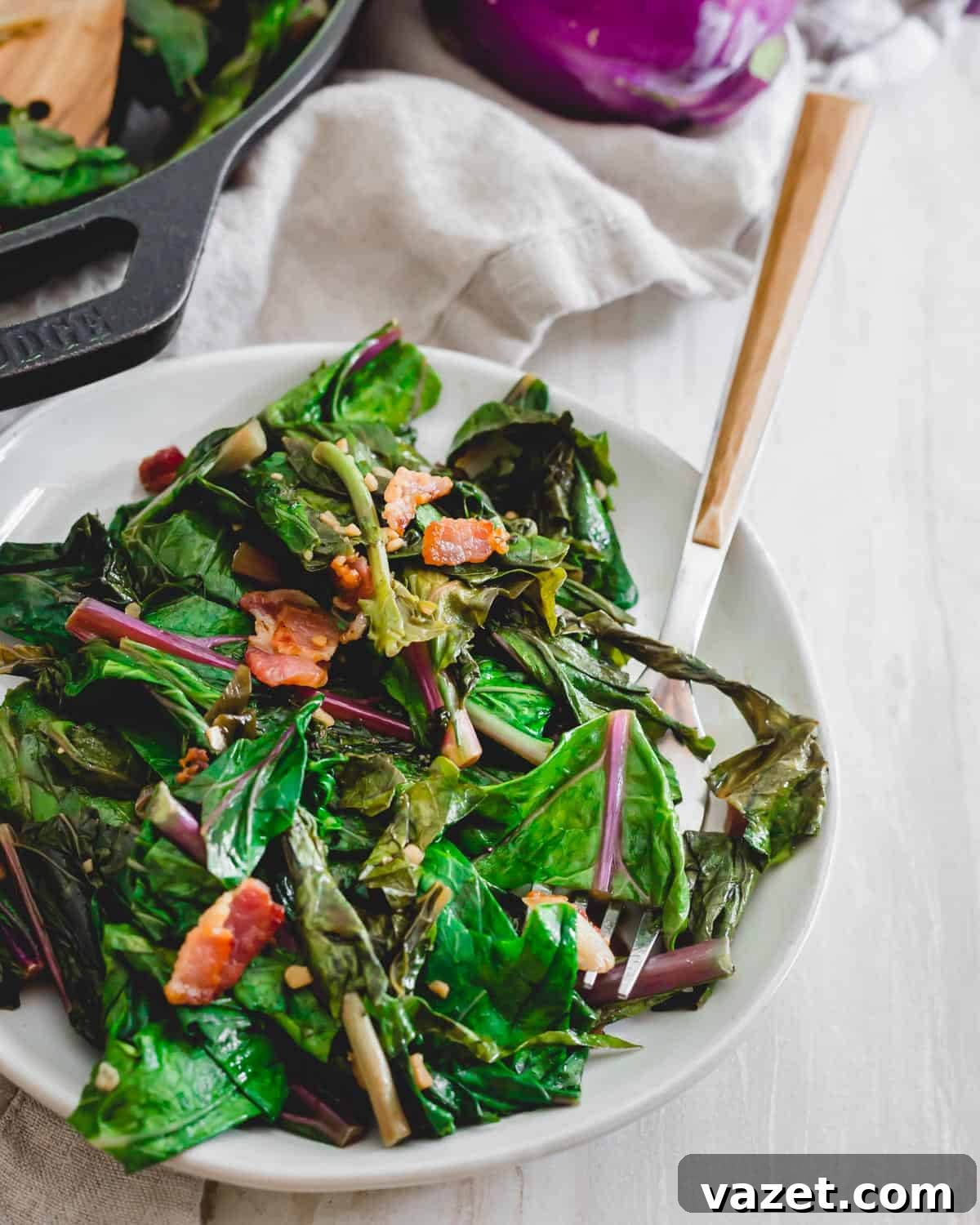
Step-by-Step Guide: How to Sauté Kohlrabi Greens to Perfection
Follow these simple steps to create a delicious and healthy side dish that makes the most of your kohlrabi greens:
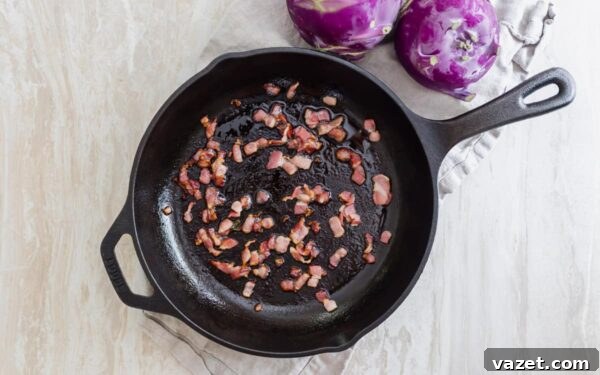
- **Prepare the Bacon:** Begin by placing a skillet (a cast iron skillet is highly recommended for its even heat distribution and ability to develop a beautiful crust on the bacon) over medium-high heat. Once the pan is hot, add the chopped bacon. Cook the bacon, stirring occasionally, until it is wonderfully crispy and golden brown. Using a slotted spoon, transfer the crispy bacon bits to a plate, leaving the flavorful rendered bacon fat in the skillet. Set the plate of bacon aside for later.
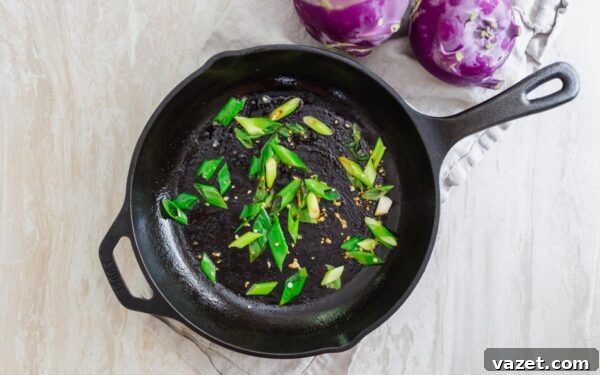
- **Sauté the Aromatics:** Reduce the heat to medium. Add the chopped scallions and minced garlic to the skillet, taking advantage of the residual bacon fat. Sauté for approximately one minute, stirring constantly, until the aromatics become fragrant and slightly softened. Be careful not to burn the garlic.
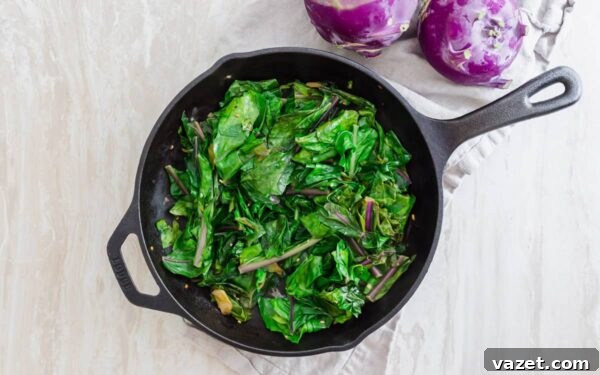
- **Wilt the Greens:** Add the thoroughly washed, dried, and chopped kohlrabi leaves to the pan. Pour in the broth or water. Immediately cover the skillet with a lid. Allow the greens to cook, steaming in the liquid, until they have significantly wilted down and become tender. This usually takes about 6-8 minutes, depending on the volume and maturity of the greens.
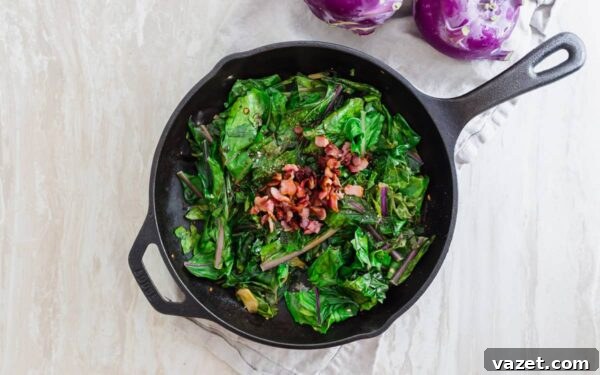
- **Finish and Serve:** Remove the lid from the skillet. Season the cooked greens generously with salt and freshly ground black pepper to taste. Pour in the balsamic vinegar and toss everything gently to combine the flavors. Immediately turn off the heat to prevent overcooking and preserve the vinegar’s bright notes. Finally, return the crispy bacon from the plate into the skillet, give a final stir to incorporate, and serve the sautéed kohlrabi greens warm. They are best enjoyed fresh.
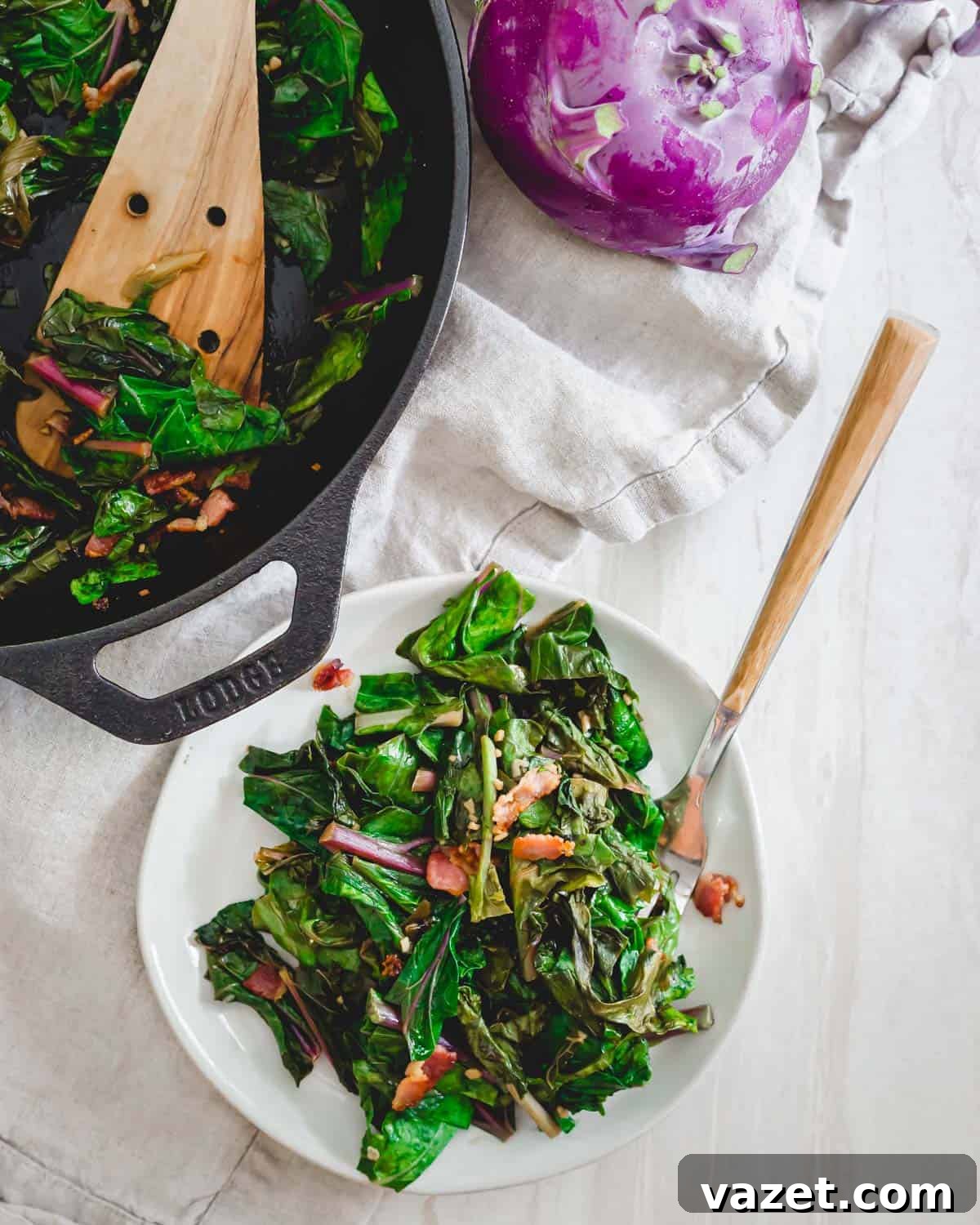
Tips for Success & Variations
To ensure your sautéed kohlrabi greens turn out perfectly every time, consider these helpful tips and explore potential variations:
- **Choosing Your Kohlrabi:** Always opt for kohlrabi with bright, crisp, and unwilted greens. Fresher greens will have a better texture and milder flavor when cooked.
- **Proper Washing:** Kohlrabi greens can sometimes hold onto a bit of dirt. Wash them thoroughly under cold running water or in a bowl of water, changing the water multiple times, until no grit remains. Dry them well before chopping to prevent steaming rather than sautéing.
- **Adjusting Bitterness:** If you find the greens too bitter for your taste, you can blanch them briefly in boiling salted water for 1-2 minutes, then shock them in ice water, before proceeding with the sautéing steps. This can help mellow the bitterness further.
- **Flavor Enhancements:** For an extra kick, add a pinch of red pepper flakes along with the garlic and scallions. A squeeze of fresh lemon juice at the end can also brighten the flavors.
- **Make it Vegetarian or Vegan:** To adapt this recipe for vegetarian or vegan diets, simply omit the bacon. Instead, start by sautéing the scallions and garlic in olive oil or a plant-based butter. To mimic the smoky flavor, you can add a pinch of smoked paprika or a dash of liquid smoke. A handful of toasted nuts like pecans or walnuts can also add a delightful crunch.
- **Storage:** Leftover sautéed kohlrabi greens can be stored in an airtight container in the refrigerator for up to 3-4 days. Reheat gently on the stovetop or in the microwave.
Serving Suggestions for a Versatile Side Dish
The beauty of sautéed kohlrabi greens with bacon lies in their versatility. They make an excellent side dish for almost any meal. Here are some ideas to inspire your next culinary creation:
- **Classic Pairings:** Serve alongside roasted chicken, grilled fish (especially salmon or cod), pan-seared pork chops, or a juicy steak for a complete and satisfying meal.
- **Hearty Comfort Food:** These greens are a natural fit for hearty dishes like slow-cooked stews, pot roasts, or even with mashed potatoes, offering a fresh contrast to rich flavors.
- **Breakfast or Brunch:** Don’t limit these greens to dinner! Stir them into scrambled eggs or an omelet, or serve them alongside a frittata for a nutritious and flavorful breakfast or brunch.
- **Grain Bowls and Salads:** While best cooked, cooled sautéed kohlrabi greens can be a fantastic component in warm grain bowls (with quinoa, farro, or brown rice) or as an addition to a robust main course salad.
- **Sandwiches and Wraps:** Use them as a flavorful, nutritious filling in sandwiches, wraps, or even flatbreads, adding a gourmet touch to your lunch.
Nutritional Powerhouse: The Health Benefits of Kohlrabi Greens
Beyond their delicious taste and the satisfaction of minimizing food waste, kohlrabi greens offer a wealth of health benefits. These often-discarded leaves are a true nutritional powerhouse, contributing significantly to a balanced diet:
- **Rich in Vitamins:** Kohlrabi greens are particularly high in Vitamin C, a powerful antioxidant essential for immune function and skin health. They also provide ample Vitamin K, crucial for blood clotting and bone health, and a good array of B vitamins, which play vital roles in energy metabolism.
- **Mineral Boost:** They are a good source of essential minerals, including potassium, which helps regulate blood pressure, and manganese, important for bone development and metabolism. They also offer iron, vital for oxygen transport in the blood, and calcium for strong bones and teeth.
- **Dietary Fiber:** Like most leafy greens, kohlrabi leaves are packed with dietary fiber. Fiber is essential for digestive health, promoting regularity and contributing to a feeling of fullness, which can aid in weight management.
- **Antioxidant Properties:** Kohlrabi greens contain various antioxidants, including glucosinolates, which are compounds also found in other cruciferous vegetables. These antioxidants help protect the body’s cells from damage caused by free radicals, potentially reducing the risk of chronic diseases.
- **Low in Calories:** Despite their rich nutrient profile, kohlrabi greens are remarkably low in calories, making them an excellent choice for those looking to enjoy flavorful, satisfying meals without a high caloric intake.
Hopefully, the next time you procure fresh kohlrabi from your local grocer or farmer’s market, you’ll be inspired to put its magnificent greens to excellent use! As someone who strives to incorporate leafy greens into my diet daily (and often prefers simply sautéed greens for their sheer ease of preparation), I genuinely appreciate having this additional vegetable in my culinary arsenal. It’s a delicious, nutritious, and sustainable choice that perfectly aligns with a whole-food approach to cooking.
More Delicious Leafy Green Recipes to Explore:
Warm bacon and greens potato salad
Spicy collard greens and rice
Mizuna lettuce salad
Purple tatsoi salad
Sautéed Kohlrabi Greens with Crispy Bacon
Gina Matsoukas
4 servings
10 mins
15 mins
25 mins
Print Recipe

Ingredients
- Kohlrabi greens from 3 large kohlrabi bulbs, woody ends chopped off, washed, dried and roughly chopped
- 2 slices organic or pastured uncured bacon, chopped
- 1 large scallion, roughly chopped
- 2 large cloves garlic, minced
- 2 tablespoons broth or water
- 2 tablespoons balsamic vinegar
- salt and pepper to taste
Instructions
-
Place skillet over medium-high heat. Once hot, add chopped bacon and cook until crispy. Remove with a slotted spoon to a plate and set aside.

-
Reduce heat to medium then add the scallions and garlic to the skillet with the residual bacon fat and cook for 1 minute until fragrant.
-
Add kohlrabi greens and broth to the skillet. Cover with a lid and cook until greens are wilted and tender, about 6-8 minutes.
-
Remove the lid, season to taste with salt and pepper. Add the balsamic vinegar, stir to combine then immediately turn off the heat. Add the crispy bacon back to the skillet, toss together and serve.
Nutrition
Serving: 1SERVING
Calories: 80kcal
Carbohydrates: 14g
Protein: 5g
Fat: 2g
Polyunsaturated Fat: 1g
Cholesterol: 3mg
Sodium: 173mg
Fiber: 7g
Sugar: 5g
Nutrition information is automatically calculated, so should only be used as an approximation.
Additional Info
Side Dishes
American
TRIED THIS RECIPE?
COMMENT + RATE BELOW!