
This post is sponsored by In The Raw®. All content and photography are my own.
Key Lime Coconut Panna Cotta: A Dairy-Free & Healthier Tropical Escape
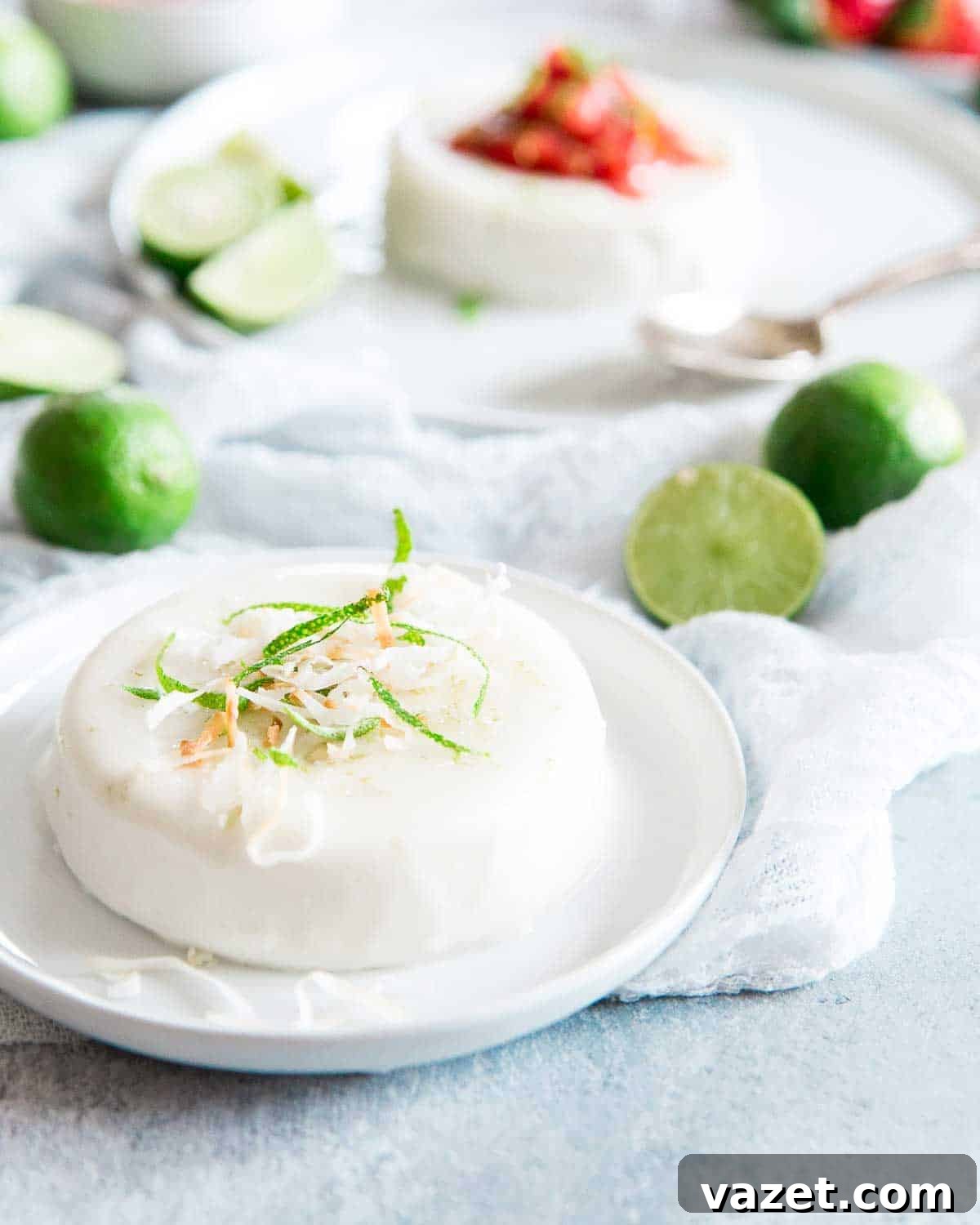
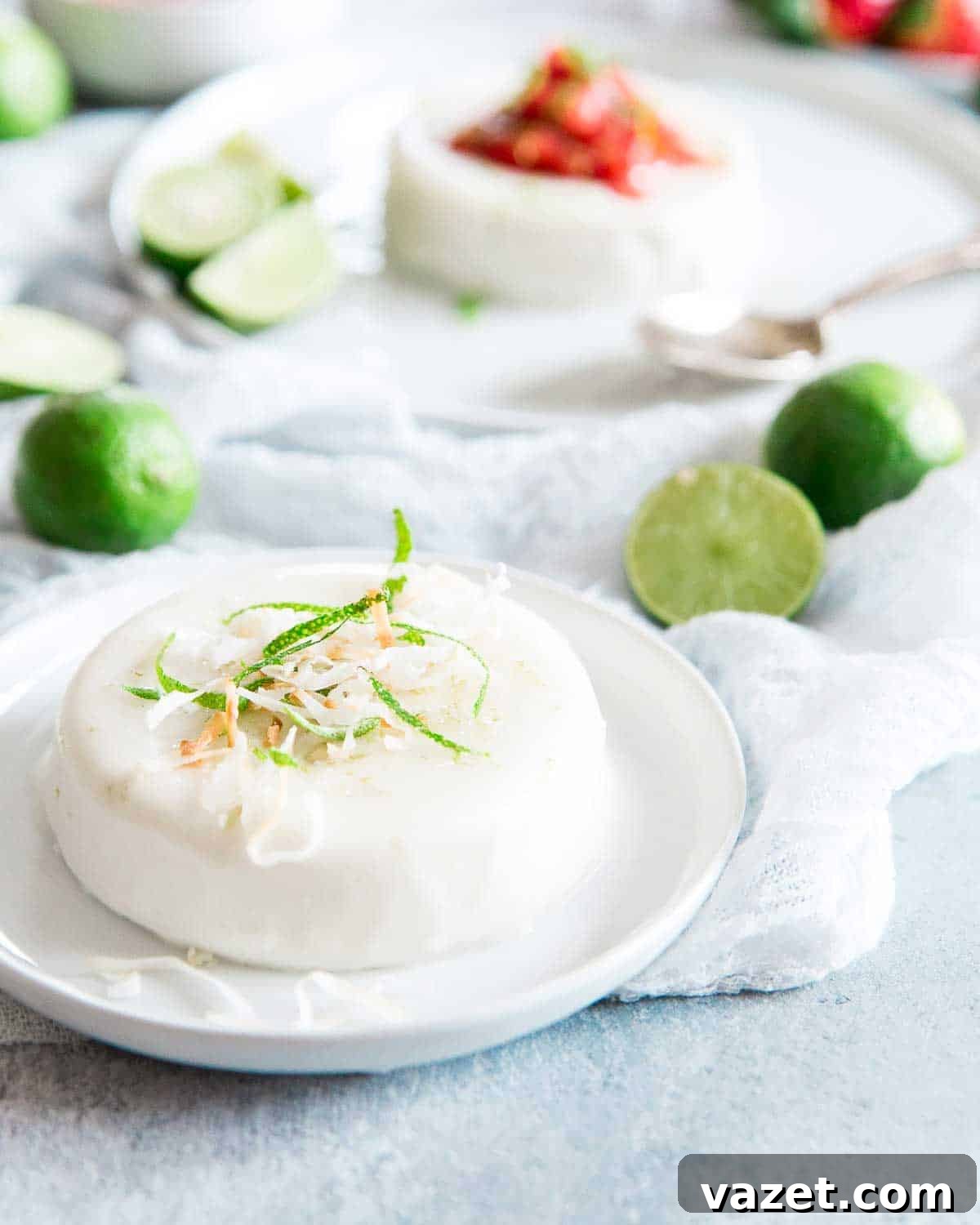
Indulge in the exquisite taste of a Key Lime Coconut Panna Cotta, a dessert that redefines classic elegance with a healthy, tropical twist. Crafted with rich coconut milk and naturally sweetened, this recipe offers a creamy, vibrant, and entirely dairy-free experience, beautifully crowned with a zesty key lime strawberry compote. Prepare to be transported to a sun-drenched paradise with every delicate spoonful.
The Timeless Allure of Panna Cotta: Easy Elegance for Any Occasion
My culinary journey has always held a special place for creamy, custard-like desserts. From the delicate, jiggly texture of a perfectly made flan (a dessert I personally believe receives far too much unwarranted criticism!) to the satisfying, glass-like crack of caramelized sugar on a crème brûlée, there’s an undeniable comfort and sophistication inherent in these classic treats. Yet, among this esteemed trio, panna cotta consistently emerges as my top favorite.
Perhaps it’s a subtle, subconscious appreciation for its Italian roots; after all, “panna cotta” literally translates to “cooked cream”—a name that charmingly encapsulates its simple yet utterly luxurious nature. What truly elevates panna cotta in my regard is its unparalleled versatility and remarkable ease of preparation. Unlike its blow-torch-requiring cousin, crème brûlée, or the often-temperamental flan, panna cotta demands no specialized equipment or daunting techniques. Its smooth, silken texture provides a perfect canvas for an endless array of flavors, ranging from classic vanilla and rich chocolate to vibrant fruits and exotic spices. It is, without a doubt, the easiest of the three to master in your own kitchen, making it an ideal choice for both spontaneous weeknight indulgences and impressive dinner party finales.
A Healthier Reinvention: Dairy-Free Creaminess with a Natural Sweetener
Despite my long-standing affection for panna cotta, I confess I had never ventured into making it myself until now. The concept always felt a touch intimidating, a recipe reserved for professional pastry chefs, even though I knew, in theory, it was quite simple. When I finally decided to dive in, I wasn’t content with merely creating a traditional version. Instead, I decided to “go big or go home,” embarking on a mission to craft a healthier, dairy-free, and equally decadent panna cotta.
This bold reinvention hinged on two pivotal substitutions. First, I opted for full-fat coconut milk to replace the conventional heavy cream and dairy milk, ensuring a rich and creamy base without any dairy. Second, in lieu of refined sugar, I chose Monk Fruit In The Raw®, a natural, zero-calorie sweetener. This daring combination meant the outcome could swing dramatically: either a spectacular success, resulting in an epic dairy-free and paleo-friendly panna cotta, or an unmitigated culinary failure. Thankfully, as you can clearly see from the tempting visuals, the former proved to be true. This recipe triumphantly demonstrates that healthier choices do not necessitate a compromise on flavor or luxurious texture.
Mastering the Art of Coconut Panna Cotta: Simple Steps to Tropical Perfection
Traditional panna cotta relies on a careful combination of dairy milk and cream, balanced with sugar and gelatin, to create a dessert that is firm enough to hold its shape when unmolded, yet delightfully jiggly and delicate on the tongue. Our Key Lime Coconut Panna Cotta maintains this fundamental technique, adapting it seamlessly for a dairy-free and naturally sweetened version without sacrificing any of its classic charm.
How to Craft This Easy Coconut Panna Cotta at Home:
The process for making this tropical delight is surprisingly straightforward, involving just a few key steps:
- Bloom the Gelatin: The first crucial step involves “blooming” the gelatin. This fancy term simply means combining unflavored gelatin powder with cold water and letting it sit for a few minutes. This allows the gelatin granules to absorb the water, swell, and become translucent, ensuring it dissolves smoothly into the warm mixture later without any lumps.
- Gently Heat the Base: In a small saucepan, you’ll combine the full-fat coconut milk, Monk Fruit In The Raw® sweetener, fresh key lime juice, vibrant key lime zest, and a hint of vanilla extract. This mixture is then gently heated over medium heat, brought to a low simmer. It’s important to stir frequently and avoid a rapid boil to prevent the coconut milk from scorching and to allow the flavors to meld beautifully.
- Dissolve the Gelatin: Once the coconut milk mixture is warm and simmering, add the bloomed gelatin. Whisk continuously until the gelatin is completely dissolved into the liquid. This step is essential for achieving the panna cotta’s signature silky-smooth texture and ensuring it sets properly.
- Pour and Chill: The final preparation step involves pouring the warm panna cotta mixture into lightly greased ramekins. Greasing the ramekins, ideally with a touch of coconut oil, is a small but critical detail that will significantly aid in the easy release of the panna cotta later. Once poured, allow the ramekins to cool to room temperature before covering them with plastic wrap and transferring them to the refrigerator. The panna cotta needs at least 6 hours to set, but chilling overnight is highly recommended for the best results and firmness.
It truly is that simple! The gelatin acts as the magical binder, transforming the flavorful liquid into a perfectly set, creamy dessert as it chills. Your patience during the refrigeration period will be handsomely rewarded with a flawless Key Lime Coconut Panna Cotta.
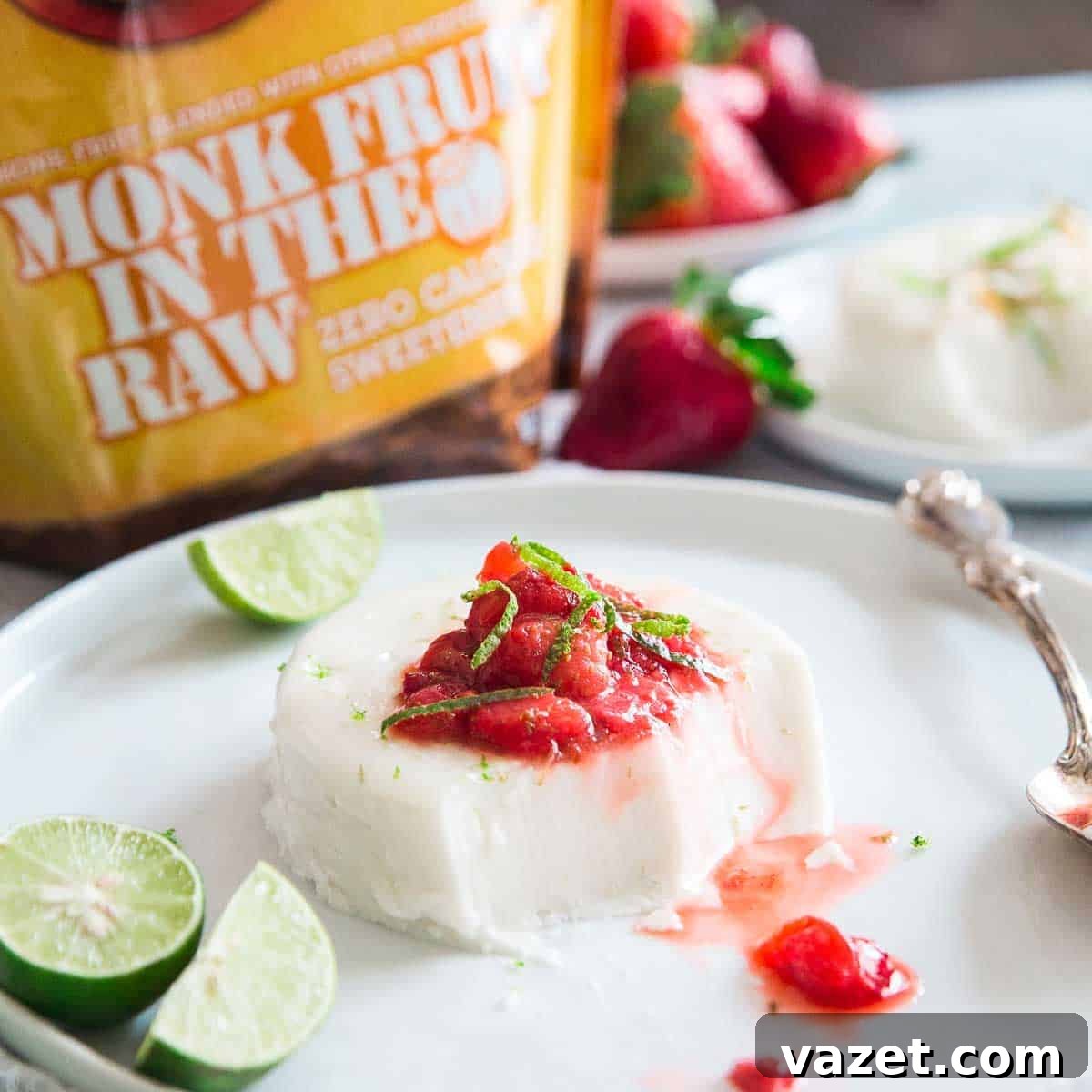
Discovering Monk Fruit Sweetener: A Natural Path to Sweetness
In recent years, monk fruit sweetener has garnered significant attention and popularity, particularly within low-carb and health-conscious culinary circles, emerging as an outstanding natural alternative to traditional sugar. Its rise is well-deserved, offering a pure sweetness without the caloric burden or glycemic impact often associated with refined sugars.
Monk fruit (Siraitia grosvenorii) is a small, sub-tropical melon, native to the lush landscapes of Southeast Asia, predominantly found in regions of China and Thailand. For centuries, this fruit has been cherished in traditional Eastern medicine for its various perceived health benefits. The secret to its remarkable sweetness lies in unique natural compounds called mogrosides, which are extracted from the fruit. These mogrosides are incredibly potent, delivering a sweetness that is approximately 200-300 times more intense than that of sucrose (common table sugar).
Because of its concentrated sweetness, raw monk fruit extract is almost always blended with a bulking agent, such as erythritol or maltodextrin, to create a product that can be easily measured and incorporated into recipes. For this Key Lime Coconut Panna Cotta, I specifically used the Monk Fruit In The Raw® Bakers Bag, which combines monk fruit extract with maltodextrin. This particular blend is ingeniously formulated to measure cup-for-cup exactly like sugar, simplifying the substitution process and ensuring consistent, delicious results in your cooking and baking endeavors. It’s an exceptional option for those seeking lower-calorie and lower-carbohydrate sweetening solutions.
While Monk Fruit In The Raw® is an invaluable tool for reducing sugar, it’s worth understanding its optimal application in different types of recipes. For traditional baked goods, where sugar plays multifaceted roles beyond just sweetness—contributing to structure, browning, and moisture retention—it’s often recommended to replace only up to 50% of the sugar with monk fruit sweetener. This helps maintain the desired rise, texture, and overall integrity of items like cakes, cookies, and muffins.
However, for recipes such as our Key Lime Coconut Panna Cotta, where the “baking” is effectively done on the stove-top (heating and mixing) followed by chilling, Monk Fruit In The Raw® can be confidently used as the sole sweetener. In these no-bake applications, it dissolves beautifully and delivers a clean, pure sweetness that perfectly complements the other flavors without any of the subtle aftertastes sometimes associated with other artificial sweeteners. This makes our panna cotta an ideal lower-calorie and lower-carb dessert option, allowing you to indulge your sweet cravings mindfully and deliciously.
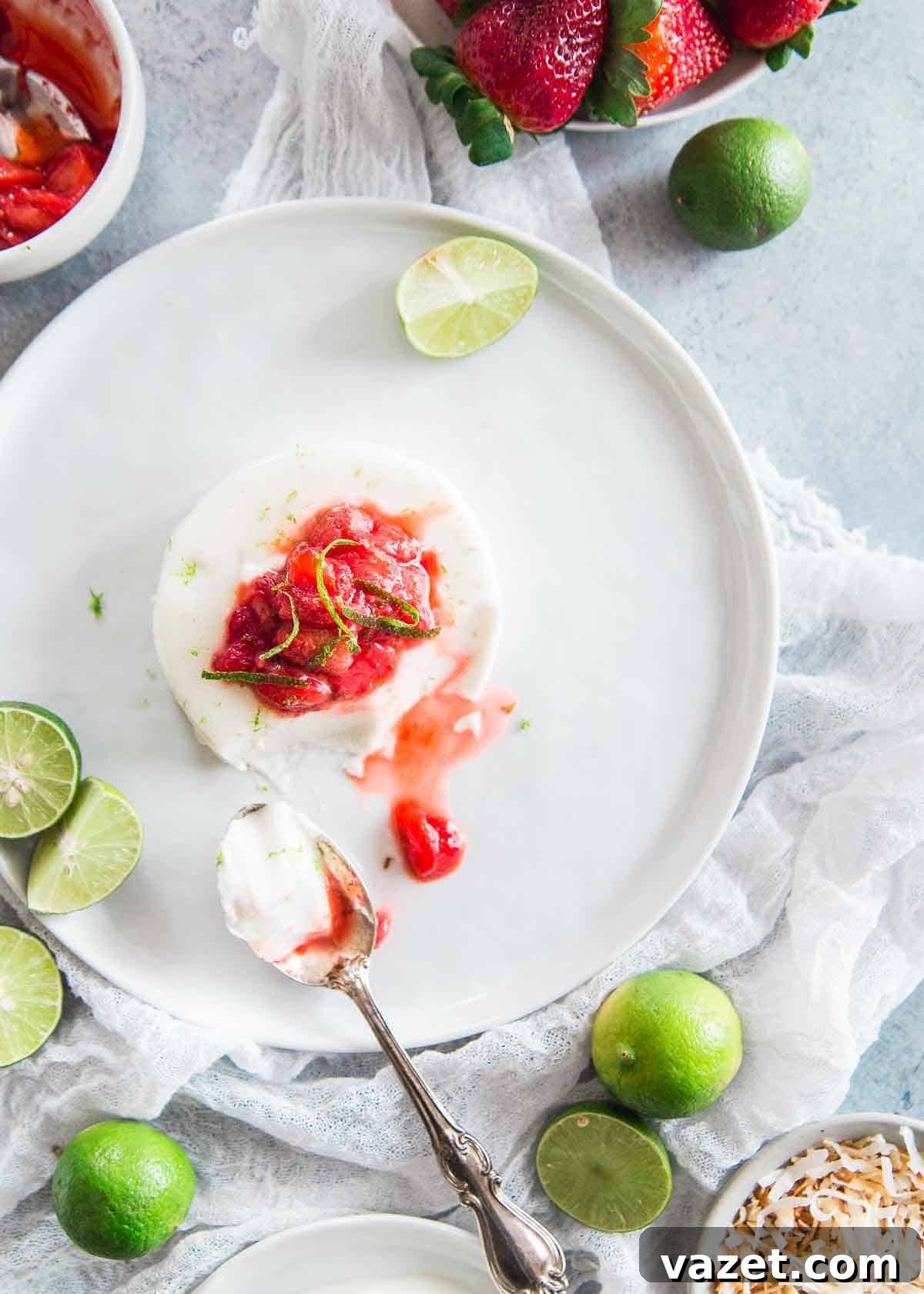
The Exquisite Flavor Journey: A Tropical Fusion for Your Palate
What can you expect when you take your first bite of this Key Lime Coconut Panna Cotta? Imagine the vibrant, zesty tang of a classic key lime pie, seamlessly interwoven with the creamy, exotic essence of a piña colada. That delicious, evocative combination is precisely the flavor symphony this recipe delivers. It’s an indulgent experience that instantly reminds me of a decadent, dessert-focused version of my favorite coconut lime smoothie, promising a delightful escape to a tropical paradise.
The texture is nothing short of divine: impossibly silky, smooth, and luxuriously creamy, it simply melts in your mouth. The predominant flavor is a bright and invigorating burst of tart key lime, which is perfectly balanced by the mellow, rich notes of the full-fat coconut cream. This creates a refreshing contrast that ensures the dessert is never overly sweet, offering a sophisticated and invigorating finish that cleanses the palate.
Perfect Pairings & Captivating Topping Ideas
To truly elevate this already magnificent dessert, a thoughtful topping is absolutely essential. Freshly grated key lime zest is a non-negotiable must-have; its aromatic oils intensify the key lime flavor and add a beautiful visual sprinkle. Beyond that, the possibilities for customization are wonderfully expansive.
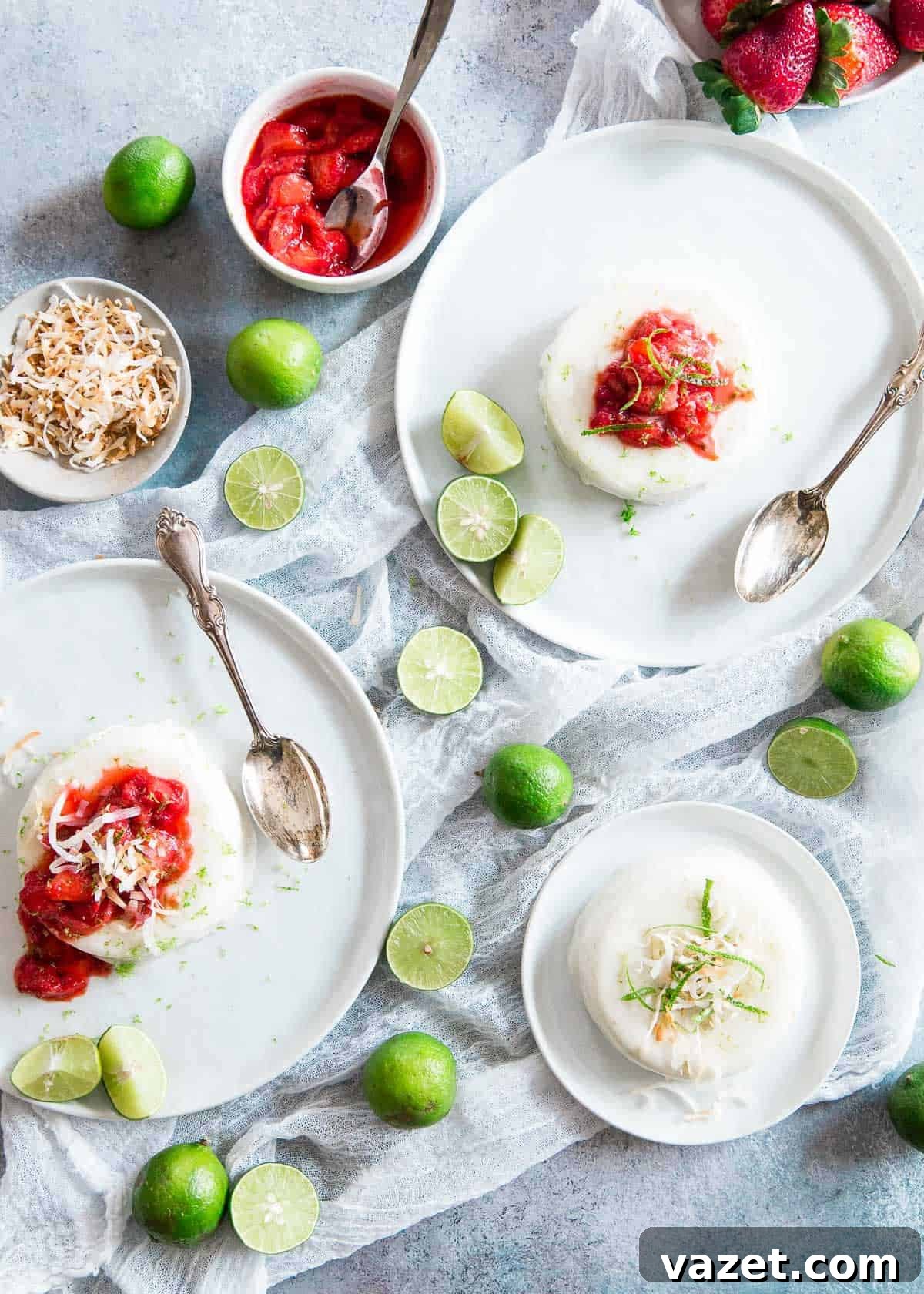
I experimented with two delightful variations for this recipe. One featured a simple scattering of lightly toasted coconut flakes, which added a subtle crunch and enhanced the tropical character, along with the fresh key lime zest. The second, and arguably more visually stunning, option was a vibrant strawberry key lime compote. The easy-to-follow directions for this tangy and sweet compote, which perfectly complements the panna cotta, can be found in the comprehensive recipe card below.
From an aesthetic perspective, the vivid ruby-red hue of the strawberry compote creates a striking and elegant contrast against the pristine white coconut panna cotta, resulting in a truly restaurant-worthy presentation. Both topping options offer fantastic flavor complements to the core panna cotta, so choose based on your preference. For those with an adventurous palate who enjoy a hint of heat, you could even try incorporating a subtle touch of chili into your strawberry compote, drawing inspiration from a gourmet strawberry chili jam for an unexpected and exciting kick!
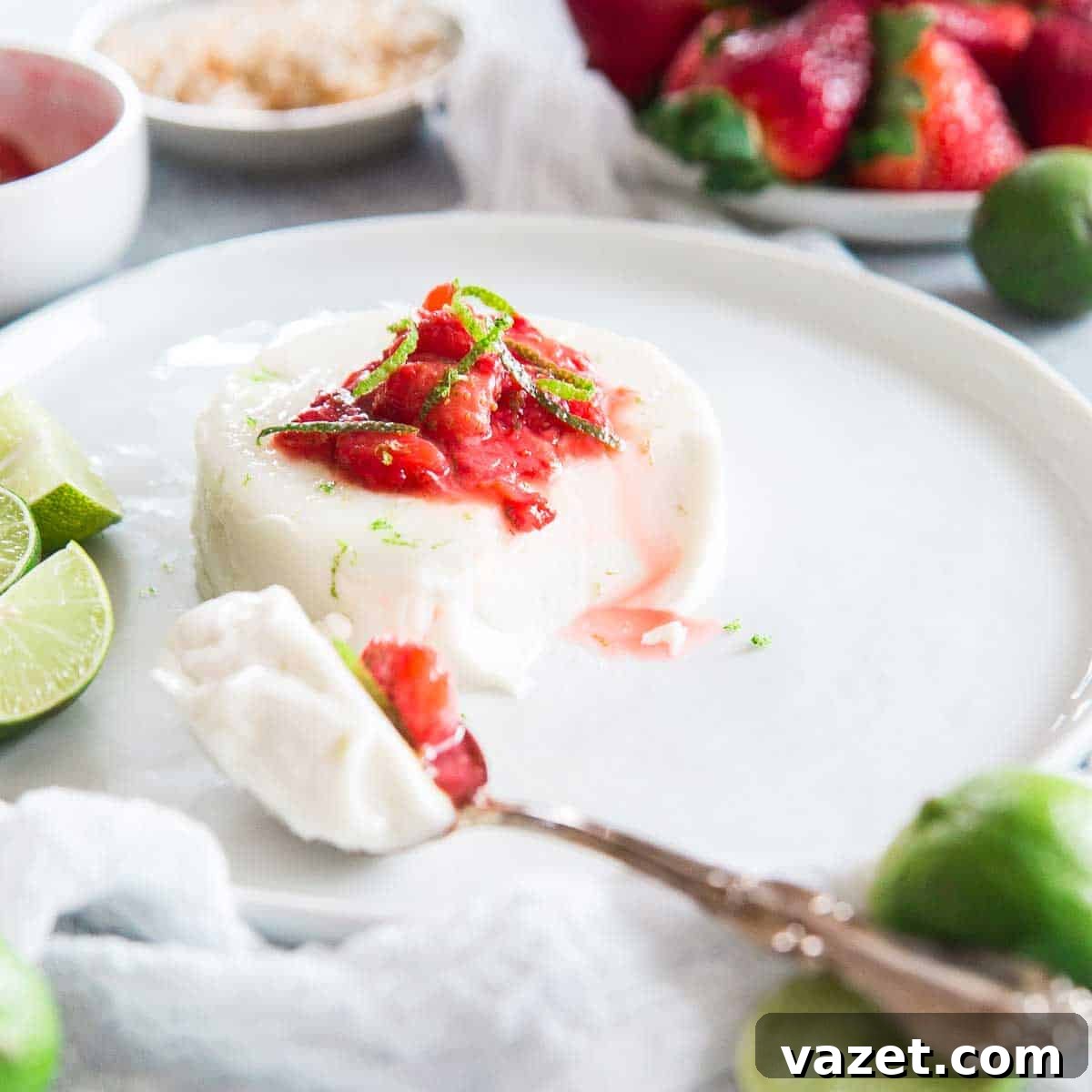
A Dessert for Everyone: Meeting Diverse Dietary Needs
One of the most appealing aspects of this Key Lime Coconut Panna Cotta is its remarkable ability to cater to a wide array of dietary preferences and restrictions, making it a truly inclusive dessert that nearly everyone at your table can enjoy. It’s a testament to how thoughtful ingredient choices can transform a classic into a versatile culinary delight.
- Lower Calorie & Carb: By thoughtfully substituting refined sugar with Monk Fruit In The Raw® as the primary sweetener, we significantly reduce both the calorie and carbohydrate content of this dessert. This makes it an excellent choice for individuals managing their sugar intake, following a low-carb lifestyle, or simply seeking a healthier sweet treat without compromising on taste.
- Dairy-Free: The exclusive use of rich, full-fat coconut milk makes this panna cotta entirely dairy-free. This is wonderful news for those with lactose intolerance, dairy allergies, or individuals adhering to a vegan or plant-based diet. Beyond its dietary benefits, coconut milk imparts a distinctively delicious and nuanced flavor that beautifully enhances the tropical theme of the dessert.
- Paleo-Friendly: As a dessert that is both dairy-free and naturally sweetened, this recipe effortlessly aligns with paleo dietary guidelines. It consciously avoids common paleo no-gos such as grains, legumes, dairy products, and refined sugars, offering a compliant yet incredibly indulgent option for those following a ancestral diet.
- Naturally Gluten-Free: Panna cotta, by its inherent composition, is a naturally gluten-free dessert. There are no flours or gluten-containing ingredients whatsoever in this recipe, ensuring it is a safe and thoroughly enjoyable treat for individuals with celiac disease, gluten sensitivities, or those simply choosing to avoid gluten.
While this particular recipe utilizes gelatin, which is an animal-derived product, it’s certainly possible to adapt panna cotta for a strictly vegan diet. This can be achieved by substituting the gelatin with agar-agar, a plant-based gelling agent derived from seaweed. However, the gelling properties of agar-agar differ from gelatin, so I would highly recommend consulting specific vegan panna cotta recipes for precise agar-agar measurements and preparation instructions, as this variation requires careful adjustment. Nevertheless, for all other dietary considerations, this Key Lime Coconut Cream Panna Cotta effortlessly ticks all the boxes, proving that a healthier dessert can be just as decadent, satisfying, and universally appealing.
Mastering the Unmolding Process: Achieving That Perfect Panna Cotta Presentation
While the actual preparation of panna cotta is wonderfully straightforward, the moment of truth often arrives when it’s time to unmold it from its ramekin. This step can sometimes feel like the trickiest part, but with a few simple techniques and a little patience, you can confidently achieve that beautiful, traditional presentation that makes panna cotta so visually appealing.
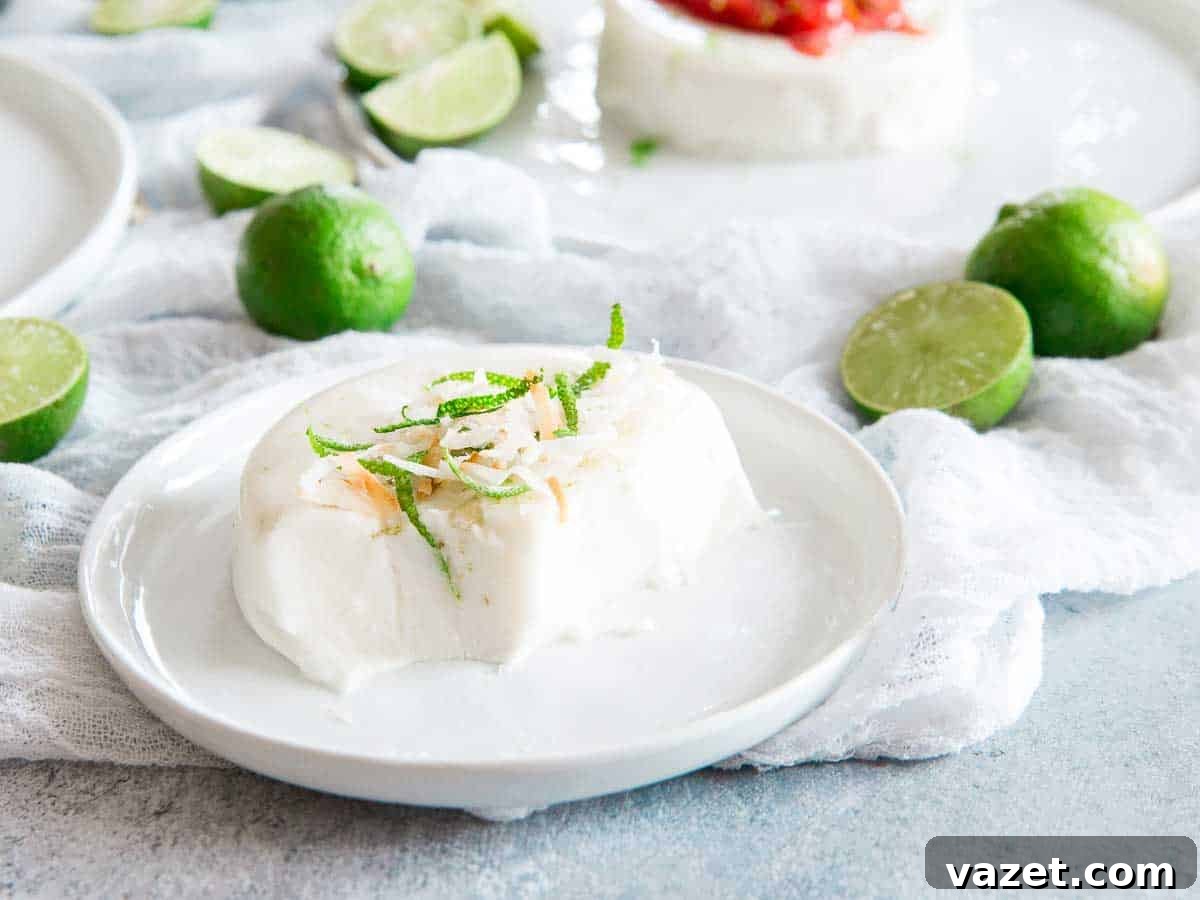
First and foremost, it’s important to remember that unmolding is entirely optional! If you prefer a completely fuss-free dessert, there’s absolutely no need to bother trying to get it out of the mold. Simply serve and enjoy your delicious panna cotta directly from the ramekin or even a pretty glass, if you chose to pour the mixture into glasses from the start. It will taste just as incredible, and you’ll save yourself a step.
However, if you’re aiming for that classic, free-standing panna cotta look, here’s a foolproof method to master the unmolding process:
- Prepare a Hot Water Bath: Fill a small bowl or a shallow dish with hot (but not boiling) water. Ensure the water level is deep enough to immerse at least the bottom half, if not more, of your ramekin.
- Gently Loosen the Edges: Before dipping, take a thin, sharp knife or a small offset spatula and carefully run it around the inside edge of each ramekin. Be gentle, aiming to create a slight separation between the panna cotta and the ramekin walls, rather than cutting deeply into the dessert. This helps break the suction that holds it in place.
- Brief Dip and Invert: Take one ramekin and dip its bottom into the hot water bath for approximately 20-30 seconds. The warmth from the water will slightly melt the outer layer of gelatin, facilitating its release.
- The Release: Remove the ramekin from the water, quickly wipe any excess water from the bottom, and immediately invert it onto your chosen serving plate. Give the ramekin a gentle shake or a slight wiggle. You should hear a subtle “whoosh” sound as the vacuum seal breaks and the panna cotta gracefully detaches itself from the mold and slides onto the plate.
- Repeat If Necessary: If your panna cotta doesn’t release on the very first attempt, don’t fret! This is quite common. Simply re-dip the ramekin into the hot water for another 15-20 seconds and try the inversion process again. Sometimes, especially depending on the material of your ramekins or the exact temperature of your refrigerator, it might take 2-3, or even 3-4 gentle dips for it to release perfectly. Patience is truly your greatest ally here; rest assured, it will eventually release beautifully.
By following these steps, you’ll be able to gracefully unmold your Key Lime Coconut Panna Cotta, creating a stunning and professional-looking dessert that is sure to impress.
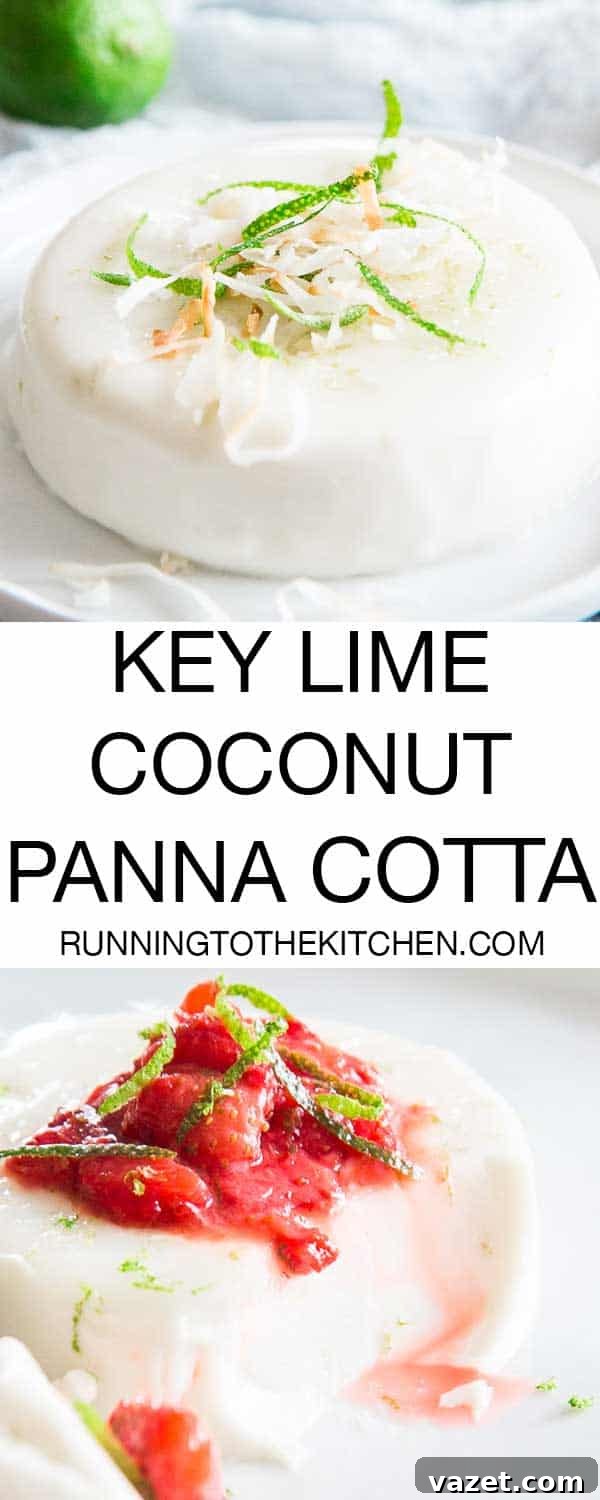
The Uncomplicated Genius of Coconut Milk in Panna Cotta
It’s a common experience in the kitchen: making substitutions in a beloved classic recipe often introduces unexpected complexities, requiring careful adjustments and a keen eye to achieve the desired outcome. However, in the creation of this Key Lime Coconut Panna Cotta, I’ve found that using coconut milk has, quite surprisingly, achieved the opposite. It not only simplifies the overall process but simultaneously elevates the dessert’s appeal and accessibility.
Traditional panna cotta recipes frequently call for a very specific and delicate balance of heavy cream and milk, with careful consideration given to their fat content. This precise ratio is crucial for achieving that ideal jiggly-yet-firm texture that defines a perfect panna cotta. Coconut milk, particularly the full-fat canned variety, elegantly streamlines this step. It provides a naturally rich, consistently creamy base with an optimal fat content, effectively eliminating the need for complex dairy fat calculations. This makes the recipe significantly more approachable for home cooks and reliably guarantees a wonderfully smooth, decadent texture every single time.
Beyond its simplifying effect, the use of coconut milk brilliantly opens up this beloved dessert to a much wider audience, catering to various dietary needs that traditional, dairy-laden panna cotta typically wouldn’t accommodate. When this plant-based creaminess is combined with the clean, natural sweetness of Monk Fruit In The Raw® bakers blend, the result is a truly healthier panna cotta. Crucially, it doesn’t compromise on any of the classic elements that make panna cotta so universally adored: that ethereal creaminess, the delicate wobble, and an exquisite, memorable flavor. This recipe stands as a testament to how thoughtful and innovative substitutions can genuinely elevate a recipe, making it both more accessible and even more delightfully delicious.
Craving More Paleo, Dairy-Free, or Coconut-Infused Delights?
If you’ve fallen in love with this Key Lime Coconut Panna Cotta, you’ll surely enjoy exploring these other delectable dessert recipes:
- Coconut Lime Ice Cream Float with Toasted Coconut Cashew Crisps
- No Bake Lime Avocado Tart
- Coconut Coffee Cream Pops
- Chocolate Coconut Avocado Ice Cream
Key Lime Coconut Panna Cotta Recipe
Rating: 4.60 from 5 votes
By: Gina Matsoukas
Servings: 3 servings
Prep time: 5 minutes
Cook time: 15 minutes
Additional time: 6 hours (for chilling)
Total time: 6 hours 20 minutes
Print Recipe
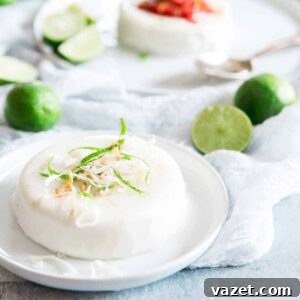
This key lime coconut panna cotta is made with coconut milk for a creamy, healthier twist to the classic recipe and topped with key lime strawberry compote, offering a delightful dairy-free and paleo-friendly tropical dessert.
Ingredients
For the Key Lime Coconut Panna Cotta
- 1 tablespoon cold water
- 2 1/4 teaspoons unflavored gelatin
- 1 can (15 ounces) full-fat coconut milk
- 3 tablespoons Monk Fruit In The Raw® Bakers Bag
- 2 tablespoons fresh key lime juice
- Zest of 1 key lime
- 1/2 teaspoon vanilla extract
For the Strawberry Key Lime Compote
- 1 1/4 cup chopped strawberries
- Juice of 1 key lime
- Zest of 1 key lime
- 1 tablespoon Monk Fruit In The Raw®
Instructions
For the Panna Cotta:
- Lightly grease 3 ramekins with coconut oil to ensure easy unmolding.
- In a small bowl, combine the cold water and unflavored gelatin. Let it sit for 5 minutes to allow the gelatin to “bloom” and soften.
- While the gelatin is blooming, combine the full-fat coconut milk, Monk Fruit In The Raw® sweetener, key lime juice, key lime zest, and vanilla extract in a small sauce pot. Place over medium heat.
- Bring the mixture to a low simmer, stirring frequently. Be careful not to let it boil vigorously.
- Once simmering, add the bloomed gelatin mixture to the pot. Whisk constantly until the gelatin is completely dissolved and no granules remain.
- Carefully pour the warm panna cotta mixture into the prepared greased ramekins.
- Place the filled ramekins on a small baking sheet for stability and allow them to cool completely to room temperature.
- Once cooled, cover each ramekin tightly with plastic wrap and transfer them to the refrigerator. Chill overnight or for a minimum of 6 hours to ensure the panna cotta sets firmly.
- When you are ready to serve, remove the ramekins from the refrigerator. Fill a large bowl with hot tap water. Using a thin, sharp knife, carefully run it around the inside edge of each ramekin to gently loosen the panna cotta from the sides.
- Dip the bottom of a ramekin into the hot water for 20-30 seconds.
- Invert the ramekin onto your desired serving plate, gently tapping and wiggling it until the panna cotta releases. If it does not release on the first attempt, re-dip the ramekin in the hot water for another 15-20 seconds and try again. Repeat this process as needed until the panna cotta comes out cleanly.
For the Strawberry Compote:
- Combine the chopped strawberries, key lime juice, key lime zest, and Monk Fruit In The Raw® sweetener in a small sauce pot. Bring the mixture to a low simmer over medium-low heat.
- Continue to simmer, stirring occasionally, until the compote thickens to your desired consistency and the strawberries begin to break down, typically about 5-7 minutes.
- Remove the compote from the heat and allow it to cool completely before serving.
- Spoon the cooled strawberry key lime compote generously over the plated panna cotta just before serving.
Notes
Enhance your Key Lime Coconut Panna Cotta with additional delightful toppings: try sprinkling toasted coconut flakes for added texture, a dollop of whipped coconut cream for extra richness, or a scattering of chopped toasted cashews for a nutty crunch.
Nutrition Information (Approximate Per Serving)
- Serving Size: 1 serving
- Calories: 253 kcal
- Carbohydrates: 28 g
- Protein: 4 g
- Fat: 16 g
- Saturated Fat: 14 g
- Polyunsaturated Fat: 1 g
- Sodium: 64 mg
- Fiber: 4 g
- Sugar: 16 g
Please note that nutrition information is automatically calculated and should be used as an approximation.
Additional Info
- Course: Dessert
- Cuisine: Italian
TRIED THIS RECIPE?
COMMENT + RATE BELOW!