Dips
Roasted Beet Hummus
This roasted beet hummus keeps the chickpeas and tahini you expect from traditional hummus and adds a whole roasted beet for subtle sweetness, earthy flavor and that incredible pink color
- Serves 8 servings
- Prep 5 minutes
- Cook 1 hour
- Total 1 hour
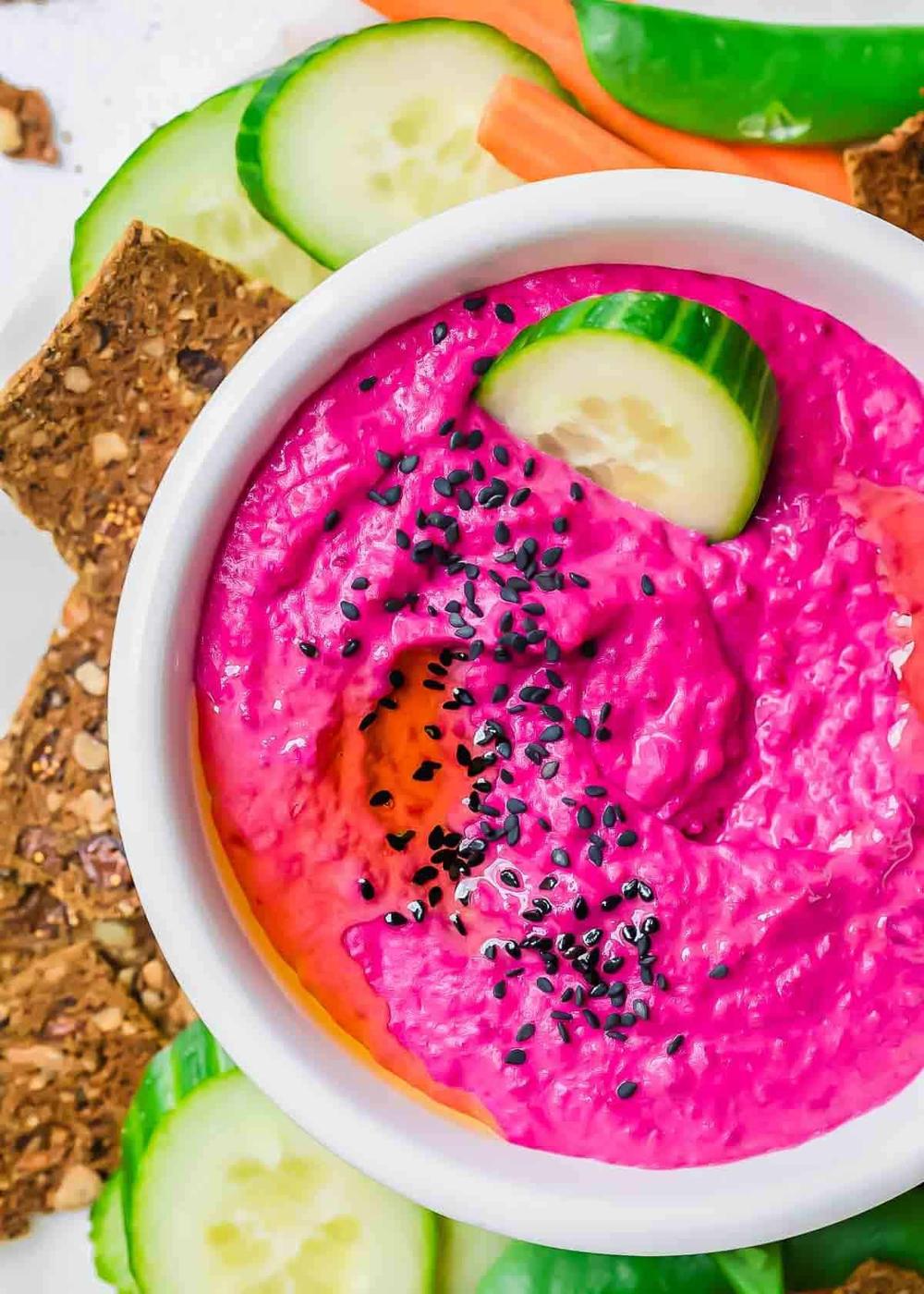
Roasted beet hummus takes classic hummus and gives it an earthy, slightly sweet flavor and that ridiculously pretty pink color. Made with chickpeas, tahini, lemon, garlic and a whole roasted beet, it’s creamy, bright and incredibly easy once the beet is roasted.
I’ve always been firmly on team beet. My husband says they taste like dirt, which I understand isn’t exactly a compelling endorsement for the recipe you’re about to make, but I feel like they’re a love-it-or-hate-it vegetable, so the haters probably won’t be interested anyway.
Roasting is where beets really shine. It brings out their natural sweetness and softens some of that earthy flavor they’re known for. When you blend one into hummus with plenty of lemon, garlic and tahini, you get a dip that’s familiar enough to still taste like hummus, but far more interesting than the usual beige stuff.
And obviously, we need to talk about that color. You can’t put a bowl this aggressively pink on a table and expect people to ignore it. It looks eerily similar to a pitaya bowl, and we all remember how obsessed the internet was with those a few years ago. This is an appetizer that will win people over with its looks before they even taste it.
Why Roast the Beet First?
Roasting brings out the beet’s natural sweetness and mellows some of the earthy flavor it’s known for. It also concentrates the flavor without adding extra moisture, which helps the hummus stay thick and creamy.
You can use pre-cooked beets in a pinch, but starting with a fresh beet gives you better control over the flavor, texture and that vibrant pink color.
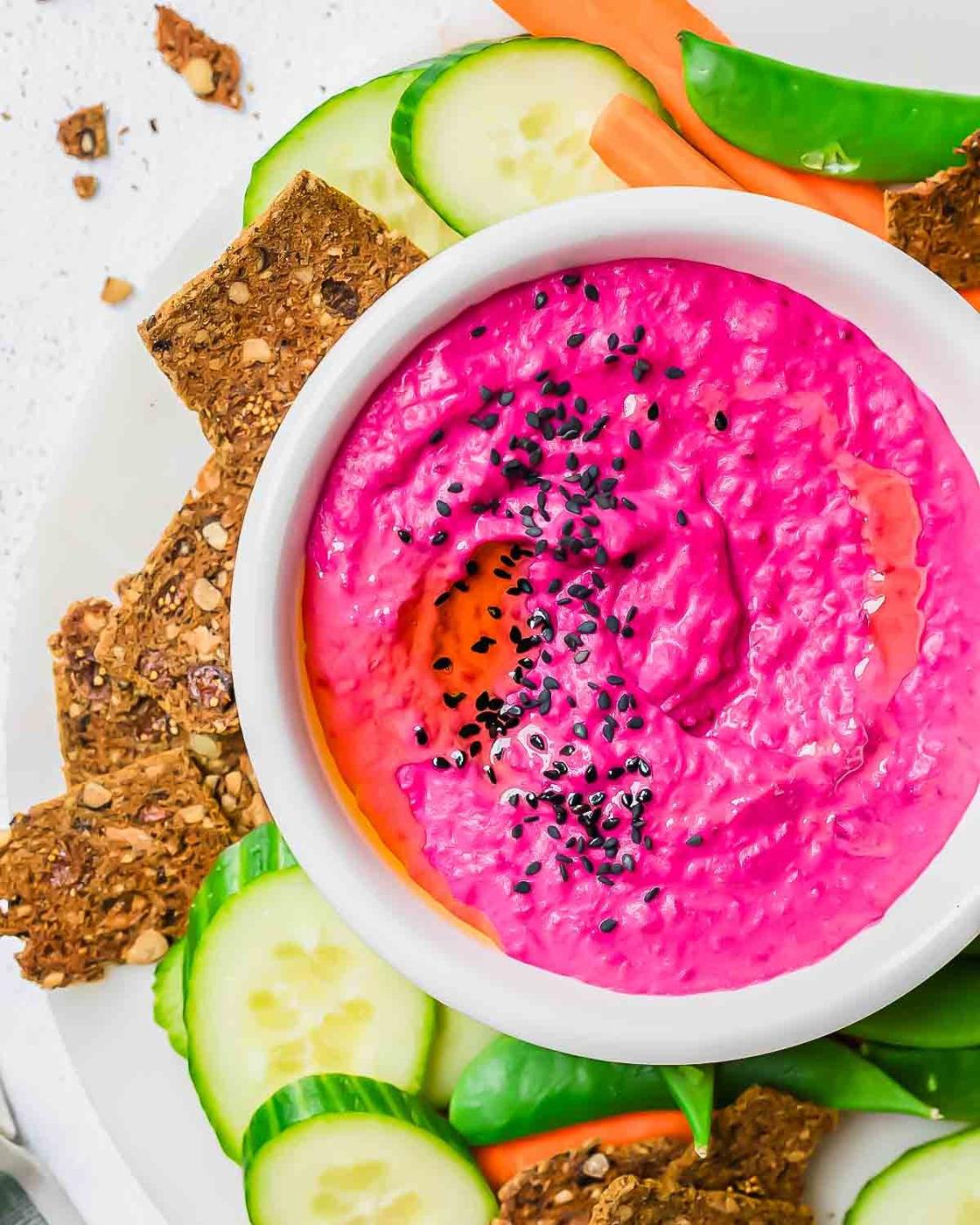
Beet Hummus That Still Tastes Like Hummus
The beet isn’t replacing the chickpeas here. This recipe starts with the same basic building blocks as traditional hummus — chickpeas, tahini, lemon, garlic and olive oil — then adds a whole roasted beet to the mix.
I prefer it this way because you still get the creamy texture and nutty, savory flavor you’d expect from hummus, with the earthy sweetness and color of the beet layered in. The beet is noticeable without completely taking over.
Fresh lemon is especially important because the acidity balances the sweetness of the roasted beet, while tahini gives it that familiar nutty flavor.
And yes, you need a red beet for that almost-neon pink color. You can use a golden beet, but half the fun of this hummus is that ridiculous pink color which you won’t get otherwise.
How To Make Roasted Beet Hummus
The process is simple, but roasting the beet first is what gives this hummus its deeper flavor and incredible color. Here’s how it comes together:
My Pro Tips
How to Get the Creamiest Hummus
The easiest thing you can do for creamier hummus is simply let the food processor run longer.
It’s tempting to stop as soon as everything looks combined, but give it another minute or two. Scrape down the sides as needed, then keep processing until you don’t see any pieces of beet and the texture looks smooth rather than grainy.
If it’s still thicker than you want, add ice-cold water one tablespoon at a time while the food processor runs. This loosens the hummus without adding a bunch of extra oil.
You can also peel the chickpeas for an extra smooth texture if you have the patience. Personally, I’m usually not peeling an entire can of chickpeas for hummus, but if you’re feeling ambitious, go for it. I sometimes do it for crispy roasted chickpeas.
The Taste
Despite the very obvious beet color, this still tastes like hummus.
The chickpeas and tahini keep that familiar hummus flavor while the roasted beet adds a subtle earthy sweetness. Lemon brightens everything up and garlic keeps it firmly on the savory side. If you’ve ever had the Ithaca Hummus Lemon Beet flavor, this recipe tastes a lot like that.
If you think beets taste a little too much like the ground they came out of, hummus might also be a good way to give them another chance. The tahini, lemon and garlic tone down that earthy flavor quite a bit.
Serving Options
Pita bread and pita chips are obvious choices, but there are so many other great alternatives too.
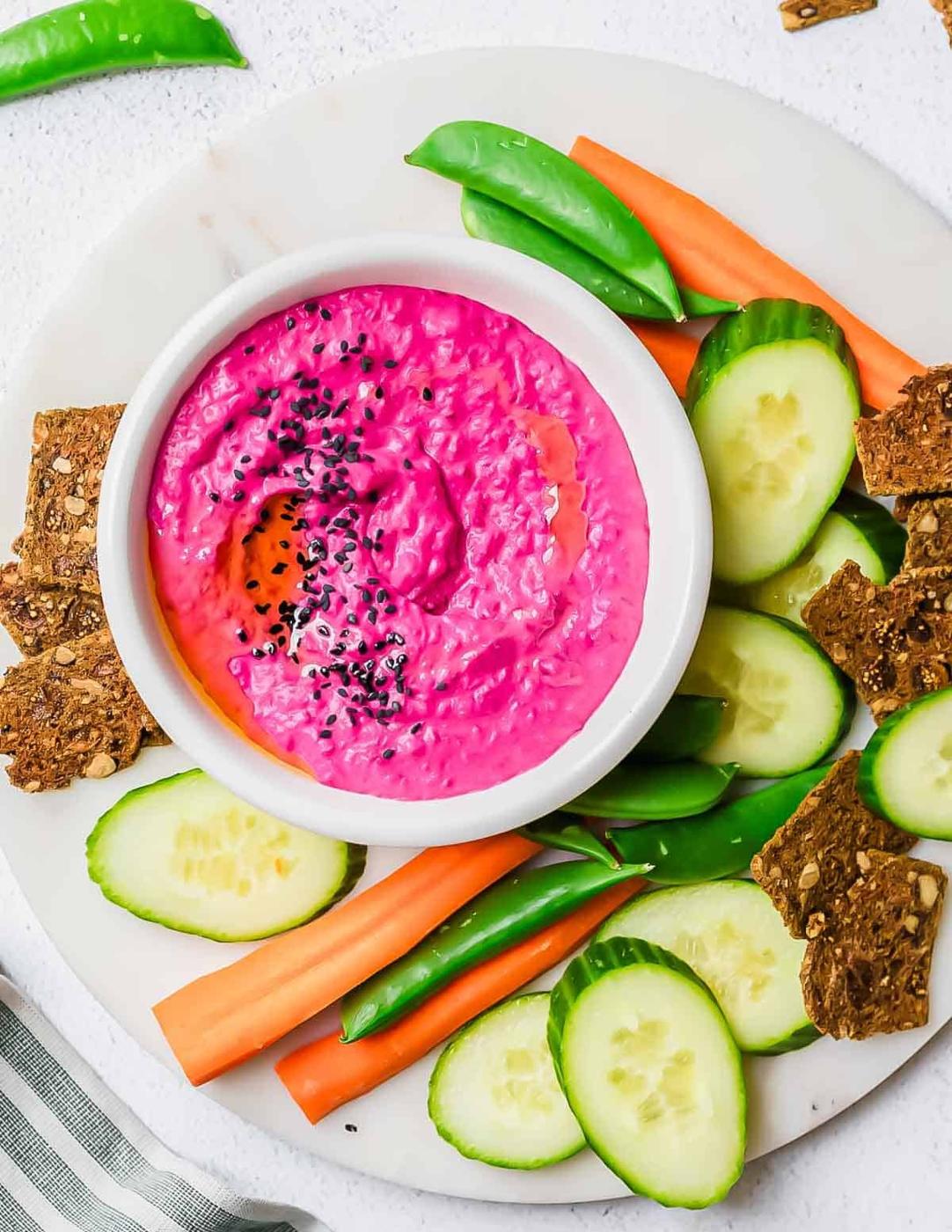
Fresh vegetables like cucumbers, carrots, bell peppers, radishes and snap peas are all great for dipping. Spread the hummus onto toast, sandwiches or wraps or add a spoonful to grain bowls for an easy sauce-like element.
I have a bunch of vegetable chip recipes that make great dippers for hummus too. You can use jicama chips, eggplant chips or snap pea crisps to dip into this for a cracker alternative.
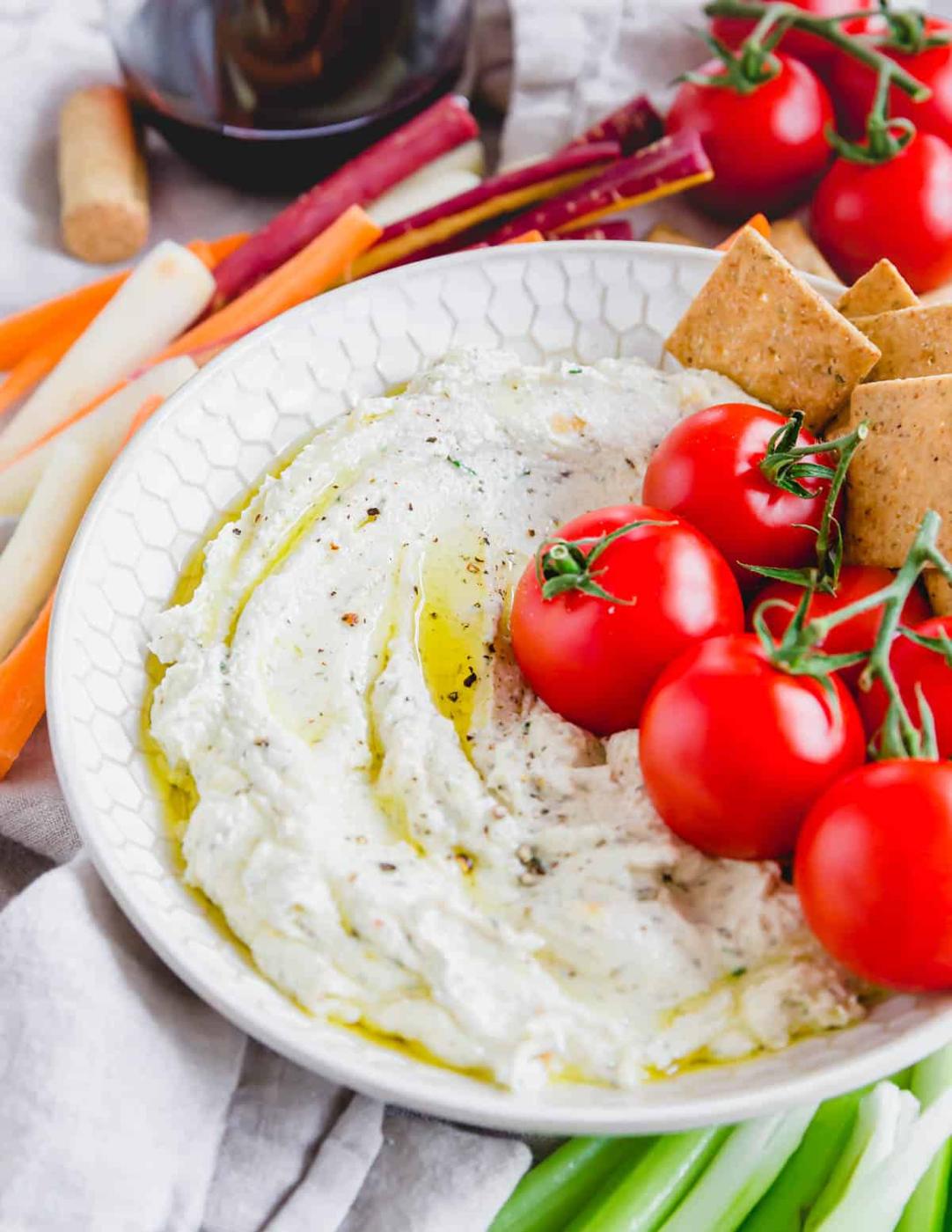
If you’re serving it as an appetizer, spoon the hummus into a shallow bowl and finish it with a drizzle of olive oil. Sesame seeds, fresh herbs or a few chickpeas on top are easy additions if you want to dress it up a little.
With a color like this, you really don’t have to do much.
Using Pre-Cooked beets
While you can use pre-cooked beets instead of roasting your own (they’re my go-to in this beet and feta salad), the flavor and texture won’t be exactly the same.
Vacuum-packed cooked beets are your best shortcut because they don’t contain much additional liquid. Avoid pickled beets because the vinegar and seasonings will completely change the flavor of the hummus.
If you have the extra 45 minutes, though, I’d roast a fresh beet. There’s very little hands-on work involved and the flavor is better. It’s kind of like making garlic confit. So simple, so much more flavor.
Storage
Store any leftover hummus in an airtight container in the refrigerator for up to 5 days. Give it a quick stir before serving since a little separation can happen as it sits.
You can also freeze beet hummus for up to 3 months. Thaw it overnight in the refrigerator, stir well and add a small splash of water or olive oil if the texture needs loosening.
Recipe
Roasted Beet Hummus
Creamy roasted beet hummus combines chickpeas, tahini, lemon and garlic with a whole roasted beet for a slightly sweet, earthy dip with a gorgeous vibrant pink color.
- Serves 8 servings
- Prep 5 minutes
- Cook 1 hour
- Total 1 hour
Ingredients
- 1 red beet
- 15 ounces canned chickpeas (drained)
- 3 tablespoons tahini
- 1/2 cup olive oil
- 6 tablespoons lemon juice
- 2 cloves garlic
- 1 teaspoon sea salt
Instructions
- 1
Preheat oven to 400°F.
- 2
Place the beet in the center of a piece of aluminum foil.
- 3
Drizzle a small amount of olive oil over beet. Massage oil on beet and fold the foil to enclose the beet.
- 4
Place the wrapped beet directly in the oven and bake for 45 minutes. Check for doneness by piercing a toothpick into beet. It’s ready once the toothpick can easily pierce. Exact roast time will vary depending on the beet. Remove from oven.
- 5
Once the beet has cooled off, carefully peel with a peeler until all of the outer peel is removed.
- 6
Once the beet is fully peeled, slice off the ends and dispose. Place the rest of the beet in a food processor.
- 7
Add the remaining ingredients (chickpeas, olive oil, garlic, tahini, lemon juice, sea salt) to the food processor. Blend until smooth and creamy.
- 8
Serve alongside fresh cut veggies, pita bread and crackers.
Nutrition
- Serving1 SERVING
- Calories207 kcal
- Carbohydrates10 g
- Protein4 g
- Fat18 g
- Saturated Fat2 g
- Polyunsaturated Fat3 g
- Monounsaturated Fat11 g
- Sodium449 mg
- Potassium150 mg
- Fiber3 g
- Sugar1 g
- Vitamin A16 IU
- Vitamin C5 mg
- Calcium31 mg
- Iron1 mg