
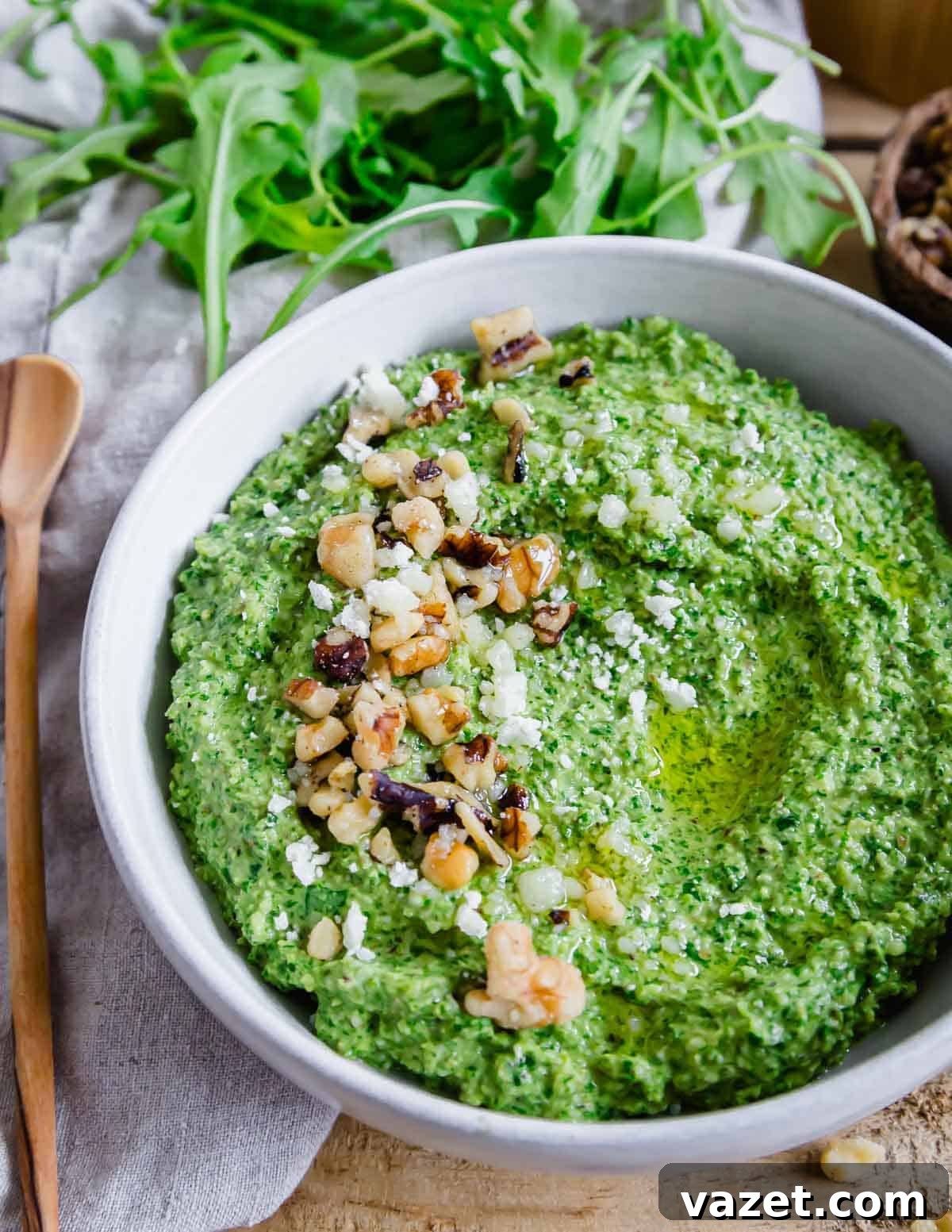
Welcome to a culinary adventure that takes a delightful detour from the traditional. While basil pesto holds a cherished spot in many hearts, we’re here to introduce you to an equally enchanting, if not more vibrant, alternative: Arugula Pesto. This isn’t just a recipe; it’s an ode to the peppery, slightly bitter greens that bring an exciting twist to your palate. Our meticulously crafted arugula pesto recipe masterfully combines the pungent kick of fresh arugula with the earthy richness of walnuts, the sharp tang of Parmesan cheese, the aromatic depth of garlic, and the smooth elegance of extra virgin olive oil. The result? A versatile, irresistible sauce that you’ll be eager to slather on everything – from comforting bowls of pasta and vibrant roasted vegetables to succulent grilled meats and delicate flaky fish.
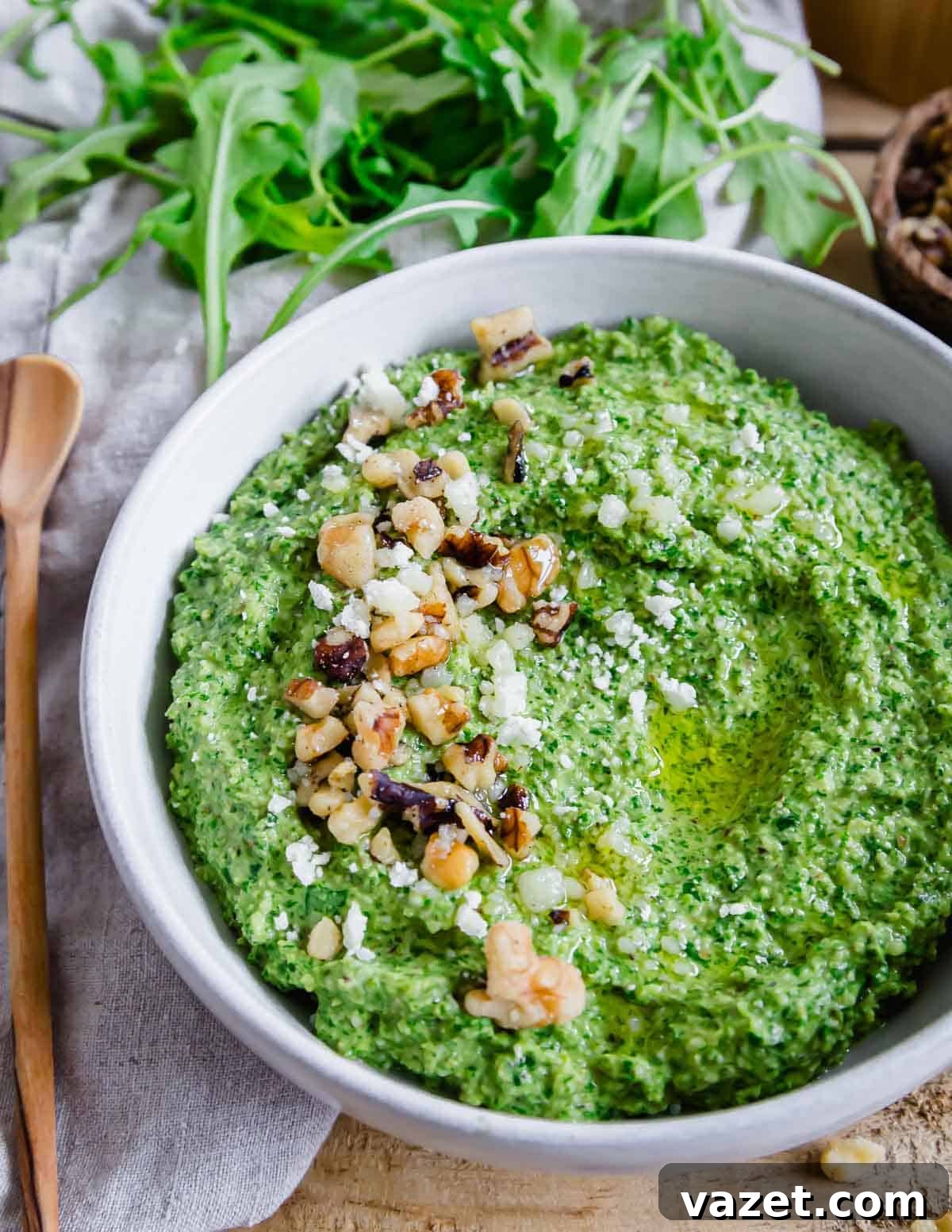
For over a decade, our kitchen has been a testing ground for countless pesto variations. While many might reach for the classic basil, our journey into pesto-making has frequently led us away from it. This particular arugula walnut pesto, in fact, has roots dating back to early 2012, even if its official recipe debut on the blog was somewhat delayed. Looking back, some of those early posts were amusingly bare, but they paved the way for gems like this one.
There are compelling reasons why we often opt for pesto recipes that don’t feature basil as the star. Firstly, fresh basil, especially the quantity required for a truly robust pesto, can be surprisingly expensive. You typically need a generous two to three bunches to yield a decent batch, which quickly adds up. Secondly, for those of us with a green thumb (or aspiring to have one!), growing basil can be a finicky affair. Despite our best efforts, it rarely delivers the abundant, prolific harvest that other herbs readily provide.
Arugula, on the other hand, is a gardener’s dream. We’ve successfully grown arugula from seed, and let us tell you, it thrives with an almost wild abandon. During the inaugural year of our raised garden beds, we found ourselves making this delightful pesto almost every week, purely to keep up with the overwhelming bounty of arugula. It was a delicious challenge, transforming a garden overflow into a pantry staple.
Recipes like this **homemade arugula pesto** or our zucchini pesto are the ideal solution for anyone grappling with an abundance of garden produce. If you’re pondering creative ways to utilize a large harvest of arugula, this pesto is your definitive answer! And for those without a garden, consider this: a substantial container of baby arugula is often more economical than a single bunch of fresh basil. This makes our arugula pesto a much more budget-friendly variation compared to its classic counterpart, proving that gourmet flavors don’t have to come with a hefty price tag.
If you appreciate the distinctive, fiery, and peppery notes of arugula, we are confident that this recipe will not only meet but exceed your expectations. We’ve consciously chosen walnuts over traditional pine nuts for a couple of key reasons. Their robust, meaty texture and rich flavor provide a fantastic counterpoint to the intensity of the arugula, creating a beautifully balanced sauce. Beyond their culinary benefits, walnuts are also significantly more budget-friendly than pine nuts. The exorbitant price of pine nuts often feels like a small mortgage payment, which is why we tend to use them sparingly in our recipes.
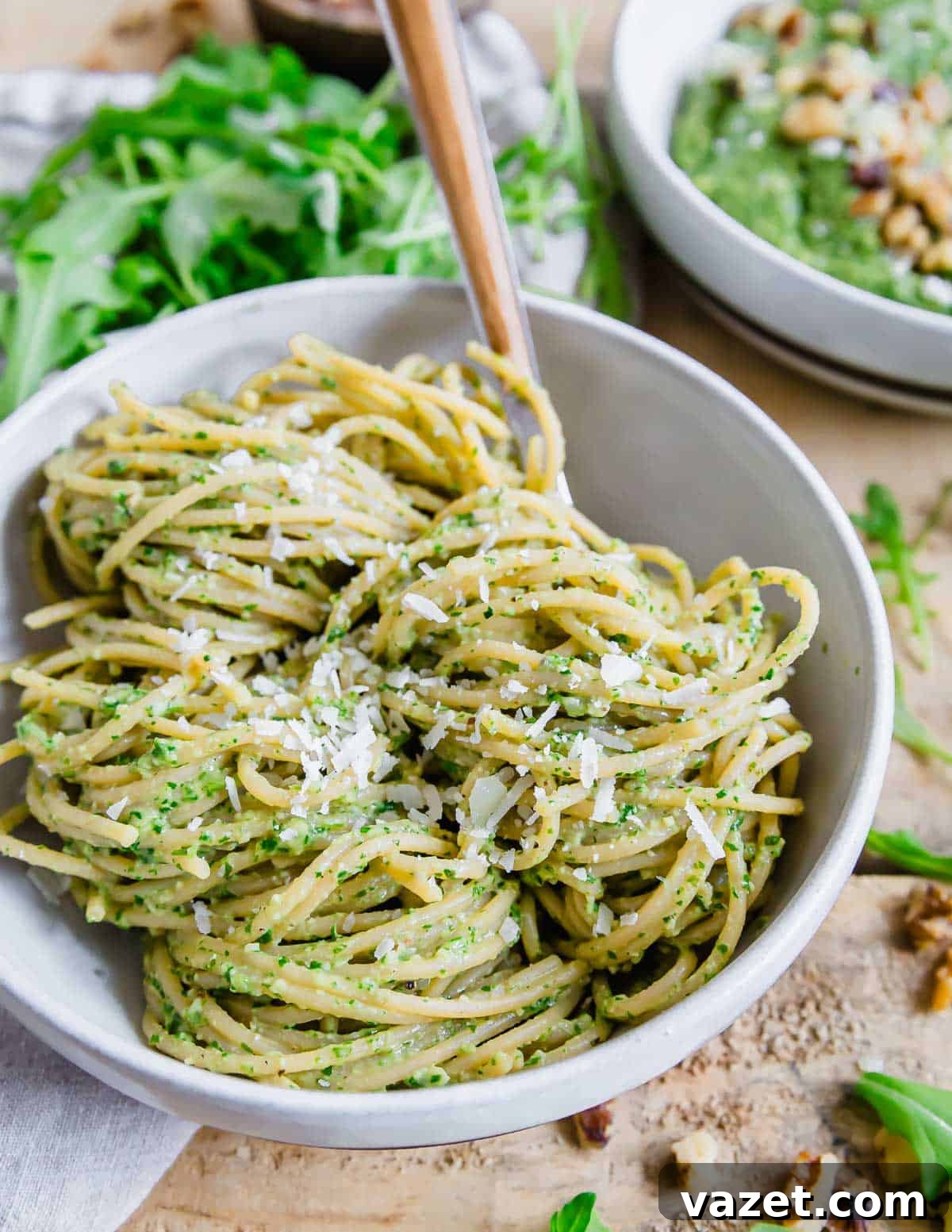
The beauty of this pesto lies in its incredible versatility. It’s equally divine when lightly tossed with your favorite pasta, generously dolloped onto a platter of warm roasted vegetables, or served as an elegant accompaniment to grilled meats and pan-seared fish. What’s more, preparing this vibrant sauce is a breeze. With the aid of a food processor, it comes together in mere minutes, making it a perfect last-minute addition to any meal. And once prepared, it stores remarkably well, both in the refrigerator for immediate enjoyment and in the freezer for future culinary delights.
Essential Ingredients for Your Perfect Arugula Pesto
Crafting a truly exceptional arugula pesto begins with selecting the finest ingredients. Each component plays a crucial role in developing the complex, vibrant flavors that define this sauce. Here’s a closer look at what you’ll need and why each element is important:
- Fresh Arugula: The star of our pesto! We highly recommend using baby arugula leaves whenever possible. Their flavor profile is a touch milder and less bitter than that of mature, full-grown arugula, resulting in a more balanced and palatable pesto. The fresh, peppery notes of arugula are what give this pesto its unique character.
- Fresh Parsley: While optional, a small addition of fresh parsley can truly elevate your pesto. It introduces a bright, herbaceous freshness that beautifully complements and subtly rounds out the intense, earthy flavors of the arugula without overpowering them. Flat-leaf Italian parsley is generally preferred for its robust flavor.
- Walnuts: Our chosen nut for this recipe, replacing the more expensive traditional pine nuts. Walnuts contribute a fantastic robust, meaty texture and a slightly bitter, earthy flavor that harmonizes wonderfully with the peppery arugula. Unlike many pesto recipes, there’s no need to toast the walnuts beforehand; their raw flavor works perfectly here.
- Garlic: The cornerstone of any great pesto, but balance is key. We’re not advocates for a pesto where garlic dominates every other flavor. Using just one clove in this recipe imparts a delicious aromatic depth while allowing the distinctive arugula to truly shine. For an incredibly subtle yet profound garlic flavor, consider incorporating roasted garlic – it adds a delightful sweetness and complexity.
- Fresh Lemon Juice: This essential ingredient acts as a brightener, lifting the overall flavor profile of the pesto and preventing it from becoming too heavy. Its acidity cuts through the richness of the oil and cheese, adding a refreshing tartness. If you adore the zesty freshness of lemon, our citrus pesto recipe further amplifies this vibrant flavor.
- Extra Virgin Olive Oil: The backbone of a silky, luscious pesto. A good quality extra virgin olive oil is non-negotiable for a no-cook sauce like this, where its flavor is front and center. It provides richness, body, and that characteristic smooth finish. Investing in a high-quality, cold-pressed olive oil will make a remarkable difference in the final taste of your pesto.
- Parmesan Cheese: An indispensable component, contributing a nutty, salty, and umami-rich depth that is integral to authentic pesto flavor. While vegan substitutes like nutritional yeast exist for dairy-free versions, nothing quite replicates the nuanced taste of genuine Parmesan. Pecorino Romano is an excellent and widely accepted substitute if you prefer its sharper, saltier notes.
- Salt and Black Pepper: These seasonings are crucial for enhancing all the other flavors. Start with the recommended amounts and adjust to taste, remembering that the Parmesan cheese also contributes significant saltiness.
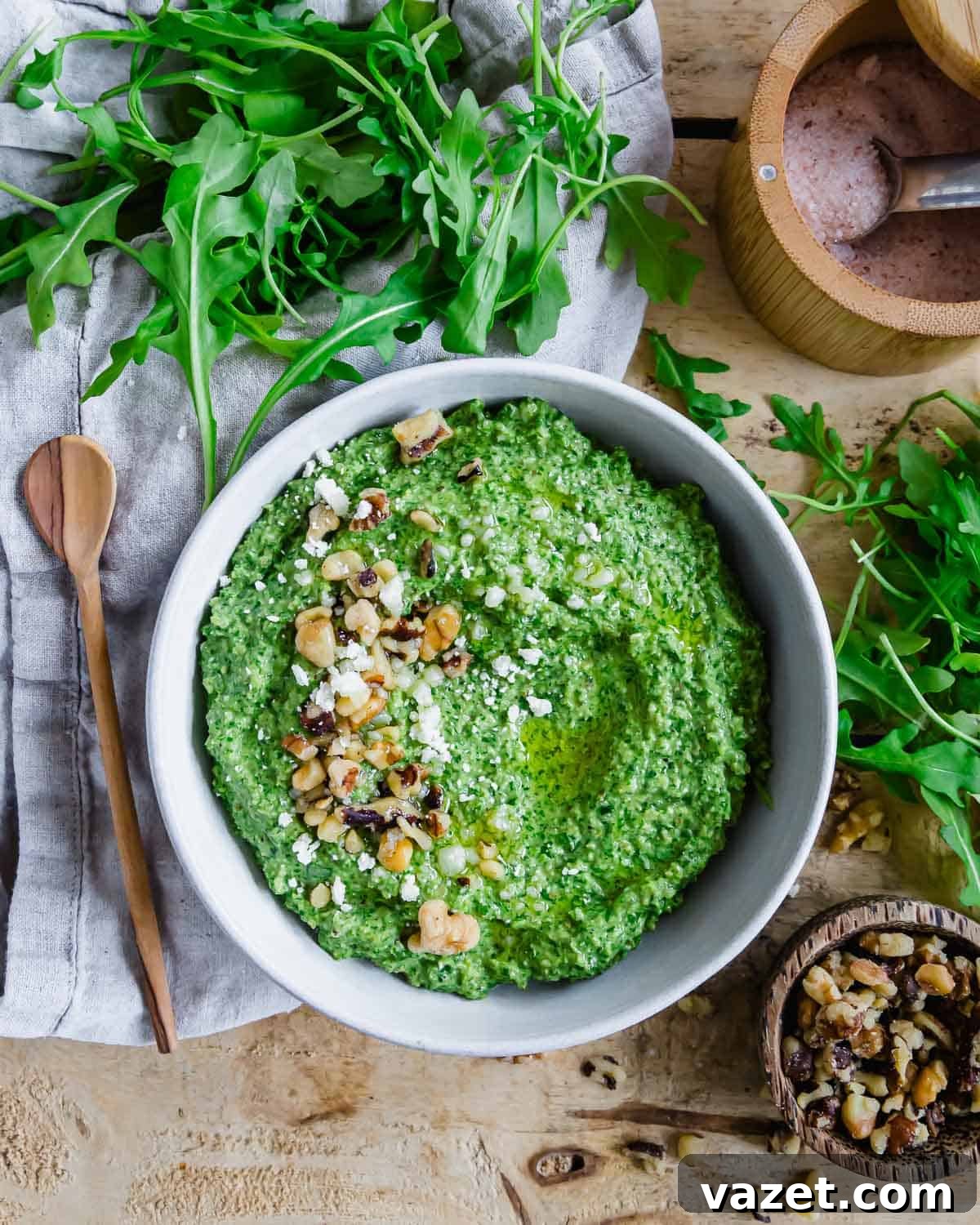
Crafting Your Arugula Pesto: A Step-by-Step Guide
While pesto’s origins lie in the traditional mortar and pestle method, a process that requires considerable effort and time, most modern kitchens benefit greatly from the convenience of a food processor. This method not only saves time but also allows for a smoother, more uniform pesto consistency, which we generally prefer over the chunkier texture often produced by hand-grinding. Think of it as creating a velvety sauce rather than a rustic salsa.
Step-by-Step Instructions:
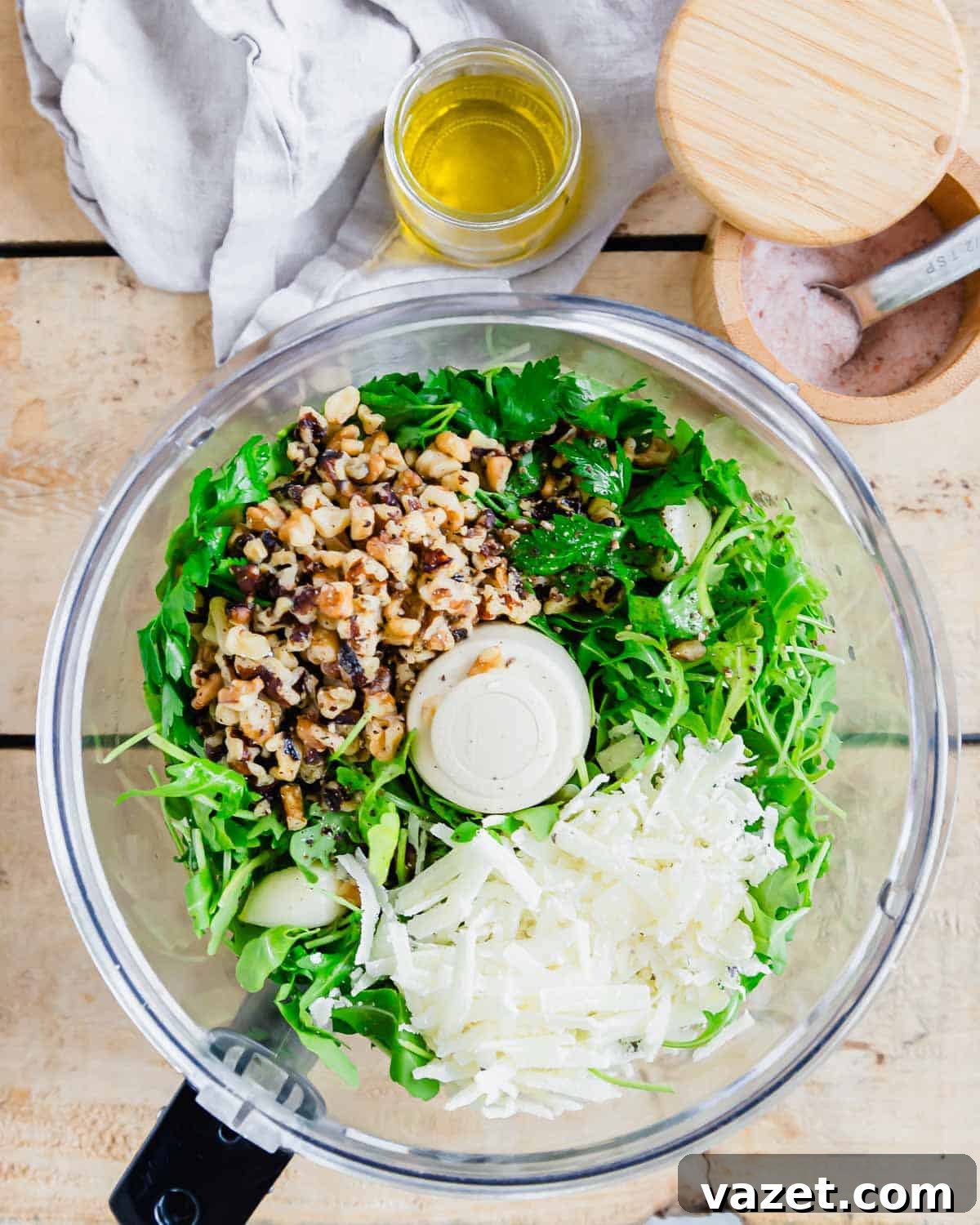
- Combine Initial Ingredients: Begin by adding all the ingredients – fresh arugula, parsley (if using), walnuts, grated Parmesan cheese, garlic clove, lemon juice, salt, and black pepper – into the bowl of your food processor. Ensure the ingredients are well-packed but not overly compressed.
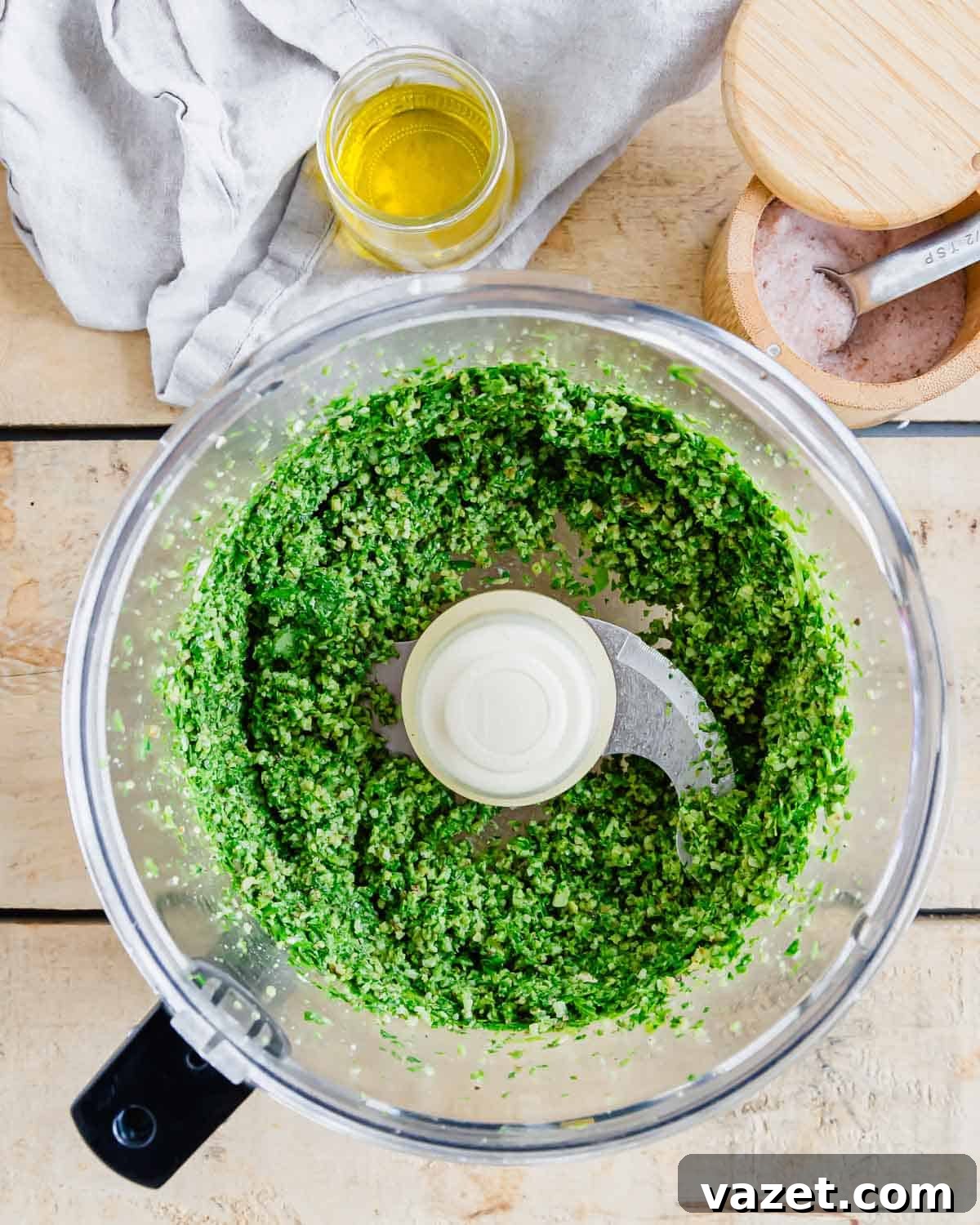
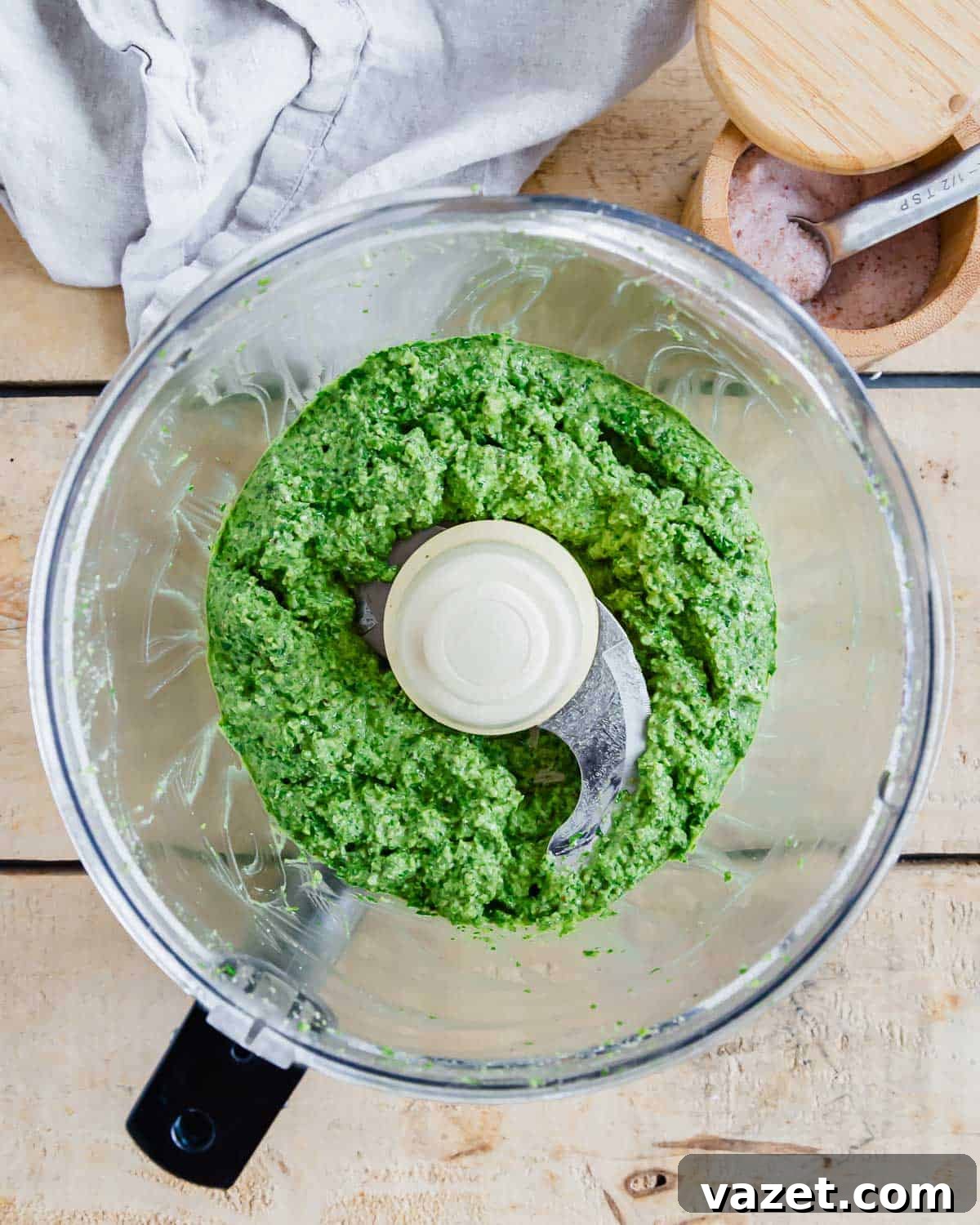
- Pulse to Chop: Secure the lid on your food processor and pulse the mixture in short bursts. This initial pulsing action will finely chop the ingredients. As you pulse, stop the processor a few times and use a rubber spatula to scrape down any ingredients that have clung to the sides of the bowl. This ensures everything is evenly processed. Continue until the mixture has a finely chopped, almost crumbly texture.
- Slowly Incorporate Olive Oil: With the food processor running continuously on a low setting, slowly and steadily drizzle in the extra virgin olive oil through the feed tube. The key here is a slow, gradual addition. As the olive oil emulsifies with the other ingredients, the pesto will begin to transform, becoming beautifully smooth, creamy, and vibrant green.
- Achieve Desired Consistency: Continue processing until your pesto reaches your preferred smoothness and silkiness. If you find the pesto is too thick, you can add a little more olive oil, a tablespoon at a time, until you achieve the ideal consistency.
- Taste and Adjust: Once your pesto is beautifully smooth, transfer it to a clean bowl. Now is the time to taste and adjust the seasoning. You might find it needs a touch more salt, a squeeze of lemon for extra brightness, or another grind of black pepper. Remember, the flavors will meld and deepen slightly as it rests.
My Pro Tip for Lightening Pesto
Smart Pesto Thinning Trick
For a wallet-friendly and waist-conscious alternative, consider thinning your pesto with a tablespoon or two of water instead of additional olive oil. This helps achieve the desired consistency without adding extra fat or cost, making your pesto a little lighter.
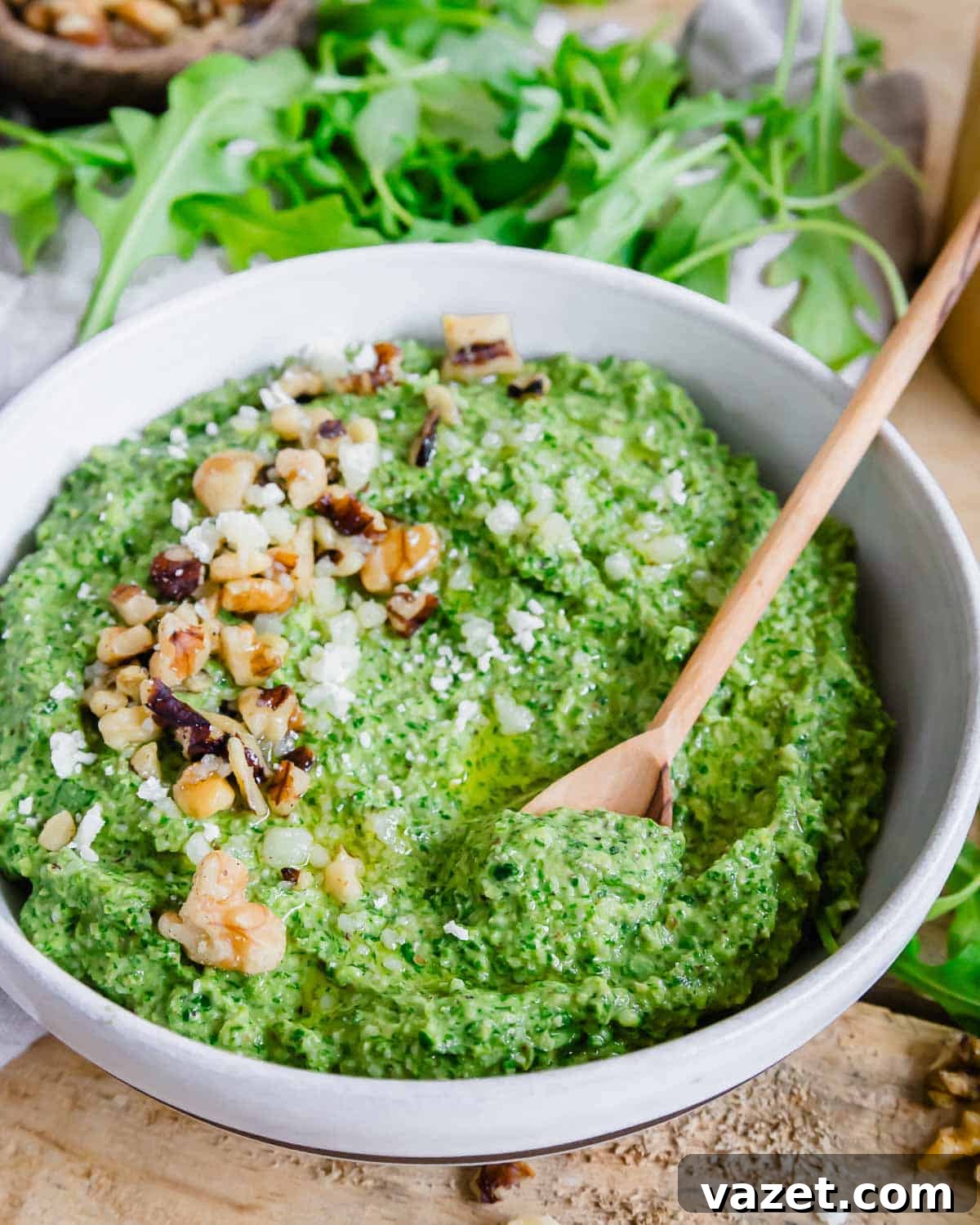
Delicious Ways to Enjoy Your Arugula Pesto
The culinary possibilities with this vibrant arugula pesto are truly endless. While tossing it with fresh pasta remains a beloved classic – and for good reason, as it always delivers an easy and satisfying meal – we encourage you to explore its incredible versatility and get creative in the kitchen. Here are numerous delightful ways to incorporate this flavorful sauce into your meals:
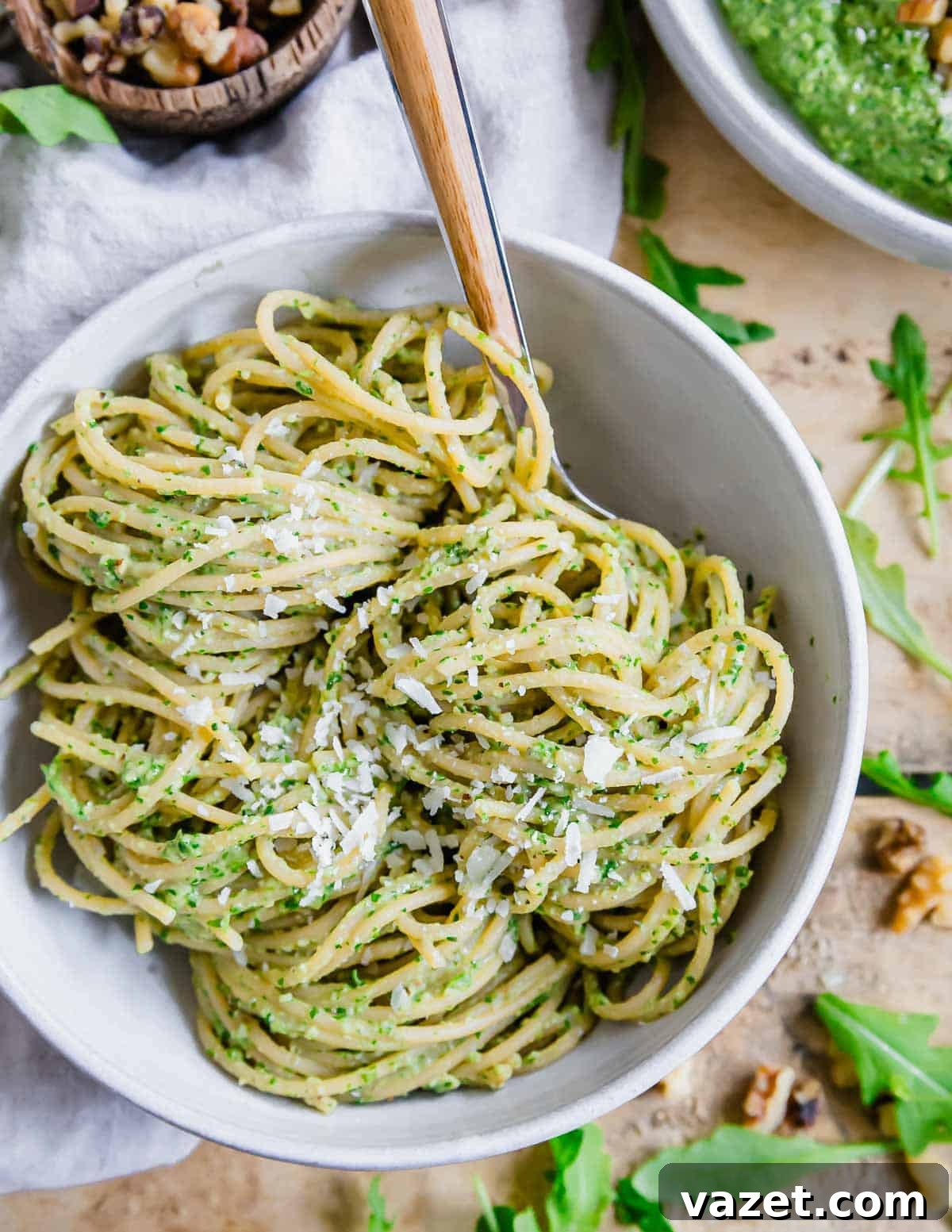
- Pasta Perfection: The most iconic use! Simply toss your freshly cooked pasta with a generous spoonful of pesto, a splash of pasta water, and maybe some cherry tomatoes for a quick, flavorful dinner.
- Gourmet Crostini Appetizer: Spread a thin layer of pesto onto toasted baguette slices and top with fresh mozzarella, sun-dried tomatoes, or roasted red peppers for an elegant crostini appetizer.
- Elevated Roasted Potatoes: Transform a humble side dish into something extraordinary. Toss roasted or boiled potatoes with arugula pesto for an easy and incredibly flavorful side dish. Try our recipe for roasted pesto potatoes.
- Flavorful Casseroles: Stir pesto into your favorite casseroles or bakes, like a chicken and rice bake or a vegetable gratin, to infuse rich, herbaceous flavor without much additional effort. Consider a meaty pesto quinoa bake for a hearty meal.
- Sandwich & Wrap Enhancer: Ditch the mayonnaise! Spread pesto on sandwiches, wraps, or paninis for a burst of fresh flavor. It’s fantastic with turkey, chicken, or even in a chickpea pesto sandwich.
- Versatile Vegetable Pairing: It pairs beautifully with virtually any roasted vegetable. Drizzle it over asparagus, broccoli, zucchini, bell peppers, or even air fryer spaghetti squash for an instant flavor upgrade.
- Grilled Meat & Fish Accompaniment: Serve the arugula pesto as a fresh, zesty sauce alongside grilled chicken, steak, pork tenderloin, or any type of fish (salmon, cod, mahi-mahi). Its bright flavors cut through the richness of the proteins.
- Soup & Stew Swirl: For a delightful touch of freshness and depth, dollop a spoonful of pesto into a bowl of hot minestrone, lentil soup, or a hearty stew just before serving.
- Quick Pizza Base: Move beyond tomato sauce and use pesto as a flavorful base for homemade pizzas. Top with your favorite cheese and vegetables for a delicious pesto pizza.
- Salad Dressing Alternative: Whisk a little pesto with extra olive oil, a touch more lemon juice, and a splash of water to create a vibrant dressing for green salads, grain bowls, or even potato salad.
- Egg Enhancer: Stir a teaspoon into scrambled eggs, an omelette, or spread on toast with fried eggs for a fantastic breakfast boost.
- Marinade Magic: Use pesto as a marinade for chicken, shrimp, or firm tofu before grilling or baking to infuse them with incredible flavor.
Tips for Reducing Bitterness in Arugula Pesto
While the peppery bite of arugula is its defining characteristic, some may find the pesto occasionally leans towards an overly bitter profile. If you encounter this, there are several simple tricks to balance the flavors and achieve a more mellow, enjoyable sauce:
- A Touch of Sweetness: One of the quickest and most effective ways to counteract bitterness is to introduce a hint of natural sweetness. A small drizzle of honey or a pinch of sugar, added to taste, can work wonders in rounding out the flavors. Start with a quarter teaspoon and adjust incrementally.
- The Olive Oil Factor: The most common culprit for an overly bitter pesto, especially one made with fresh greens, is the quality and freshness of your olive oil. If your extra virgin olive oil has started to turn rancid or is simply of poor quality, its bitter notes will be amplified in a raw sauce like pesto. Always opt for a high-quality, cold-pressed, single-source extra virgin olive oil for the best results. Good olive oil should taste fruity and slightly peppery, not acrid or overwhelmingly bitter.
- Lemon Juice for Brightness: Ensure you’re using fresh lemon juice. Its acidity helps to brighten the flavors and can often mask or balance out any unwanted bitterness. Don’t be shy to add a little extra squeeze if needed.
- Blanching the Arugula: For a significantly milder pesto, you can briefly blanch the arugula before processing. Submerge the arugula in boiling water for about 10-15 seconds, then immediately plunge it into an ice bath to stop the cooking. Squeeze out excess water before adding it to the food processor. This process can reduce some of the bitterness, though it may also slightly diminish the vibrant green color.
- Mixing with Milder Greens: If you find pure arugula pesto consistently too intense, consider mixing it with a portion of milder greens. Spinach, fresh basil (if you have it!), or even a small amount of baby kale can help temper the peppery flavor while still retaining the unique character of the arugula.
- Adjust Garlic: While our recipe calls for just one clove, if you are particularly sensitive to bitterness, or if your garlic is especially potent, you might consider using even less or blanching the garlic clove briefly before adding it.
Explore More Pesto Creations
If you’ve fallen in love with this unique arugula pesto, we invite you to delve deeper into the world of creative pesto recipes. Our collection offers a variety of vibrant sauces that defy the traditional basil-only approach, promising exciting new flavors for every season:
- Ramp Pesto: A highly anticipated seasonal delight! This exceptional recipe is perfect for the short window when fresh ramps are available, offering a wild garlic flavor that’s truly distinct.
- Radish Greens Pesto: A brilliant way to minimize food waste! Utilize the often-discarded green tops of radishes to create a peppery pesto that shares a similar vibrant kick to our arugula version.
- Garlic Scape Pesto: Discover a creamy, indulgent pesto that ingeniously tames the intense flavor of fresh garlic scapes with the luxurious addition of ricotta cheese.
- Trapanese Pesto: A departure from the usual, this unique pesto falls somewhere delightfully between a rich vodka sauce, a vibrant roasted red pepper dip, and a classic tomato pesto. It’s a different but undeniably delicious experience.
Arugula Pesto
Gina Matsoukas
8 servings
10 mins
10 mins
Print Recipe
Ingredients
- 4 cups baby arugula, packed
- 1/2 cup fresh parsley, packed (optional, for brightness)
- 1/2 cup walnuts
- 1/2 cup grated Parmesan cheese, or Pecorino Romano
- 1 clove garlic (use roasted garlic for a milder flavor)
- 1/2 lemon, juiced
- 1/2 teaspoon salt
- 1/8 teaspoon black pepper
- 1/4 cup extra virgin olive oil (plus more for desired consistency)
Instructions
-
Combine all the ingredients except the olive oil in a food processor. Pulse until finely chopped, scraping down the sides a few times as needed to ensure even processing.
-
With the food processor running on low, slowly pour in the extra virgin olive oil through the feed tube until the pesto becomes smooth and creamy.
-
Add more olive oil or water (as per our pro tip) as needed to reach your desired consistency. Taste and adjust seasoning if necessary.
-
Transfer the finished pesto to a bowl and use immediately or store for later.
Notes
—For longer storage, freeze the pesto in ice cube trays. Once frozen solid, transfer the pesto cubes to a freezer-safe bag or container, where they will keep well for up to 6 months. Thaw as needed for quick meals.
Nutrition
Calories: 140kcal
Carbohydrates: 3g
Protein: 3g
Fat: 13g
Saturated Fat: 2g
Polyunsaturated Fat: 4g
Monounsaturated Fat: 6g
Cholesterol: 5mg
Sodium: 260mg
Potassium: 113mg
Fiber: 1g
Sugar: 1g
Vitamin A: 610IU
Vitamin C: 10mg
Calcium: 86mg
Iron: 1mg
Nutrition information is automatically calculated and should only be used as an approximation. Individual results may vary based on exact ingredients and preparation methods.
Additional Info
Sauces, Dressings & Spreads
Italian
TRIED THIS RECIPE?
WE’D LOVE YOUR FEEDBACK! COMMENT + RATE BELOW!