
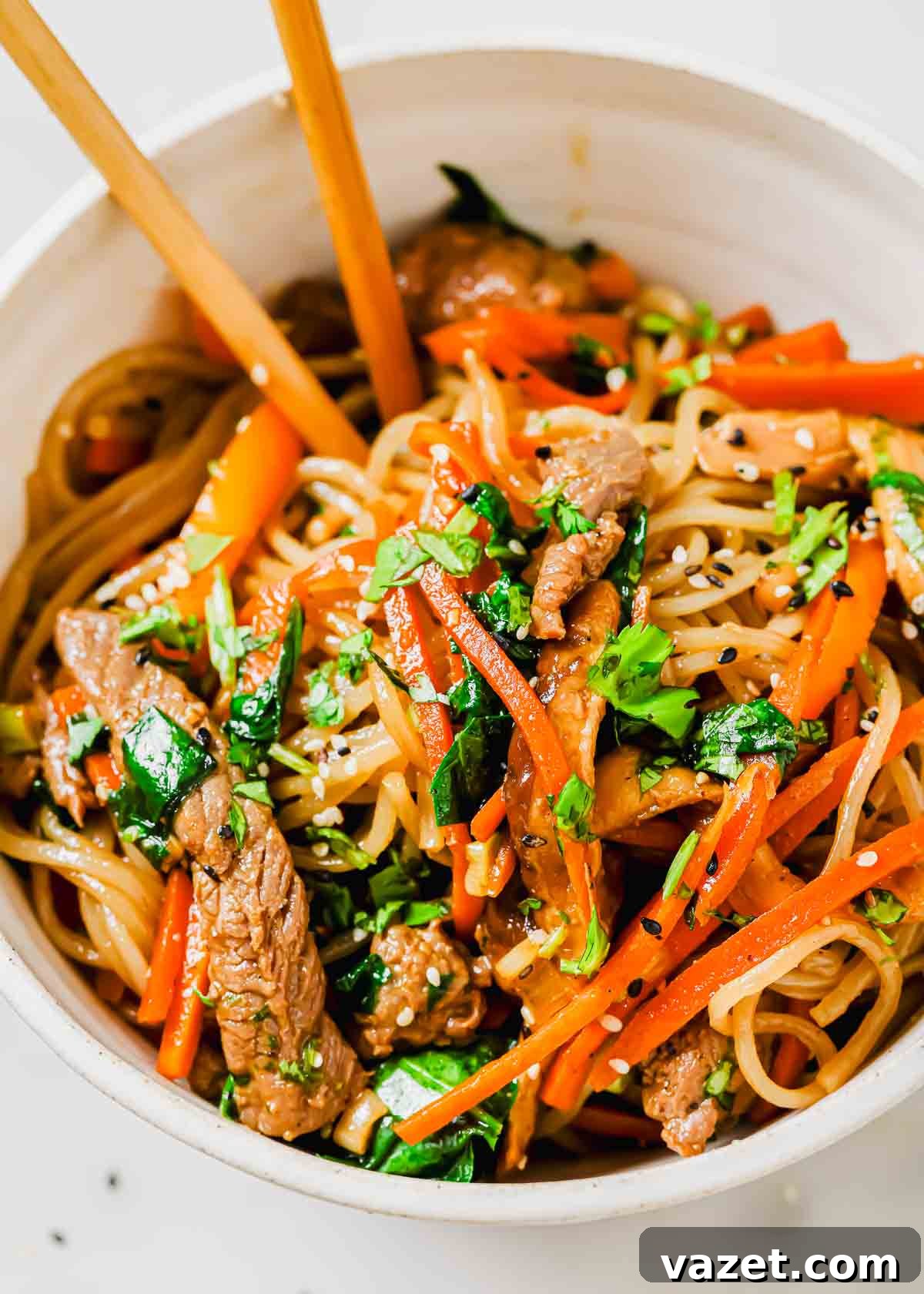
Welcome to the ultimate guide for creating exquisite Korean Sweet Potato Glass Noodles, widely known as Japchae. This beloved Korean noodle dish is a masterpiece of flavor and texture, surprisingly simple to prepare, and can be on your dinner table in just about 15 minutes! Perfect for a quick weeknight meal or a flavorful addition to any gathering, it combines naturally gluten-free sweet potato glass noodles with vibrant stir-fried vegetables, tender strips of beef, and a captivating sweet and savory marinade sauce that will leave you craving more.
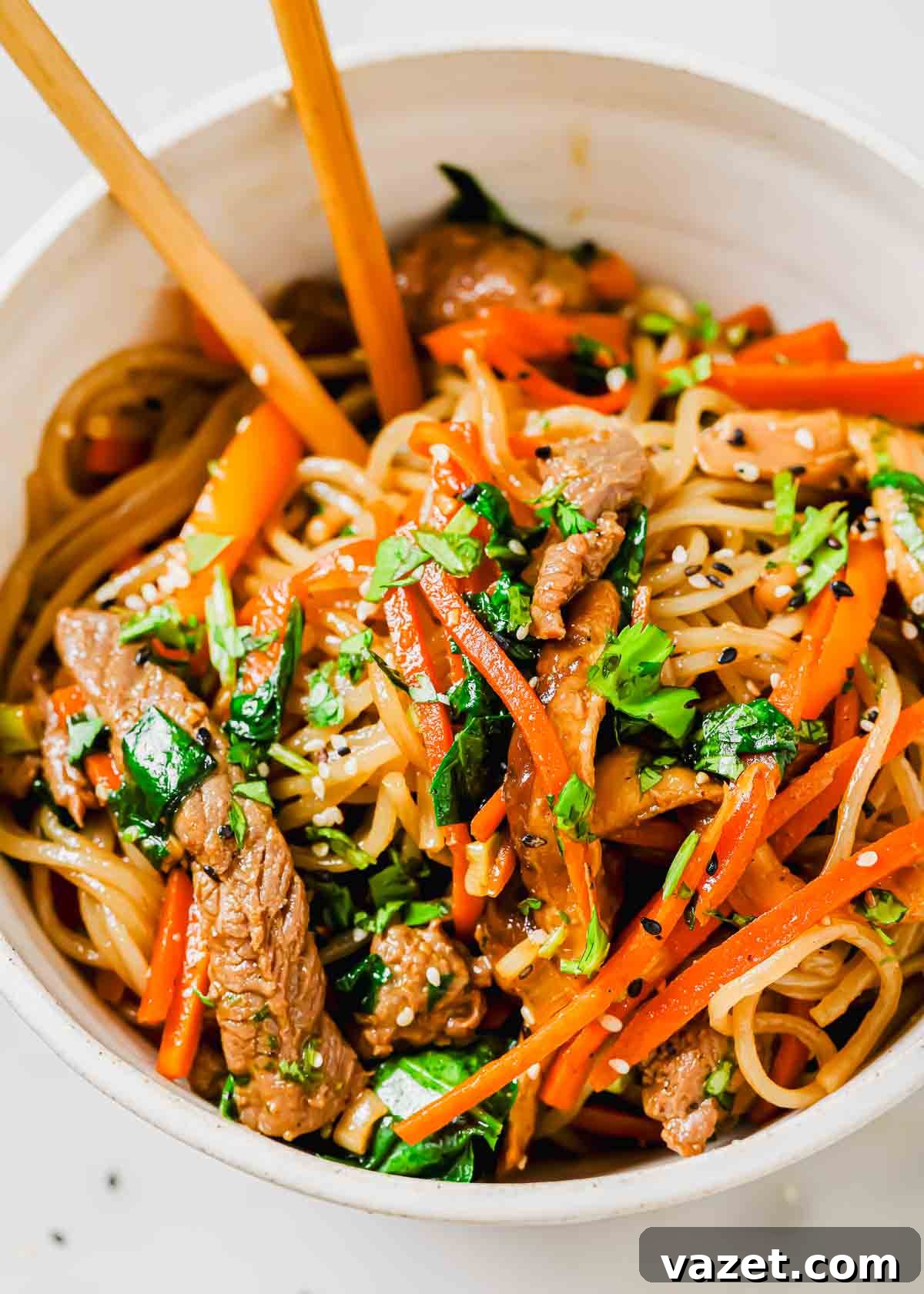
Japchae (잡채), meaning “mixed vegetables,” is a traditional and highly popular Korean dish that has graced tables for centuries. While its name suggests a vegetable-centric origin, it has evolved to prominently feature transparent, springy sweet potato glass noodles (dangmyeon) alongside a delightful medley of ingredients. Unlike many noodle dishes that rely on wheat-based pasta, Japchae stands out with its use of these unique noodles, celebrated for their chewy texture and their ability to absorb flavors beautifully. Tossed with colorful, crisp-tender vegetables and marinated beef, it offers a harmonious blend of tastes and a satisfying culinary experience. Often described as the Korean answer to a traditional Chinese chow mein, Japchae distinguishes itself with its signature sweet potato noodles and distinct marinade.
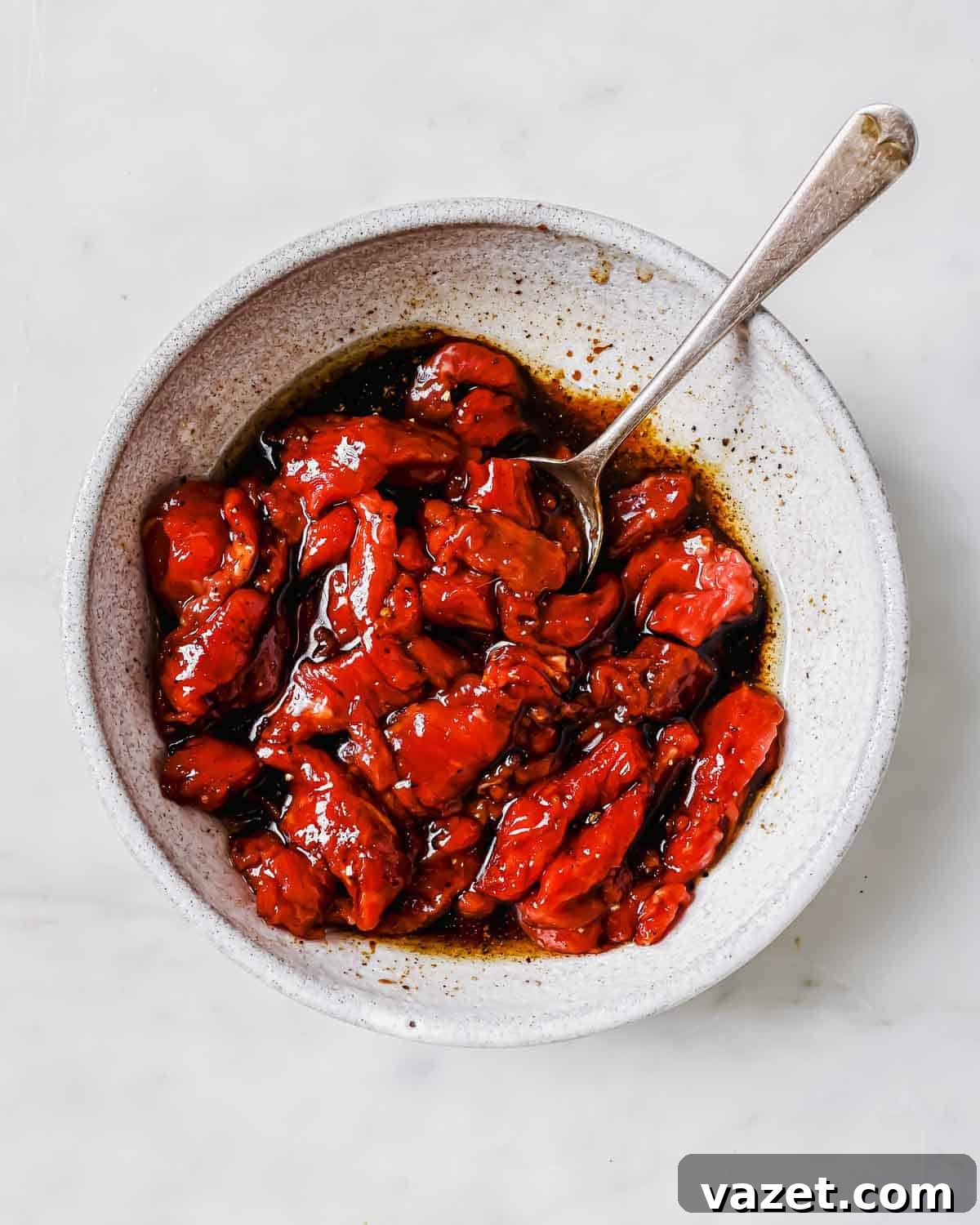
The secret to truly tender and flavorful beef in this dish lies in its simple yet effective sweet and savory soy-based marinade. By allowing the beef strips to soak, even for a short while, they become incredibly tender and infused with rich umami notes that perfectly complement the other ingredients. For maximum flavor, you can even prepare the marinade and beef the night before, making dinner prep a breeze the next day. One of the many joys of home cooking is the flexibility it offers, and this Korean sweet potato glass noodle recipe is no exception. Feel free to adapt it with easy ingredient swaps or additions to perfectly suit your dietary preferences or what you have on hand.
For those navigating a gluten-free diet, this dish is a true culinary gem. Sweet potato glass noodles are inherently gluten-free, much like the rice noodles commonly found in Vietnamese pho or various Asian stir-fries. This makes Japchae an ideal choice for individuals with gluten sensitivities or anyone simply looking to explore diverse and naturally gluten-free alternatives to traditional pasta or wheat noodles. It’s a testament to how delicious and satisfying gluten-free eating can be without compromising on flavor or authenticity.
If you’re eager to explore more delightful noodle creations, consider trying this spicy udon noodle stir fry for a different texture and heat profile. Alternatively, you can add a new dimension to this ground beef stir fry or our popular pork and cabbage stir fry recipe by incorporating rice noodles, adding a lovely chewiness to these classic dishes.
Why You’ll Fall in Love with This Japchae Recipe
This Korean sweet potato glass noodle recipe isn’t just another dish; it’s an experience waiting to happen. Here’s why it’s destined to become a staple in your kitchen:
- Effortlessly Gluten-Free: The star of this dish, sweet potato glass noodles, are naturally gluten-free. This makes Japchae a fantastic and flavorful option for individuals with celiac disease, gluten sensitivities, or those simply seeking to diversify their diet with wholesome, alternative noodle varieties. It’s a delicious way to enjoy authentic Korean cuisine without compromise.
- Unbelievably Quick & Easy: Life is busy, and we all need delicious meals that don’t monopolize our time. This Korean dish is designed for speed and convenience, requiring a mere 15 minutes of active cooking time. From prepping the ingredients to tossing everything together in a savory sauce, the entire process is streamlined for efficiency, making it perfect for weeknight dinners.
- Even Better as Leftovers: Unlike many noodle dishes that can become soggy or lose their appeal, Japchae truly shines the day after. The sweet potato noodles, known for their incredible absorbency, continue to soak up the rich, sweet, and savory marinade sauce, deepening their flavor profile and becoming even more delicious. This makes it an ideal make-ahead meal for meal prepping or a delightful option to reheat for lunch or dinner.
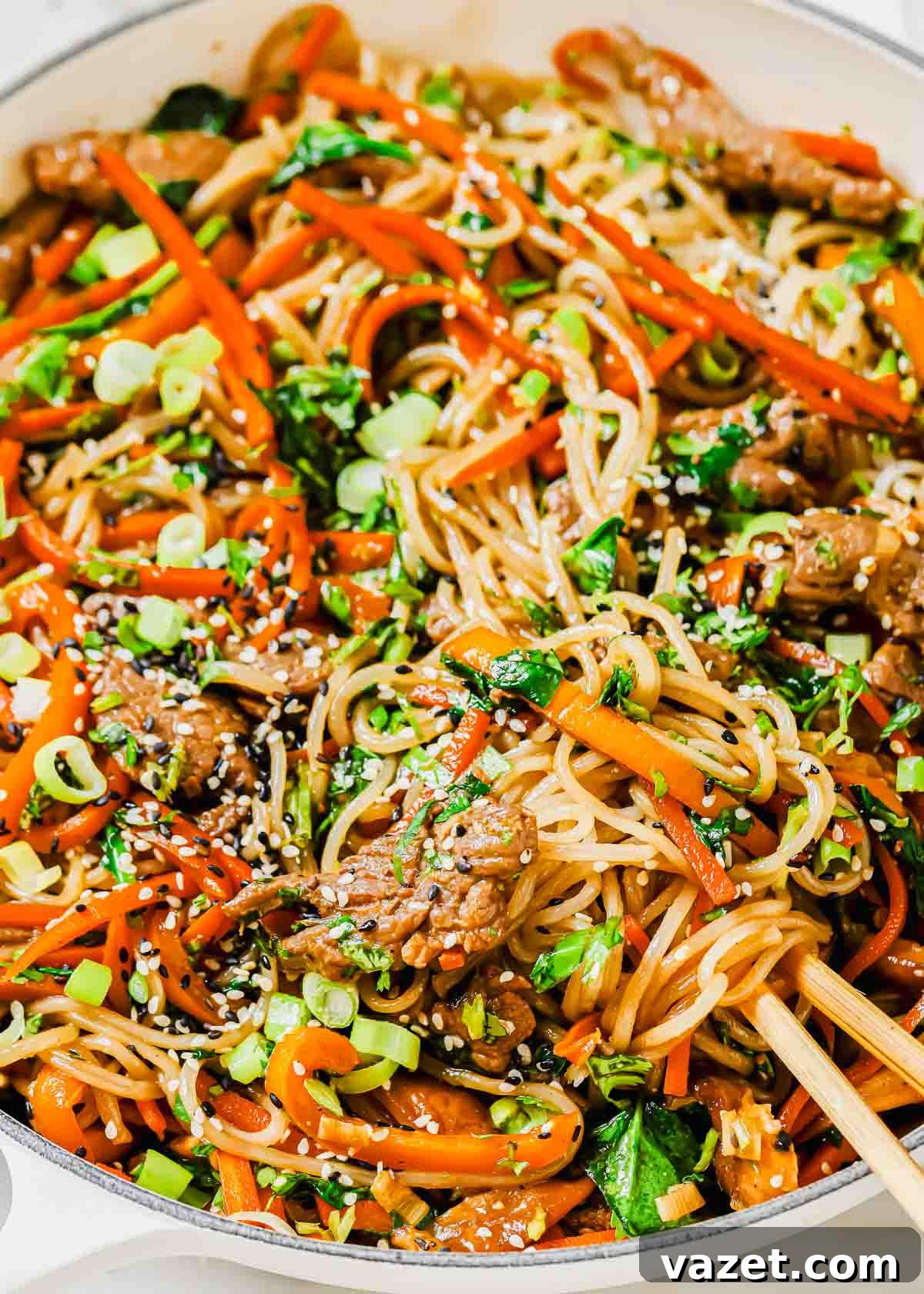
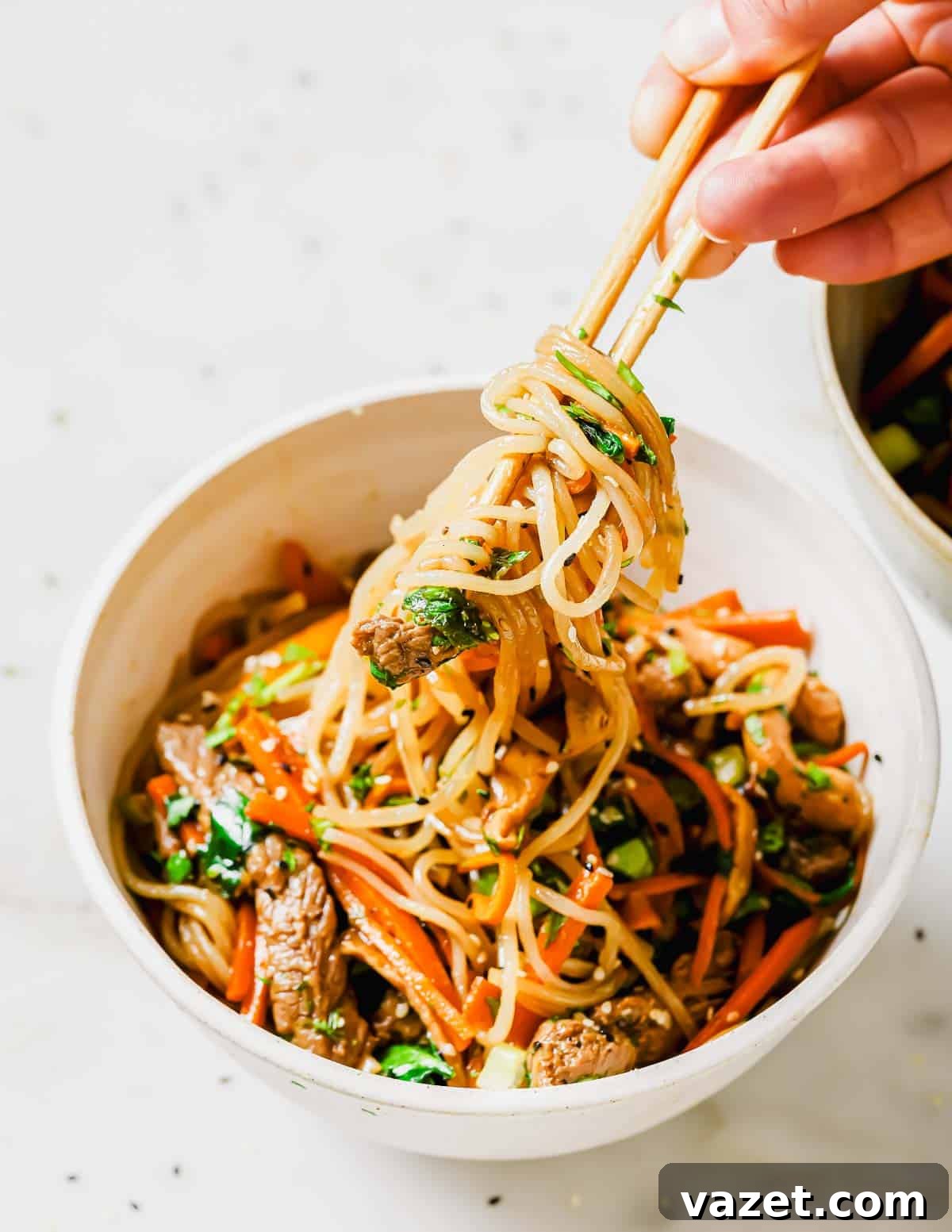
- A Symphony of Flavors and Textures: Every bite of this Japchae offers a delightful contrast. You’ll experience the satisfying chewiness of the glass noodles, the tender bite of marinated beef, and the crisp freshness of perfectly stir-fried vegetables, all coated in a balanced sauce that hits all the right notes of sweet, savory, and umami.
- Visually Stunning: With its vibrant medley of orange bell peppers, green spinach, golden carrots, and dark, savory beef, this dish is as appealing to the eyes as it is to the palate. It’s a dish that effortlessly brightens any table, making it suitable for both casual family meals and entertaining guests.
- Highly Customizable: Whether you’re a devout meat-eater, a vegetarian, or simply looking to use up leftover vegetables, Japchae offers endless possibilities for customization. It’s a forgiving recipe that encourages creativity, allowing you to tailor it to your exact preferences and dietary needs.
Essential Ingredients for Perfect Sweet Potato Glass Noodles
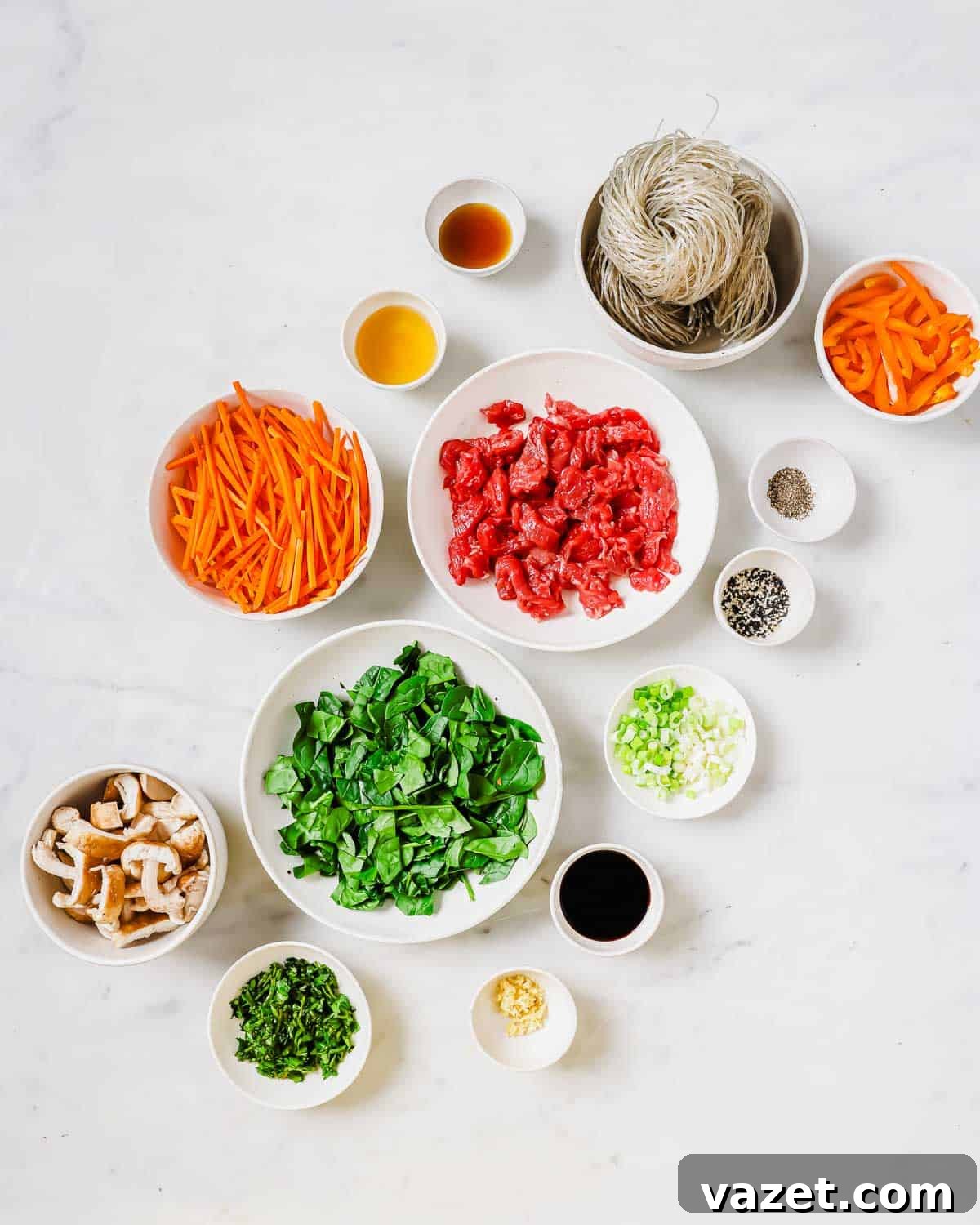
Crafting authentic and delicious Korean sweet potato glass noodles starts with selecting the right ingredients. Here’s a detailed look at what you’ll need to bring this dish to life:
- For the Irresistible Marinade: The heart of Japchae’s savory-sweet flavor profile comes from its marinade. This concoction typically includes:
- Toasted Sesame Oil: Essential for its deep, nutty aroma and flavor. Make sure it’s toasted for that characteristic richness.
- Tamari Soy Sauce: A gluten-free alternative to traditional soy sauce, ensuring the dish remains suitable for all. It provides the crucial umami and savory depth.
- Maple Syrup: Adds a natural sweetness that balances the savory notes. You can easily substitute this with brown sugar or a touch of honey if preferred.
- Cracked Black Pepper: A hint of fresh pepper provides a subtle warmth and aroma, enhancing the overall flavor complexity.
- Additional Sesame Oil: Beyond the marinade, a small drizzle of sesame oil is crucial when cooking the noodles. It helps prevent them from sticking together and imparts an extra layer of nutty fragrance, which is characteristic of Korean cooking.
- Sweet Potato Glass Noodles (Dangmyeon): These are the soul of Japchae. Made from sweet potato starch, they are translucent, incredibly chewy, and absorb flavors exceptionally well. Look for them in the Asian specialty section of most large grocery stores, or visit your local Asian market for a wider selection. They are often sold in dried bundles.
- High-Quality Beef: Japchae is traditionally made with thinly sliced beef strips. Cuts like sirloin, flank steak, or ribeye work wonderfully here, as they cook quickly and remain tender when sliced against the grain. Aim for strips about 1/4 inch thick to ensure even cooking and optimal texture.
- A Rainbow of Fresh Vegetables: This stir-fry thrives on a variety of colors and textures. Our recipe calls for:
- Orange Bell Pepper: Provides a sweet crunch and a beautiful pop of color. Red or yellow bell peppers are excellent alternatives and can be used interchangeably or combined.
- Carrots: Julienne-cut carrots add a vibrant color, natural sweetness, and a satisfying crispness.
- Shiitake Mushrooms: These mushrooms contribute a deep, earthy umami flavor and a meaty texture. If using dried shiitake, remember to rehydrate them in warm water until plump and tender before slicing and cooking.
- Green Onions (Scallions): Both the white and green parts are used, providing a mild oniony bite and freshness. The white parts are typically stir-fried, while the green parts are often used as a garnish.
- Fresh Spinach: Adds a healthy boost of greens and wilts quickly into the dish, providing a tender element.
- Optional: Don’t hesitate to experiment with other vegetables like broccoli florets, zucchini, green beans, sugar snap peas, or napa cabbage for added variety.
- Fresh Garlic: Minced garlic is indispensable for its pungent aroma and flavor. While pre-minced garlic can be used in a pinch, fresh garlic cloves minced just before cooking will always yield the best, most aromatic results.
- Fresh Cilantro: A garnish of freshly minced cilantro adds a burst of herbaceous freshness and a lovely visual appeal, cutting through the richness of the dish. If cilantro isn’t to your taste, a sprinkle of fresh parsley can work as an alternative.
- Toasted Sesame Seeds: These tiny seeds are not just for decoration; they provide a delightful nutty flavor and a delicate crunch that elevates the overall texture. You can use white, black, or a mix of both for an added visual contrast.
Crafting Your Korean Sweet Potato Glass Noodles: Step-by-Step
Follow these simple steps to create a show-stopping Japchae in your own kitchen:
- Marinate the Beef: In a medium mixing bowl, whisk together all the marinade ingredients (toasted sesame oil, tamari, maple syrup, and cracked black pepper). Add the thinly sliced beef strips to the marinade, ensuring they are thoroughly coated. Cover the bowl and place it in the refrigerator to marinate. While 15 minutes is sufficient for flavor, ideally, allow the beef to marinate overnight for the most tender and deeply flavored results. This step is crucial for the beef’s texture and taste.
- Prepare the Noodles: Bring a large pot of water to a rolling boil. To prevent the sweet potato glass noodles from sticking together, add a ¼ teaspoon of toasted sesame oil to the boiling water before adding the noodles. Carefully submerge the noodles and cook for 5-6 minutes, or until they are perfectly al dente – tender yet still delightfully chewy. Drain the cooked noodles thoroughly in a colander and set them aside. You can lightly toss them with an additional drizzle of sesame oil to keep them from clumping.
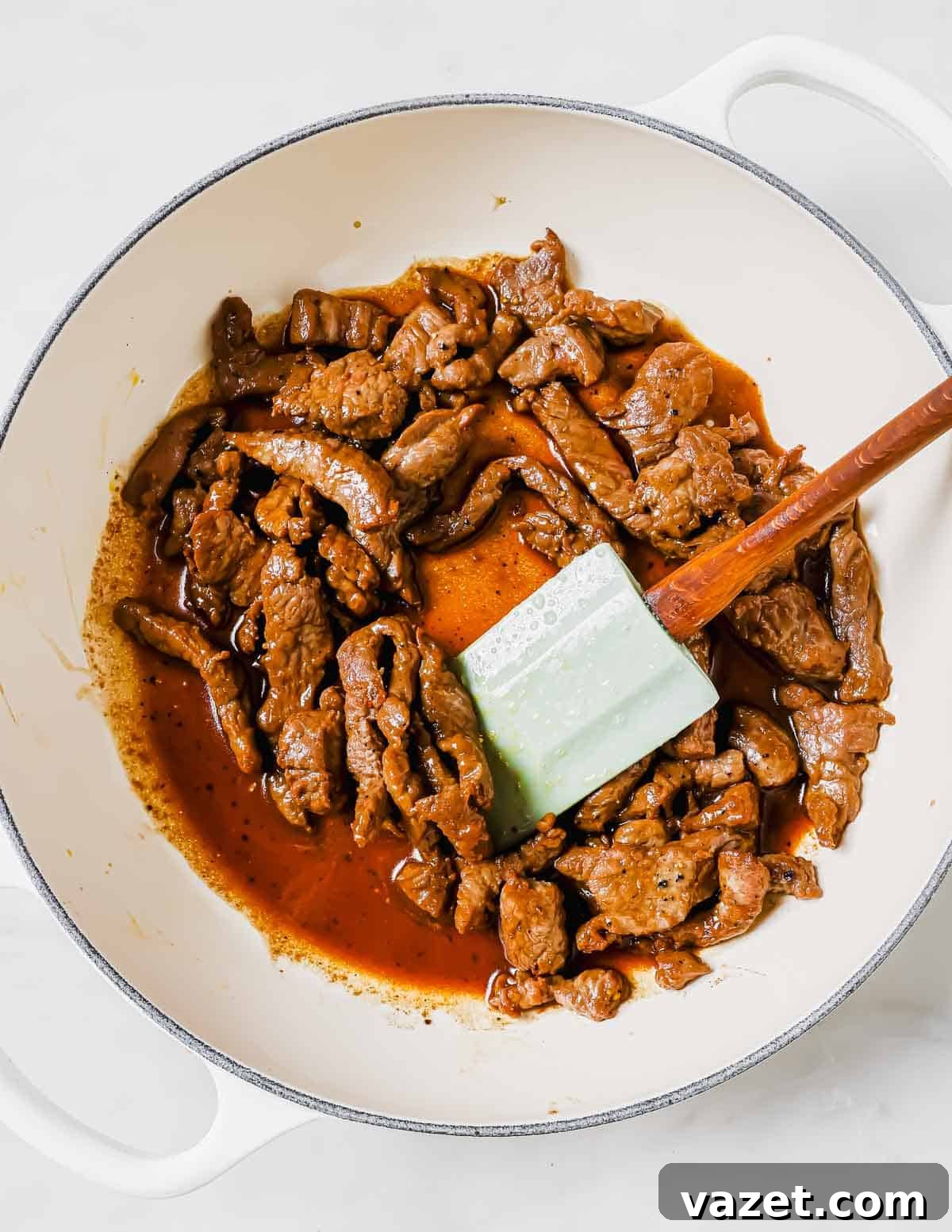
- Cook the Beef: Heat a non-stick skillet or a large frying pan over medium-high heat. Once hot, add the marinated beef strips along with half of the remaining marinade sauce. Sauté the beef for approximately 3 minutes, or until it is beautifully browned and cooked through. Remove the cooked beef from the skillet and transfer it to a large mixing bowl.
- Begin Assembling: Add the cooked sweet potato glass noodles to the large bowl with the beef. At this point, resist the urge to toss everything together just yet.
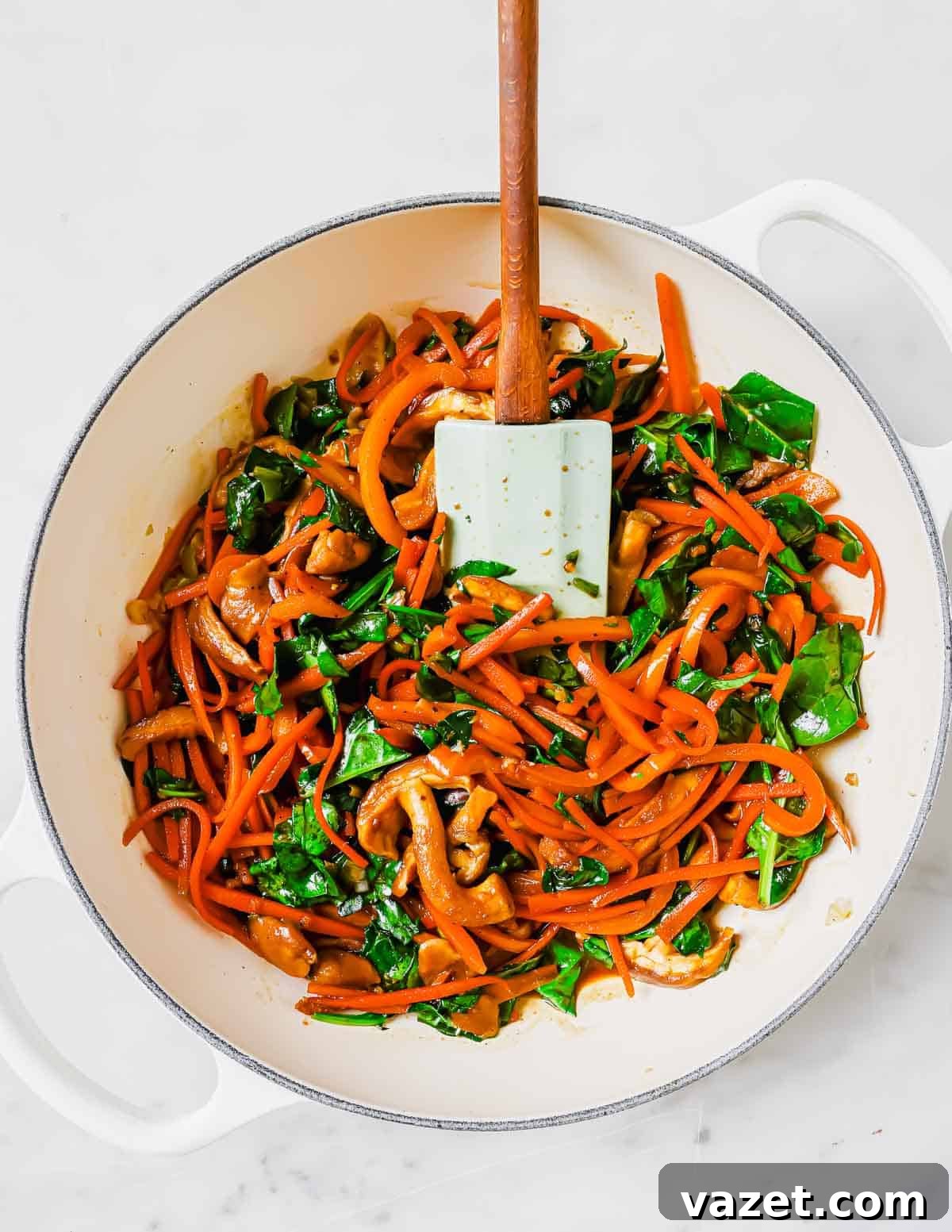
- Stir-Fry the Vegetables: Using the same skillet, add 1 tablespoon of toasted sesame oil and reduce the heat to medium. First, add the sliced bell peppers and julienned carrots to the pan. Sauté for 2 minutes, allowing them to soften slightly while retaining their vibrant color and crunch.
- Add Remaining Vegetables: Next, incorporate the sliced shiitake mushrooms, minced garlic, and the white parts of the green onions into the skillet. Cook for another 3 minutes, stirring occasionally. If the pan appears too dry or vegetables start to stick, add a small splash of water to deglaze the pan. Stir the remaining marinade into the vegetable mixture, then add the fresh spinach. Continue to cook for just 1-2 minutes, or until the spinach has wilted and the vegetables are tender-crisp.
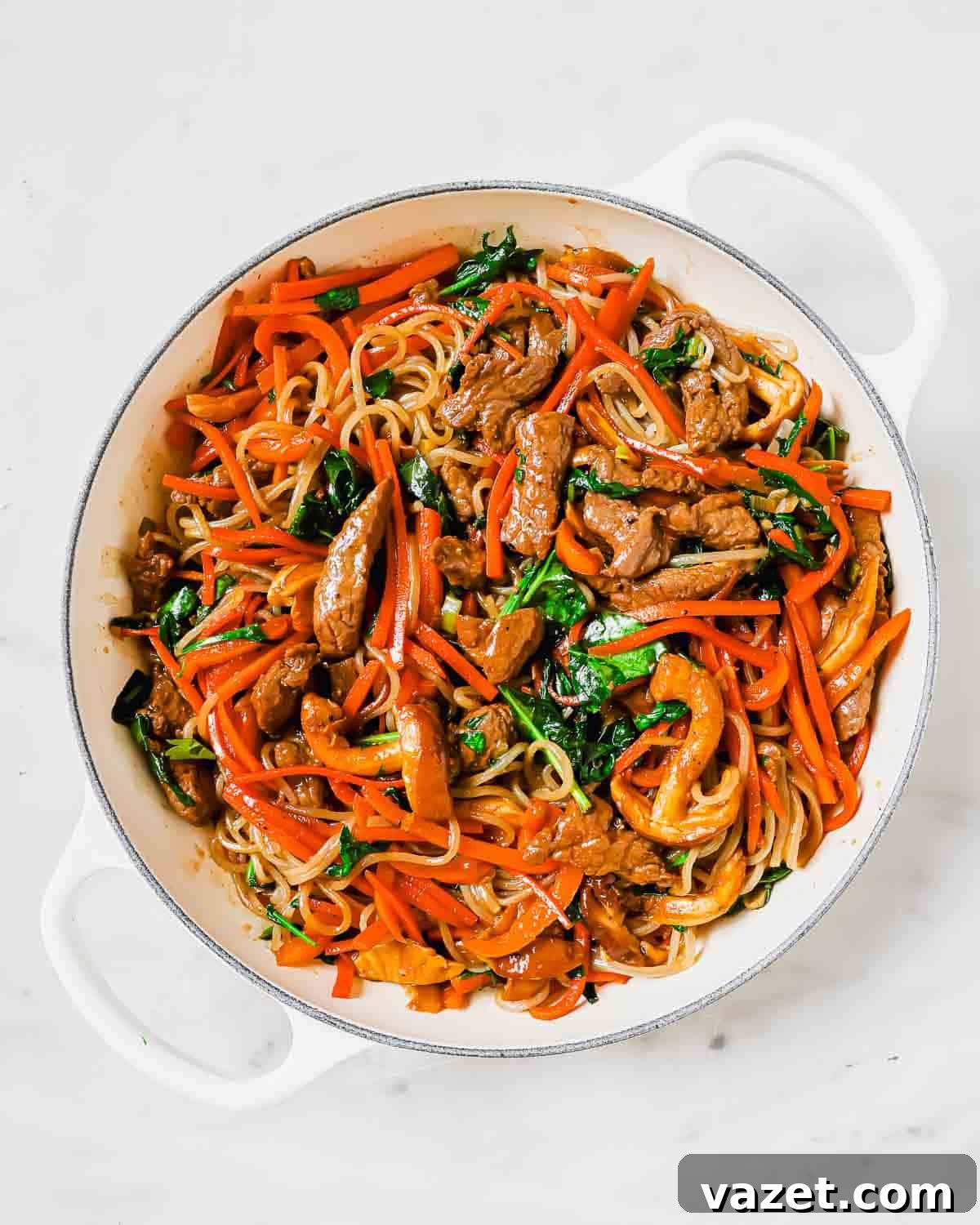
- Combine and Toss: Add all the freshly cooked vegetables from the skillet directly into the large bowl containing the noodles and beef. Using tongs, gently yet thoroughly toss all the ingredients together, ensuring the noodles, beef, and vegetables are evenly coated in the delicious sauce.
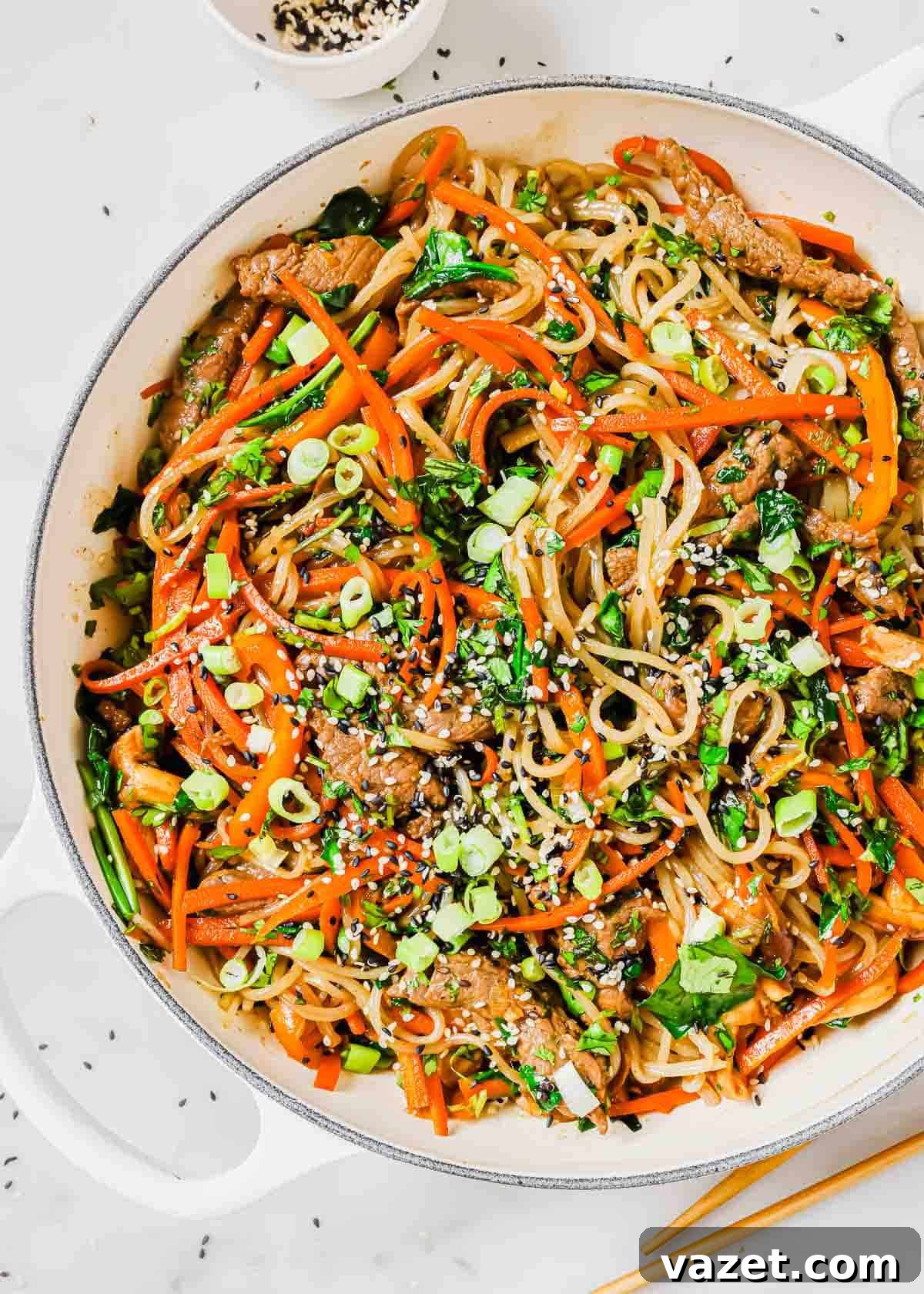
- Serve and Garnish: Plate your Korean sweet potato glass noodles hot. Garnish generously with freshly minced cilantro and a liberal sprinkling of toasted sesame seeds. Serve immediately and enjoy the complex, balanced flavors of this classic Korean dish!
My Pro Tips
Expert Recipe Tips for Perfect Japchae
- Marinating is Key: While the recipe suggests a minimum of 15 minutes, allowing the beef to marinate for several hours or even overnight in the refrigerator truly makes a difference. This process not only tenderizes the meat but also allows it to absorb the maximum amount of savory-sweet flavor, contributing significantly to the dish’s depth.
- Achieve Al Dente Noodles: Pay close attention to the cooking time for the sweet potato glass noodles. They should be cooked until just al dente, meaning they are tender but still have a pleasant chew. Overcooking can lead to mushy noodles, which will negatively impact the texture of the entire dish, especially since they will continue to absorb liquid and cook slightly when tossed with the hot vegetables and sauce.
- Staggered Vegetable Cooking for Optimal Texture: Vegetables have varying cooking times. To ensure each component retains its ideal texture – crisp-tender carrots and peppers, tender mushrooms, and perfectly wilted spinach – it’s crucial to add them in stages. Start with harder vegetables like carrots and bell peppers, then add mushrooms and aromatics, and finally, the quick-cooking spinach. Adding spinach too early will result in overcooked, soggy greens.
- Mise en Place is Your Friend: With a quick-cooking stir-fry like Japchae, having all your ingredients prepped, chopped, and measured before you start cooking (mise en place) is invaluable. This ensures a smooth cooking process and prevents anything from burning while you’re scrambling for the next ingredient.
- Don’t Overcrowd the Pan: When cooking the beef and then the vegetables, avoid overcrowding your skillet. Cooking in batches, if necessary, allows for better searing and stir-frying, preventing the ingredients from steaming and becoming watery. This ensures better flavor and texture development.
Creative Variations to Explore with Japchae
One of the best aspects of Japchae is its incredible versatility. Don’t be afraid to experiment and make it your own with these delicious variations:
- Vegetarian & Vegan Delight: To easily transform this into a vegetarian or vegan dish, simply omit the beef strips. Instead of marinating the beef, add all the marinade sauce ingredients to the skillet once the vegetables have cooked, just before adding the spinach. For added protein, consider incorporating pan-fried tofu, tempeh, or rehydrated textured vegetable protein (TVP). This variation also works perfectly if you intend to serve these sweet potato glass noodles as a flavorful side dish rather than a main course.
- Expand Your Vegetable Medley: The beauty of Japchae lies in its colorful vegetable assortment. Feel free to use a wider range of vegetables such as crisp broccoli florets, thinly sliced zucchini, tender green beans, sweet sugar snap peas, shredded napa cabbage, or even different colored bell peppers (red and yellow are excellent choices). Remember to adjust cooking times based on the hardness of the vegetables; harder vegetables will need a bit more time in the pan.
- Noodle Length Preferences: Traditional sweet potato glass noodles are typically quite long, which can sometimes be a bit challenging to eat with chopsticks. If you prefer shorter strands, you can easily cut the noodles down to your desired length after cooking, or look for pre-cut dangmyeon, which are often sold at around 12-16 inches in length, offering a more manageable eating experience.
- Alternate Protein Choices: While beef is traditional, this dish is wonderfully adaptable to other proteins. Thinly sliced pork, similar to what you might use in this ramen stir fry recipe, works beautifully. Chicken breast or thigh, cut into thin strips, is another fantastic option. For seafood lovers, shrimp can be quickly stir-fried and added. Adjust cooking times according to your chosen protein to ensure it’s cooked through but remains tender.
- Noodle Cooking Methods: Our recipe suggests boiling the noodles for 5-6 minutes until al dente. However, some traditional recipes and noodle brands recommend soaking the sweet potato glass noodles in hot water for about 15-20 minutes until tender. Both methods are effective; experiment to see which yields the texture you prefer. Boiling tends to give a slightly firmer chew, while soaking results in a softer noodle.
- Serve It Your Way: Hot or Cold: One of the charming characteristics of authentic Japchae is that it can be enjoyed both warm and at room temperature, or even chilled. Serving it cold makes it an excellent option for picnics, packed lunches, or as a refreshing side dish during warmer weather.
- Add a Spicy Kick: If you love a bit of heat, easily transform this dish into a spicy Japchae. Incorporate a teaspoon or two of Korean red pepper flakes (gochugaru) into the marinade sauce. For an extra fiery kick, you can also add a dollop of gochujang (Korean red pepper paste) to the sauce or serve with a side of sriracha.
Storage and Reheating Tips for Japchae
Japchae is an excellent dish for meal prepping or enjoying as leftovers, as its flavors tend to deepen over time. Here’s how to properly store and reheat your Korean sweet potato glass noodles:
- Storing Leftovers: Once your Japchae has completely cooled down to room temperature, transfer it to an airtight container. Store the container in the refrigerator for up to 2-3 days. While it can last a bit longer, the noodles’ texture is best within this timeframe. Ensure it’s fully cooled before refrigerating to prevent condensation and maintain quality.
- Reheating for Best Texture: The best way to reheat leftover Japchae is in a heated skillet or wok over medium heat. Add a tiny splash of sesame oil or even a tablespoon of water to the pan to help prevent the noodles and vegetables from sticking and to revive their moisture. Stir-fry gently until heated through. This method helps to retain the noodles’ chewy texture and the vegetables’ slight crispness.
- Microwave Option: While convenient, reheating Japchae in the microwave can sometimes alter the delicate texture of the glass noodles, making them a little softer than ideal. If using a microwave, reheat in short bursts, stirring in between, to ensure even heating without overcooking.
- Freezing is Not Recommended: Due to the delicate nature of sweet potato glass noodles and the moisture content of the vegetables, Japchae does not freeze well. Freezing and thawing can significantly change the noodles’ texture, often making them mushy, and the vegetables may become watery. It’s best enjoyed fresh or from the refrigerator within a few days.
More Korean Dishes to Savor
If you’ve enjoyed the delightful flavors of Japchae, you’ll love exploring other facets of Korean cuisine. Here are a few more irresistible dishes to add to your culinary repertoire:
Korean steak and noodle lettuce cups offer a delightfully interactive and fresh way to experience Korean-inspired flavors. Featuring sticky-sweet Korean-style steak combined with crisp vegetables and refreshing rice noodles, all served in crunchy lettuce cups, they are perfect for a light yet satisfying lunch or a fun dinner.
For a hearty and deeply flavorful main course, this gochujang chicken is an absolute must-try! This Korean-inspired chicken dinner can be prepared and ready for your family in just about 30 minutes. It boasts a takeout-style sticky, spicy, and sweet sauce that is utterly irresistible, especially when served over a bed of fluffy white rice.
Nothing quite captures the essence of a simple yet profoundly satisfying meal like this bulgogi kimchi rice plate. This classic dish features thinly sliced, soy-marinated beef (bulgogi) that’s perfectly cooked, topped with tangy kimchi, and served over a comforting platter of steamed rice, creating a harmonious balance of flavors and textures.
Korean Sweet Potato Glass Noodles
Gina Matsoukas
4 servings
5 mins
10 mins
15 mins
Print Recipe

Ingredients
For the marinade
- 2 tablespoon toasted sesame oil, divided
- 3 tablespoon tamari soy sauce
- 3 teaspoon maple syrup
- 1/3 teaspoon cracked black pepper
For the noodles
- 1 tablespoon sesame oil , plus a drizzle more to prevent the noodles from sticking
- 6 ounces sweet potato glass noodles
- 1 pound beef, thinly sliced
- 1 orange bell pepper, deseeded and cut into thin strips
- 1 medium carrot, julienned into thin strips
- 4 ounces shiitake mushrooms, sliced (rehydrate if dried)
- 3 garlic cloves, minced
- 3 green onions, thinly sliced, whites and green parts divided
- 2 cups spinach, roughly chopped
- 3 tablespoon fresh cilantro, minced, for garnish
- 1 tablespoon toasted sesame seeds, for garnish
Instructions
-
Add the marinade ingredients (toasted sesame oil, tamari soy sauce, maple syrup, and cracked black pepper) to a mixing bowl and stir to combine. Add the beef strips to the marinade, ensuring they are well-coated. Place the marinating beef in the fridge, covered, for at least 15 minutes, or ideally overnight for best flavor and tenderness.
-
Bring a large pan of water to a boil. Add 1/4 teaspoon of toasted sesame oil to the water to help prevent the noodles from sticking. Add the sweet potato glass noodles and cook for 5-6 minutes until al dente. Drain the noodles thoroughly and set aside.
-
Warm a non-stick skillet or a large frying pan over medium-high heat. Add the marinated beef strips with half of the reserved marinade. Sauté for about 3 minutes or until the beef is browned and cooked through. Transfer the cooked beef to a large mixing bowl.
-
Add the cooked sweet potato glass noodles to the large bowl with the beef.
-
Heat the remaining 1 tablespoon of toasted sesame oil in the same skillet over medium heat. Add the sliced bell peppers and julienned carrots and cook for 2 minutes, stirring occasionally.
-
Next, add the shiitake mushrooms, minced garlic, and the white part of the green onions. Cook for another 3 minutes, adding a splash of water if needed to deglaze the pan and prevent sticking. Stir through the remaining marinade and then add the fresh spinach. Cook for just 1-2 minutes more, or until the spinach has wilted.
-
Add all the cooked vegetables from the skillet to the bowl with the noodles and beef. Gently toss everything together until all ingredients are well combined and coated in the sauce.
-
Serve immediately, garnished with fresh cilantro and a generous sprinkling of toasted sesame seeds.
Notes
Nutrition
Serving: 1SERVING
Calories: 595kcal
Carbohydrates: 48g
Protein: 23g
Fat: 35g
Saturated Fat: 10g
Polyunsaturated Fat: 6g
Monounsaturated Fat: 14g
Trans Fat: 1g
Cholesterol: 81mg
Sodium: 859mg
Potassium: 673mg
Fiber: 3g
Sugar: 6g
Vitamin A: 4996IU
Vitamin C: 46mg
Calcium: 90mg
Iron: 4mg
Nutrition information is automatically calculated, so should only be used as an approximation.
Additional Info
Main Dishes
Korean
TRIED THIS RECIPE?
COMMENT + RATE BELOW!