
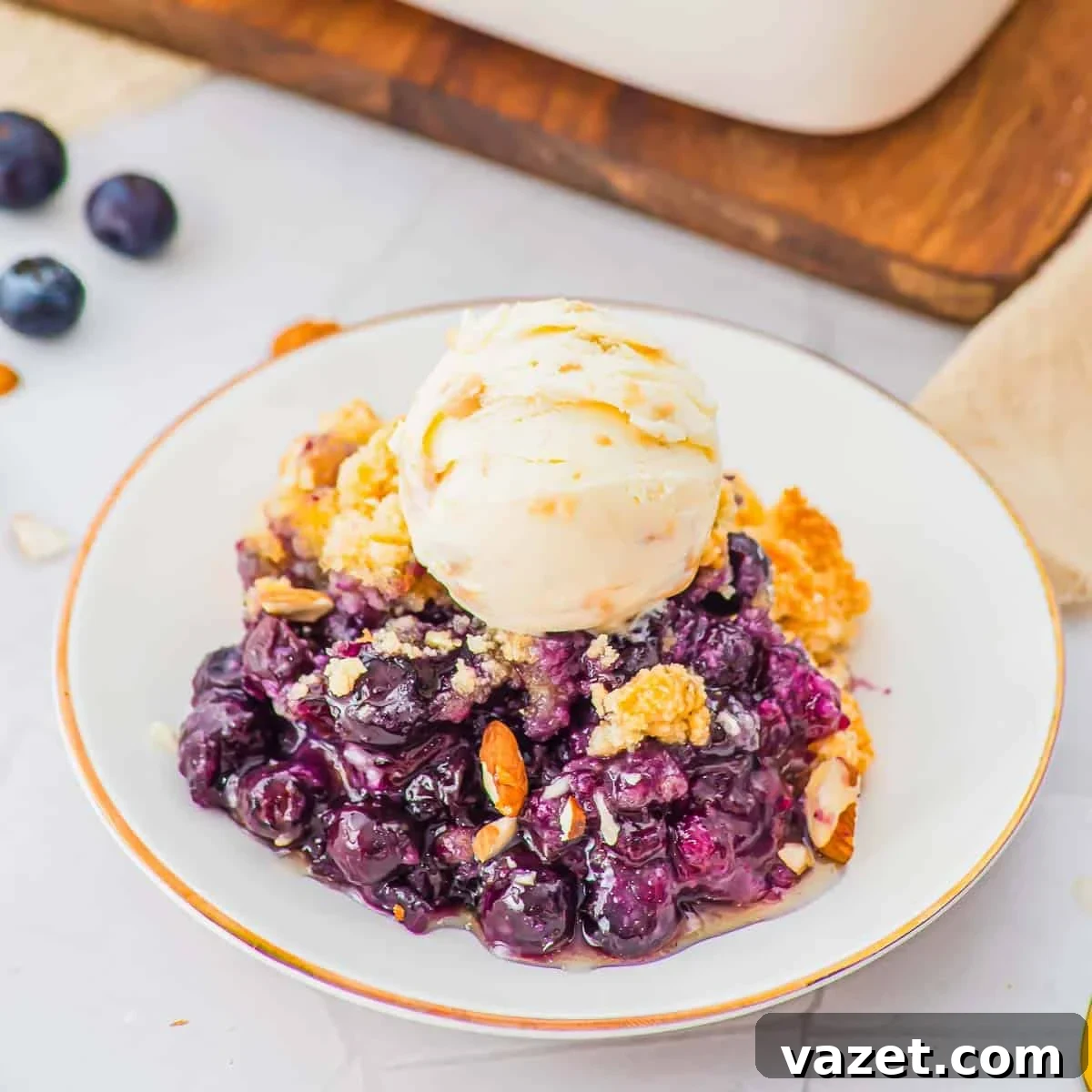
Blueberry cobbler is the kind of dessert that proves summer baking can be effortless and impressive. When blueberries are ripe and juicy, a little lemon and a simple, buttery topping are all they need to become a standout dessert. This almond flour blueberry cobbler pairs a jammy, bubbling blueberry filling with a tender, slightly crisp topping made with almond flour for a naturally gluten-free option.
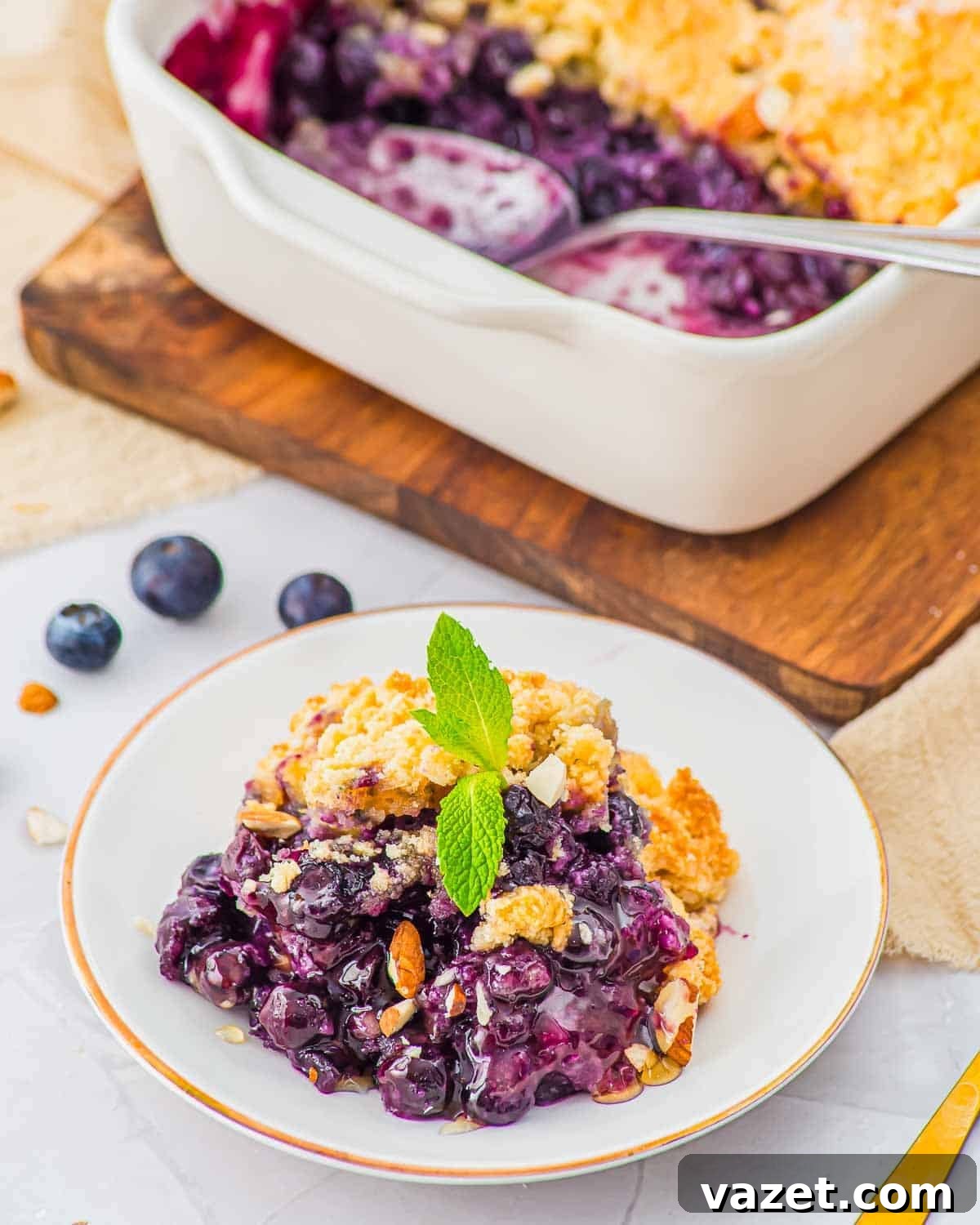
When we moved to this property with its twenty acres, my husband set out to create a small fruit orchard. After years of planting trees and shrubs, the only reliable producers turned out to be the blueberry bushes. They’re the one bright spot among the many trial plantings that haven’t taken off, and I’m grateful—because those berries are perfect for making cobbler.
With an abundant harvest, I often turn to cobbler because it highlights the fruit without the fuss of a pie crust. A splash of lemon and a touch of sweetener enhance the berries’ natural flavor, while the almond-flour topping adds a rich, tender texture that browns beautifully in the oven.
✶ Recipe Highlights ✶
Simple and classic: Cobblers are an easy, satisfying dessert. The glossy fruit filling and golden topping create a comforting result with minimal effort and no rolled crust.
Adaptable: This version uses almond flour, making it naturally gluten-free. To make it dairy-free, substitute a plant-based butter for the topping.
Great as leftovers: The filling firms up after cooling thanks to the cornstarch, so the cobbler is just as delightful a day or two later.
Fresh or frozen berries: Use seasonal fresh blueberries for the best flavor, but frozen berries work well too—simply adjust for extra liquid if needed.
Key Ingredients
The complete ingredient list appears in the recipe card below. Here are the main components and why they matter:
- Blueberries: Fresh are ideal, but frozen berries can be used. If you use frozen, you may thaw and drain some excess liquid or leave them frozen for a saucier filling.
- Lemon: Both zest and juice brighten the filling—don’t skip the zest; it adds aromatic lift.
- Sweetener: A liquid sweetener such as honey or maple syrup blends smoothly with the berries. Adjust the amount to taste depending on berry sweetness.
- Cornstarch: Thickens the filling so it sets rather than becoming soupy. Tapioca starch or arrowroot can be substituted if needed.
- Almond flour topping: Almond flour yields a tender, slightly crumbly topping. For a more traditional cake-like topping, combine almond flour with all-purpose or a gluten-free cup-for-cup flour. Grating cold butter into the dry ingredients helps create a light texture without overworking the dough.
How to Make Blueberry Cobbler
Below is a concise overview of the process. The full, detailed instructions are included in the recipe card further down.
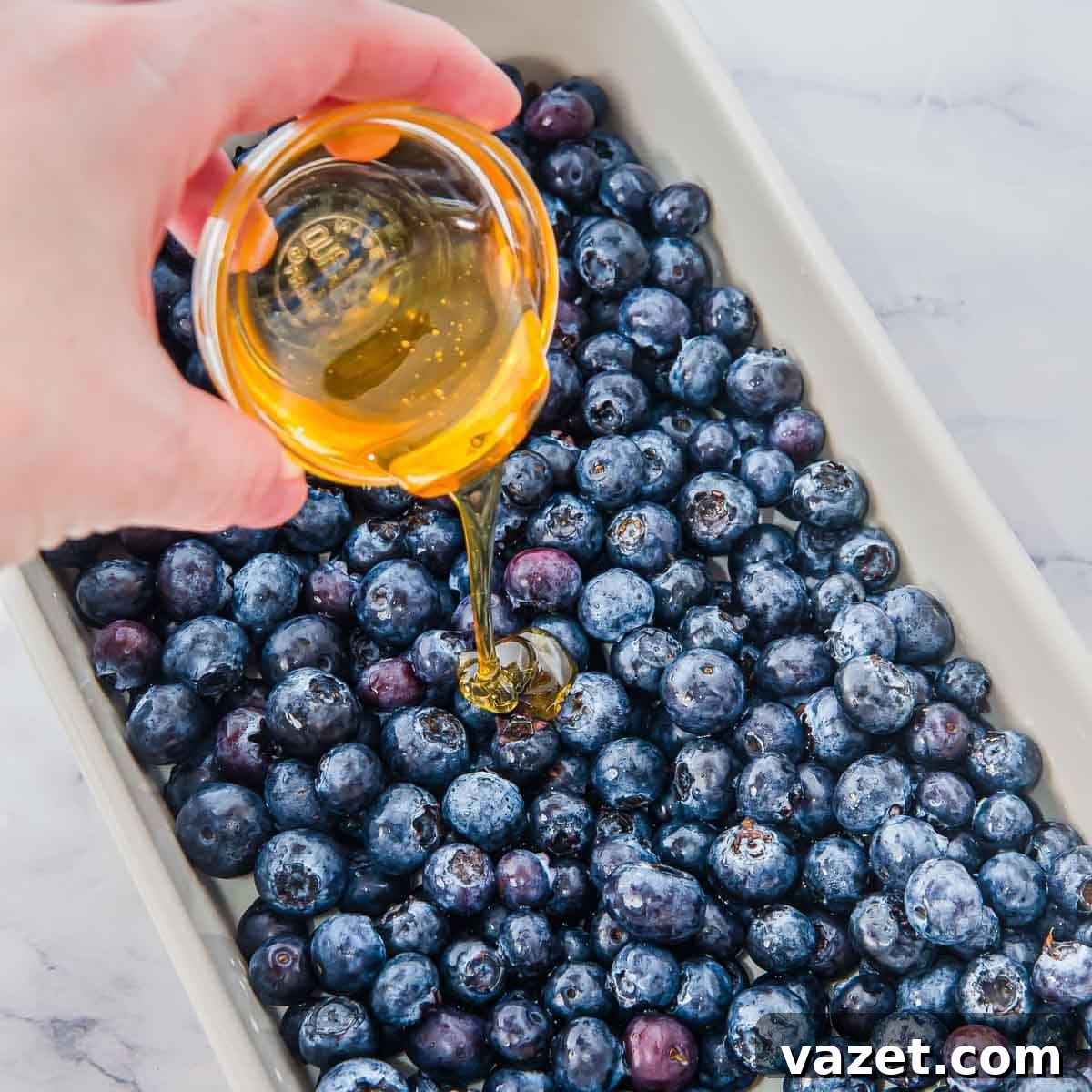
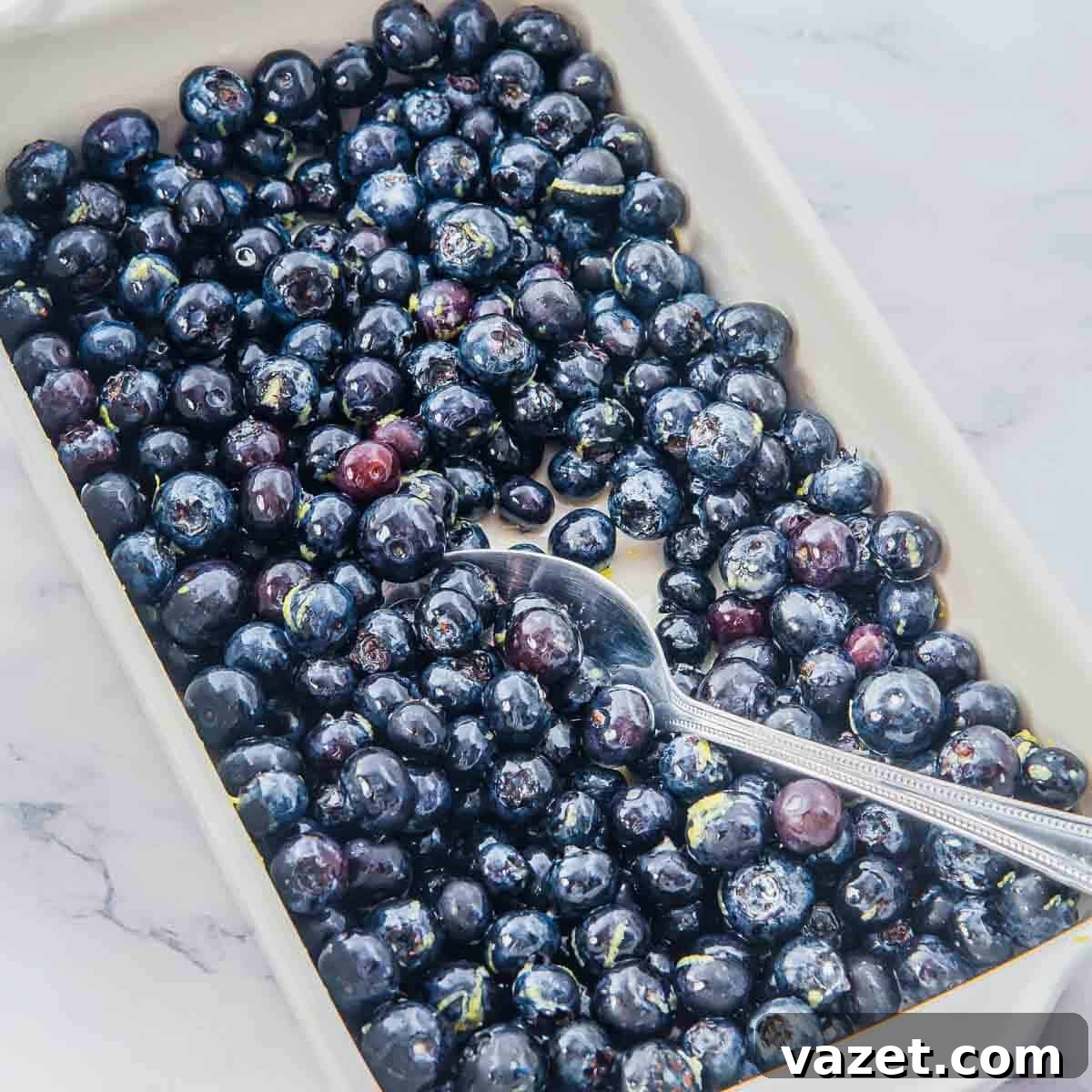
- Combine blueberries with the liquid sweetener directly in an oven-safe dish so they’re evenly coated.
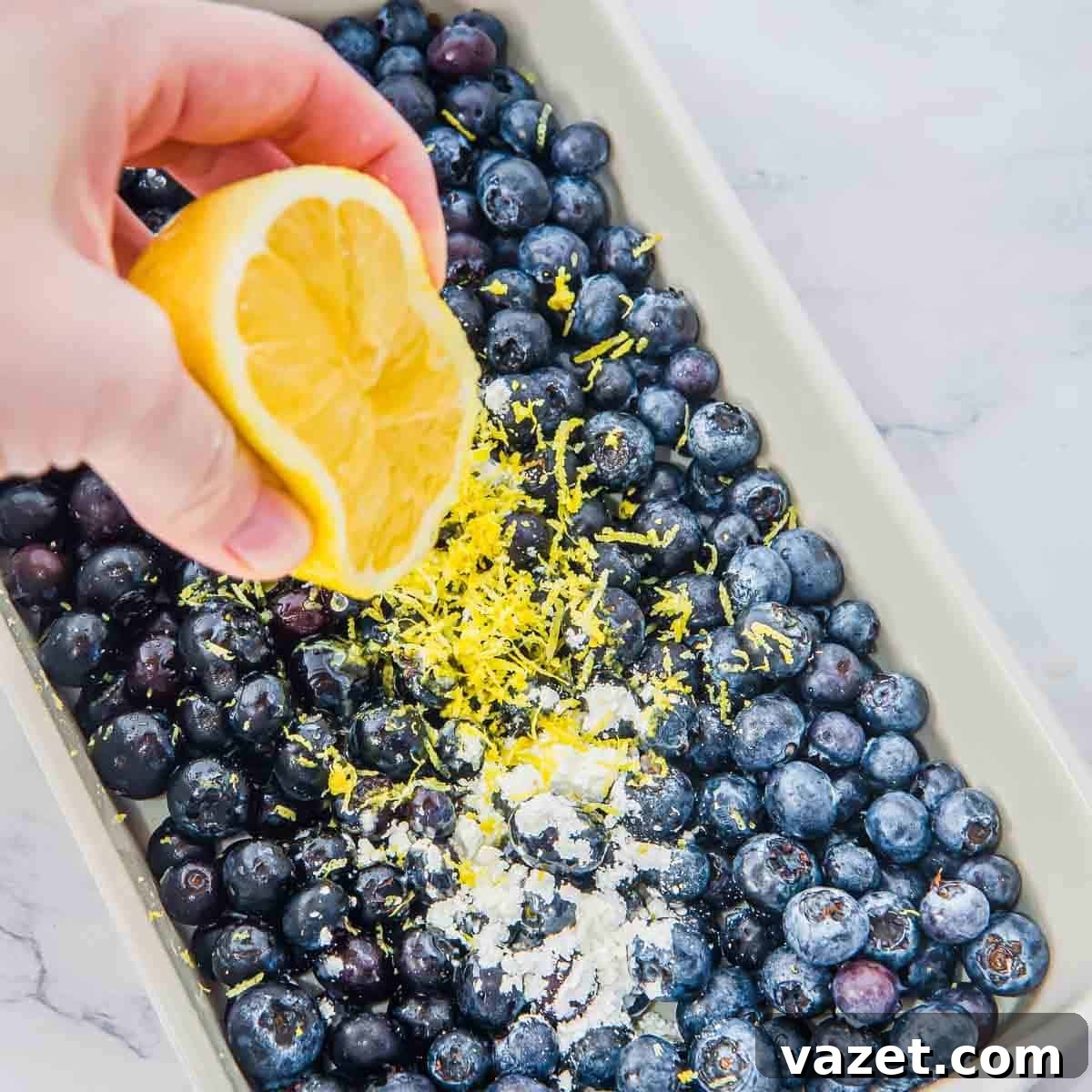
- Add the cornstarch, lemon zest, and lemon juice; stir gently to combine.
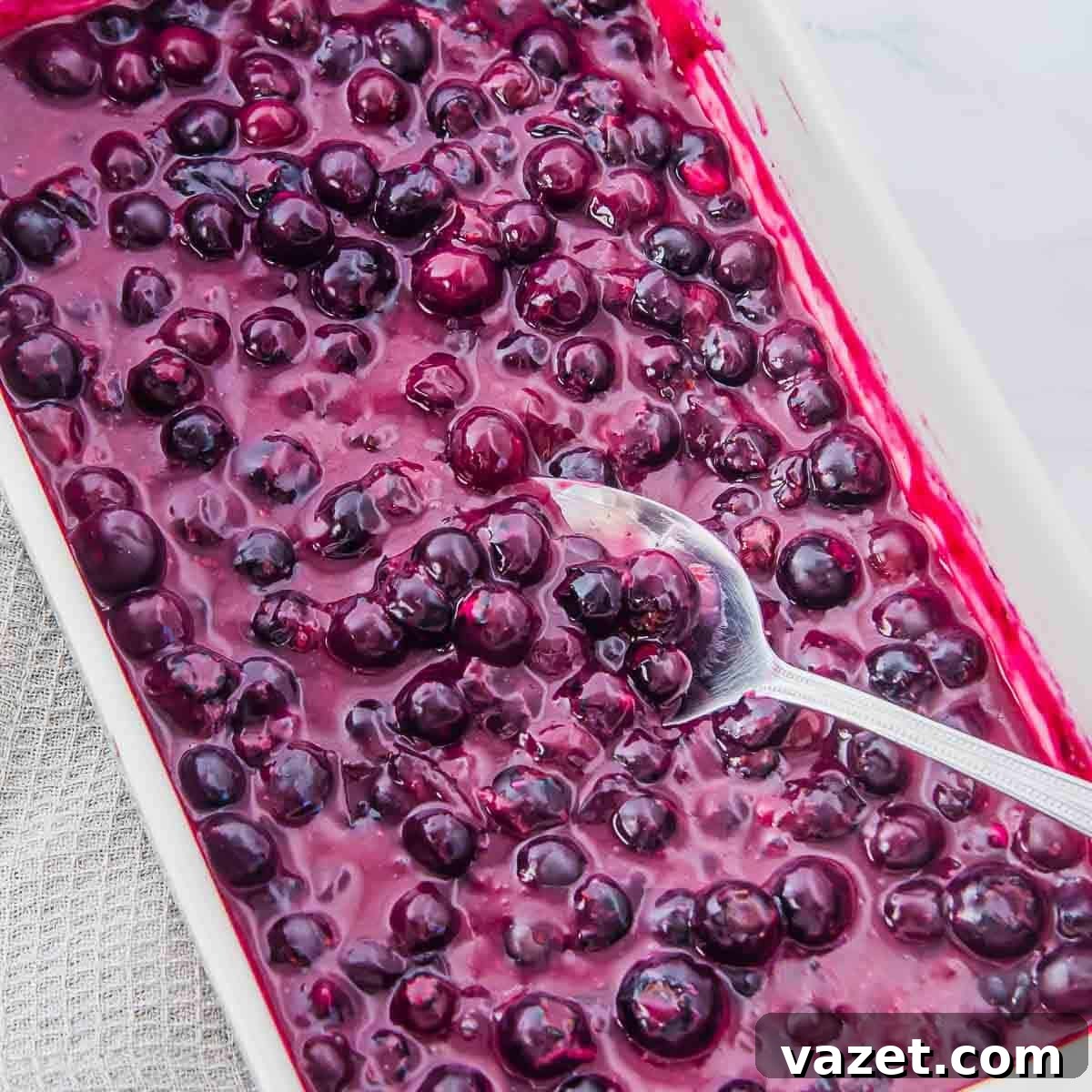
- Bake the berry mixture briefly to release juices while you prepare the topping.
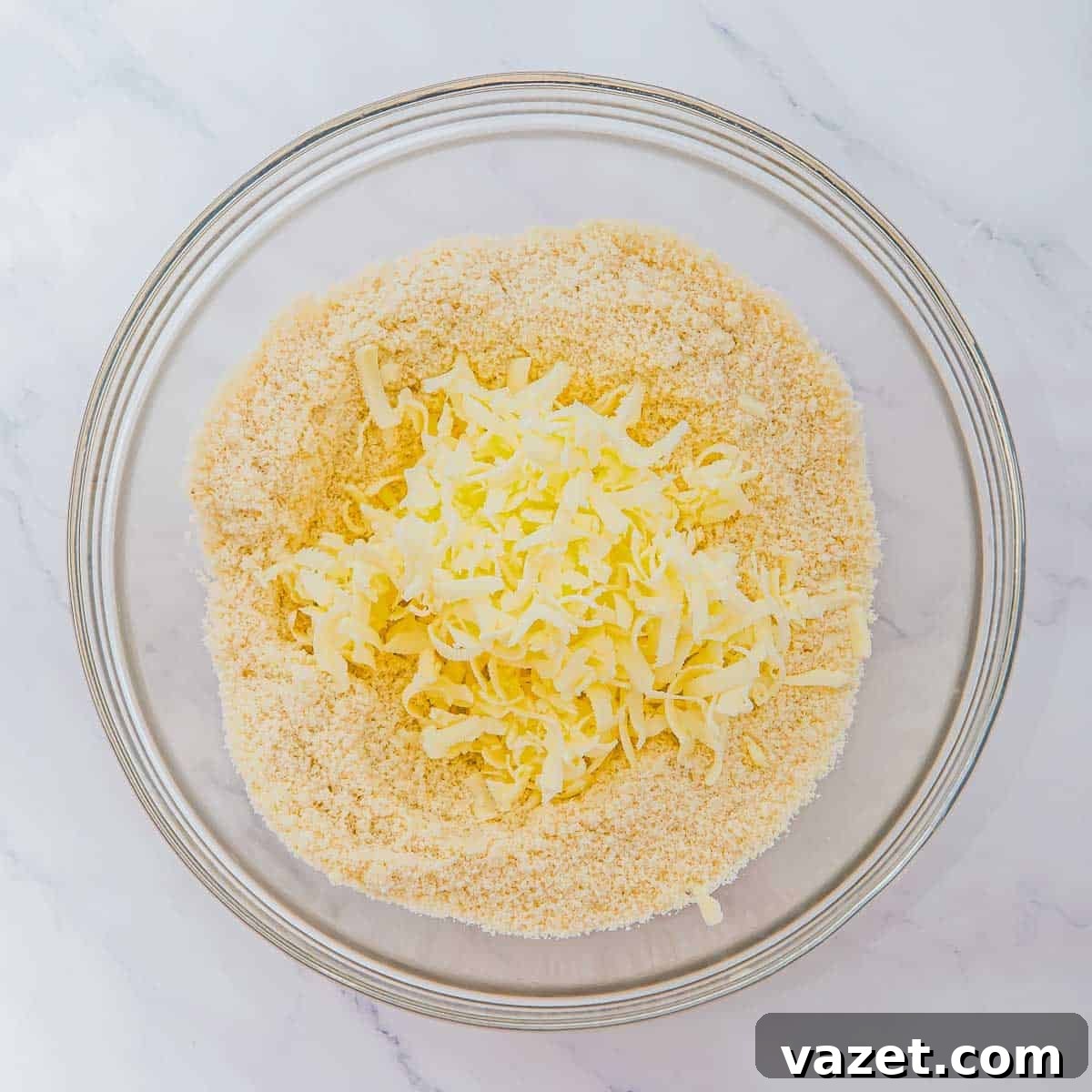
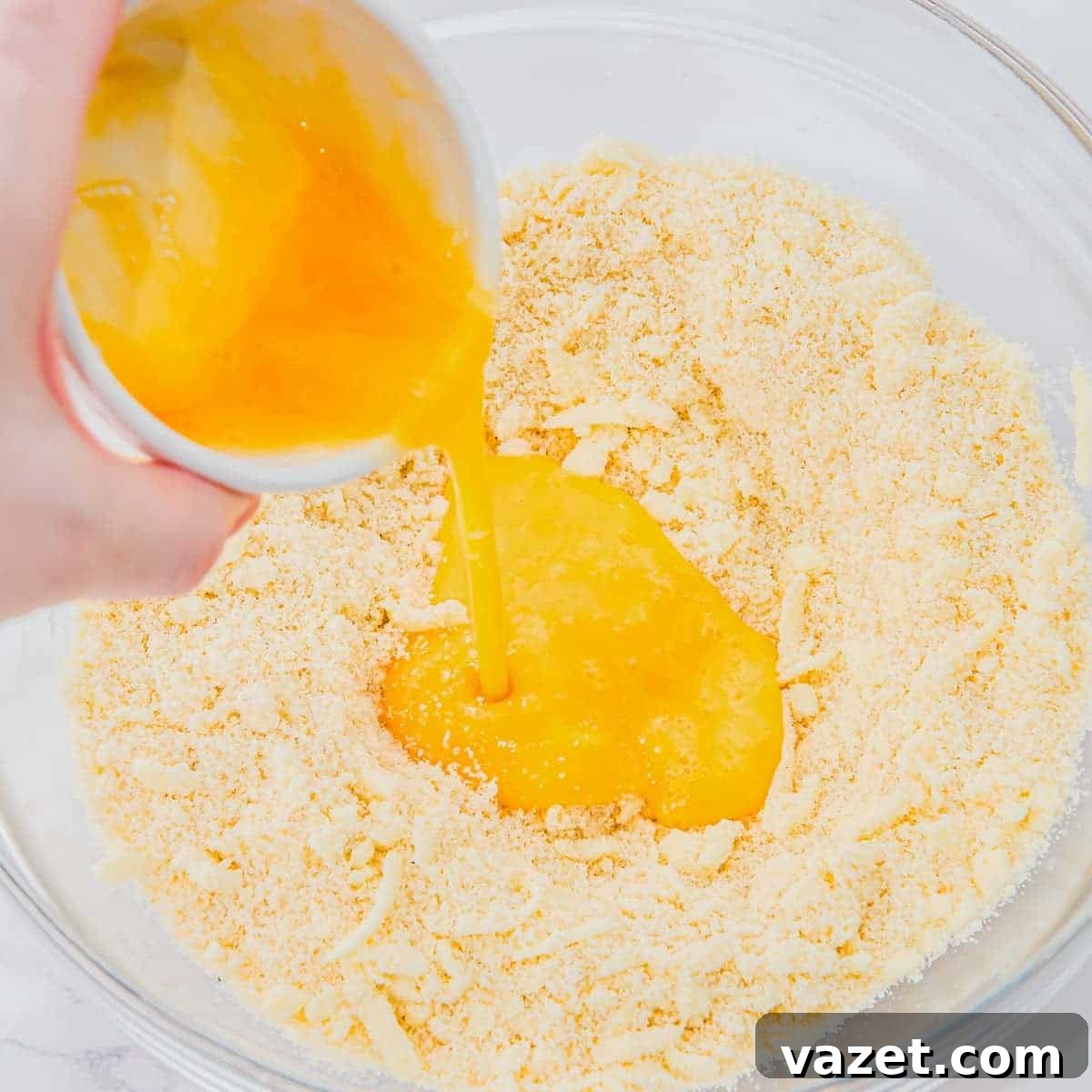
- Prepare the topping by combining dry ingredients, cutting in cold, grated butter, then stirring in a beaten egg until the dough just comes together.
- Spoon the topping over the berries in rustic mounds, leaving gaps for the fruit to bubble through.
- Bake until the topping is golden and the filling is bubbling; allow the cobbler to rest so the filling sets before serving.
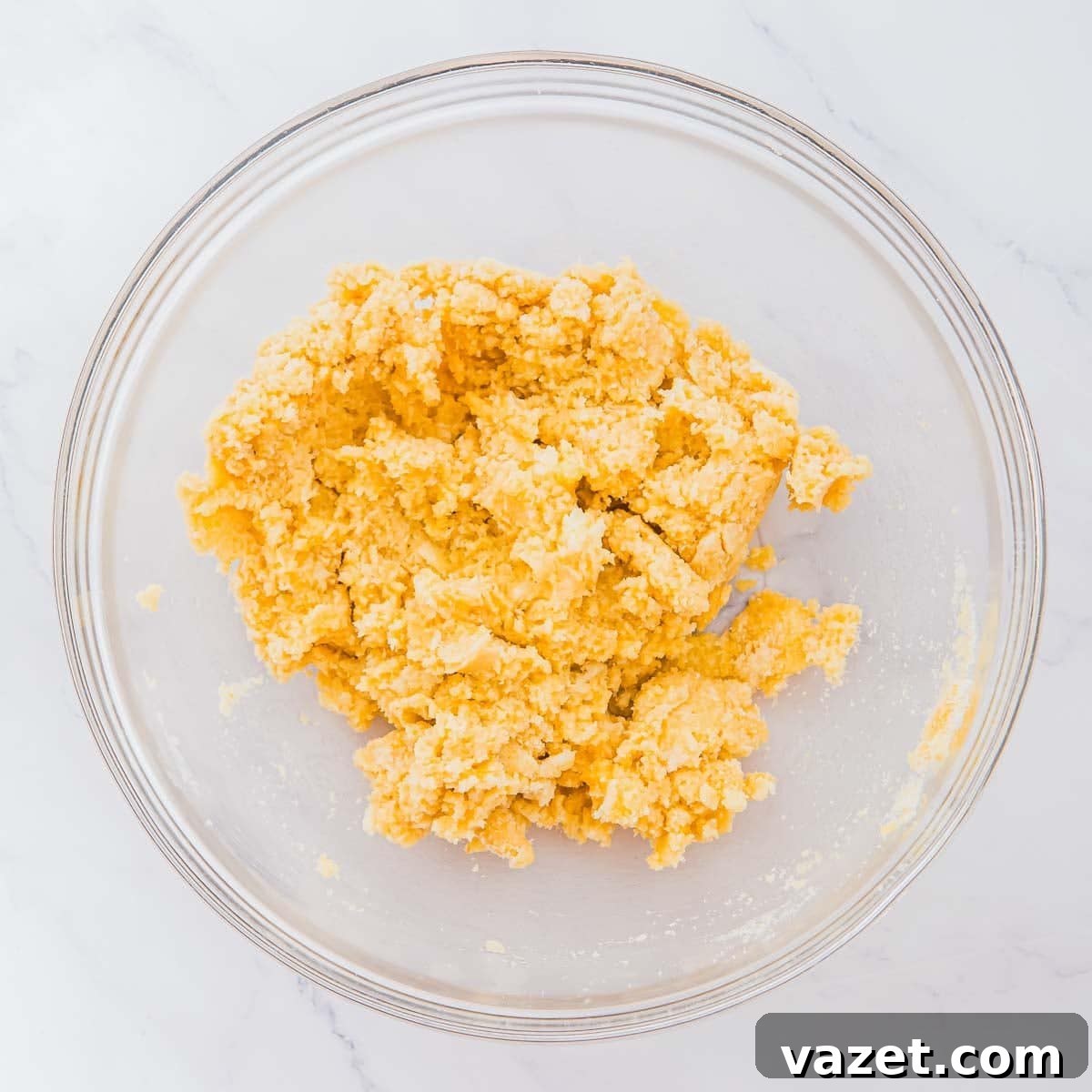
- The topping should hold together without being overworked; it will bake up tender with lightly crisp edges.

- Scoop the batter into mounds so some fruit remains exposed; this lets the filling bubble up through the topping.
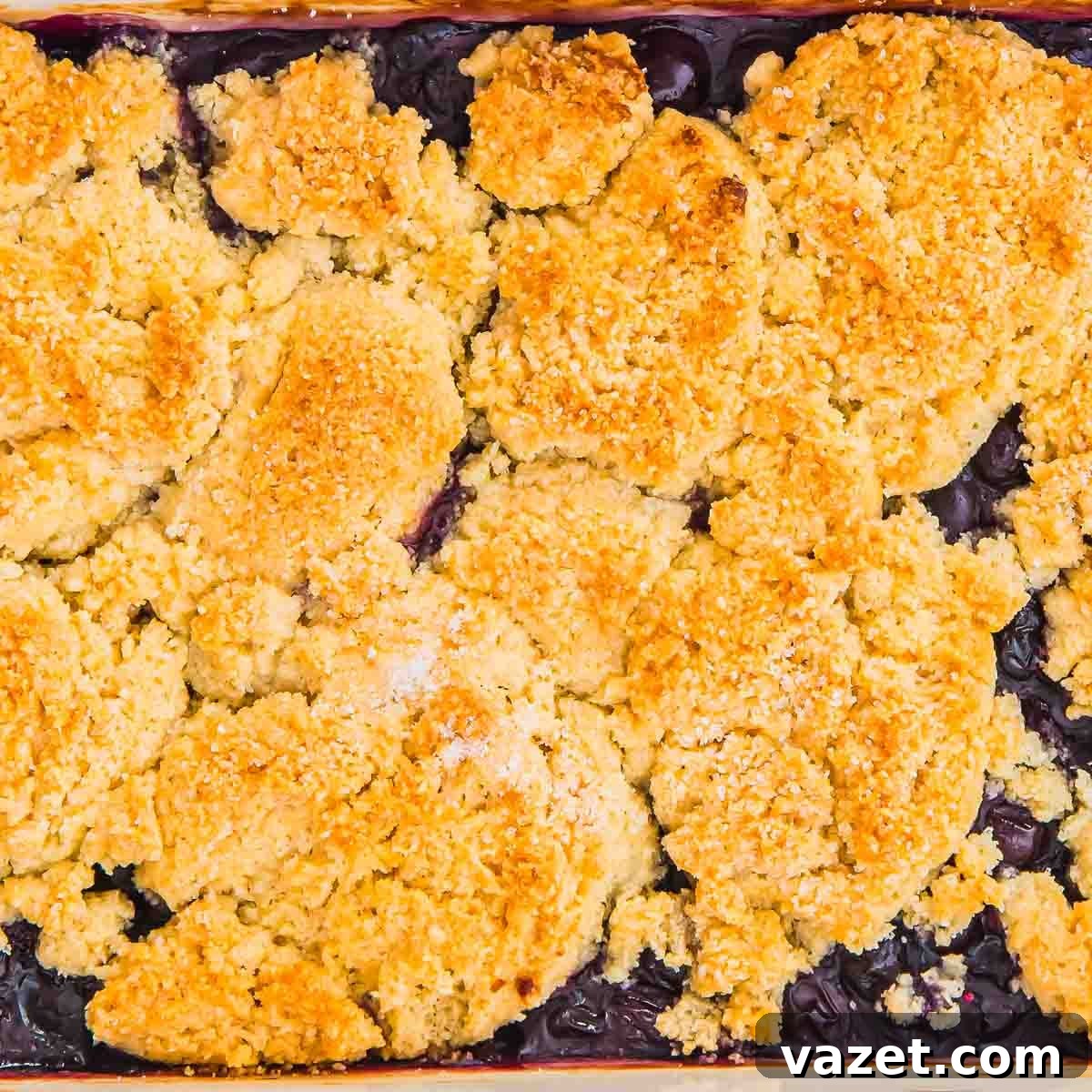
- Finish baking and let rest for at least 10 minutes so the filling thickens—serve warm.
Storage
Store leftovers covered in the refrigerator for up to 4–5 days. If you plan to enjoy it the same day, it’s fine to leave it at room temperature briefly. Reheat gently in the oven at 300°F or on a low-power setting in the microwave until warmed through.
Serving
Blueberry cobbler is excellent served with vanilla ice cream so the cold cream melts into the warm fruit. For a lighter option, plain yogurt is a delicious substitute. A sprig of fresh mint or an extra squeeze of lemon brightens the finished dish, and toasted sliced almonds add a nice crunch.
Craving More?
Cobblers and crisps are very flexible—swap the fruit in this recipe to make other seasonal variations. You might also enjoy other fruit-forward desserts that use similar techniques and toppings for easy baking and great results.
Blueberry Cobbler

Ingredients
For the topping:
- 2 cups almond flour
- 1 egg
- 1/4 cup cold butter, grated
- 3 tablespoons sugar
- 1 1/2 teaspoons baking powder
- 1/4 teaspoon salt
For the filling:
- 4 cups fresh blueberries
- 3 tablespoons honey or maple syrup
- 1 tablespoon cornstarch
- 1 lemon, zested
- 1/2 lemon, juiced
Instructions
- Preheat the oven to 350°F.
- In a 9×13-inch oven-safe baking dish, combine the blueberries, cornstarch, and honey or maple syrup. Add the lemon zest and juice, then stir gently until the berries are evenly coated.
- Bake the blueberry mixture for 20 minutes to release juices.
- While the berries bake, combine the almond flour, sugar, salt, and baking powder in a large bowl. Add the grated cold butter and work it into the dry ingredients with your fingertips or a fork until the mixture resembles coarse crumbs.
- Stir in the beaten egg and mix just until the dough comes together. Do not overmix.
- Remove the blueberries from the oven, stir gently, and spoon the topping over the fruit in rustic mounds, leaving some gaps for the berries to bubble through.
- Return the dish to the oven and bake an additional 25 minutes, or until the topping is golden brown and the filling is bubbling.
- Allow the cobbler to cool for at least 10 minutes, preferably longer, so the filling can set. Serve warm with vanilla ice cream or yogurt and toasted sliced almonds if desired.
Notes
Nutrition
Calories: 409 kcal
Carbohydrates: 39 g
Protein: 10 g
Fat: 27 g
Nutrition information is automatically calculated and should be used as an approximation.