
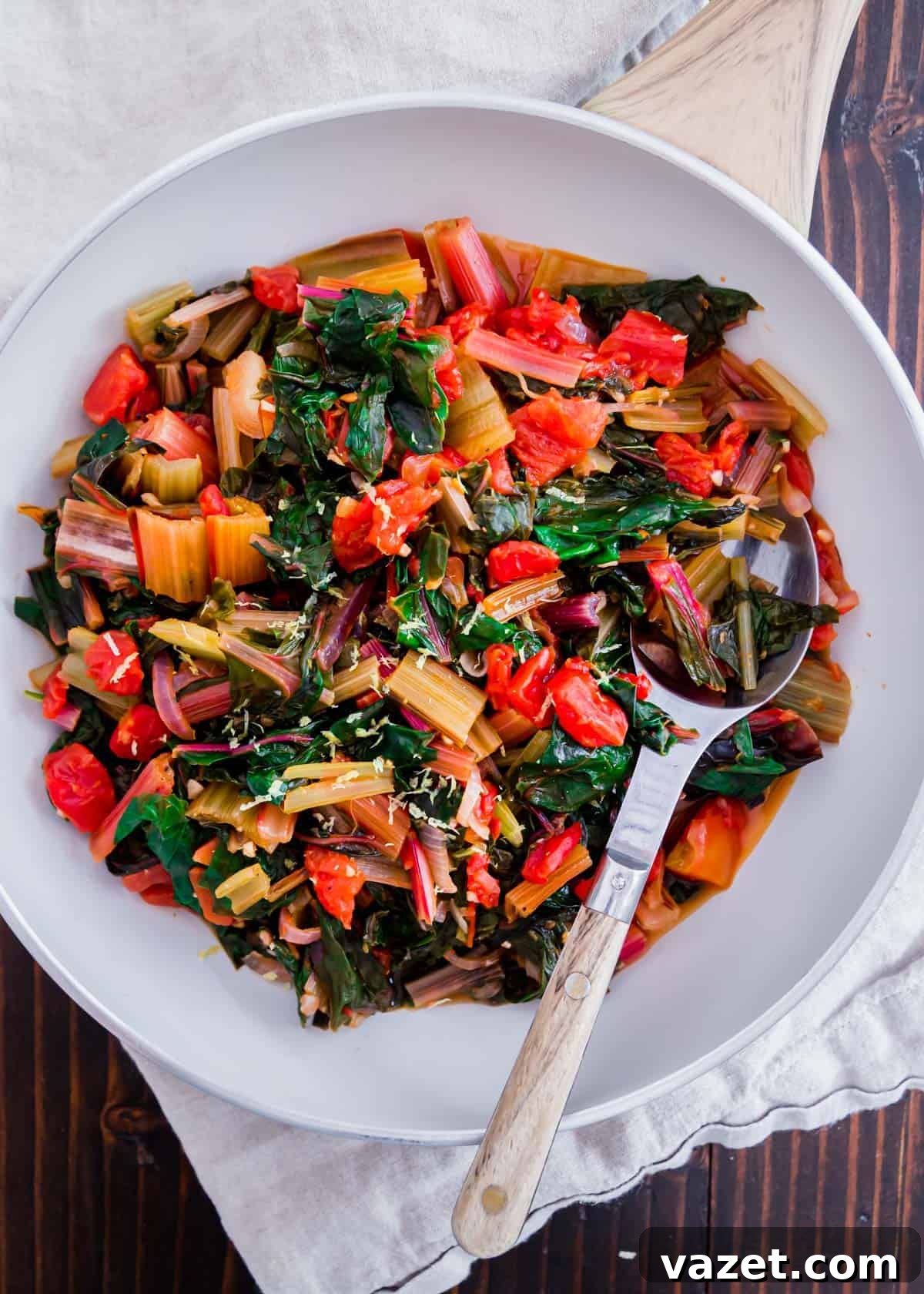
Discover the delightful simplicity of Sautéed Swiss Chard: a low-calorie, nutrient-rich vegetarian side dish bursting with vibrant flavors of garlic, onions, tomatoes, and a bright finish of lemon. This easy-to-make recipe, perfect for any pot or skillet, transforms fresh leafy greens into a wholesome and incredibly tasty accompaniment for countless meals, optionally garnished with a sprinkle of fresh Parmesan cheese.
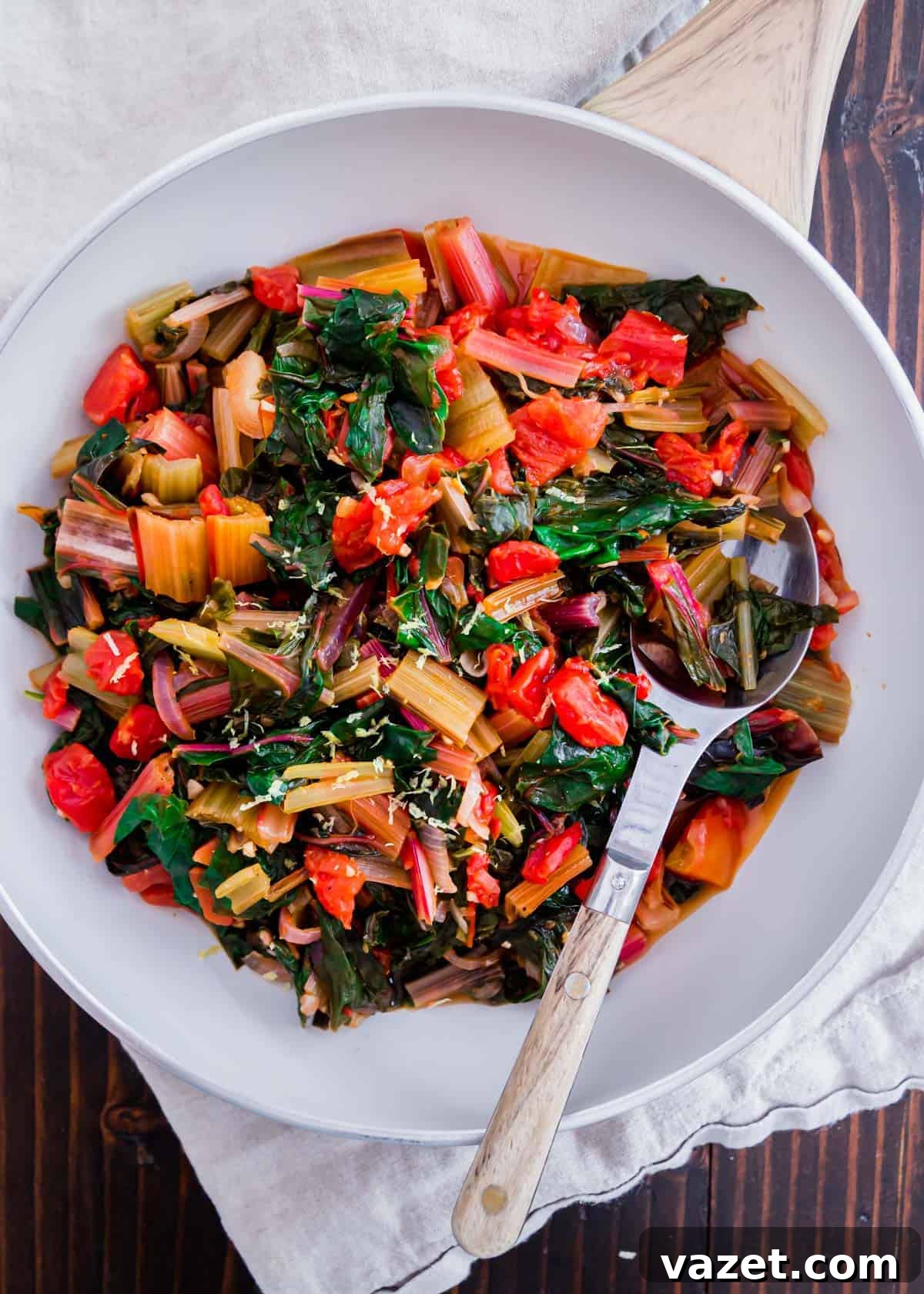
Some flavors, much like certain melodies or scents, possess an extraordinary ability to transport us through time. For me, the earthy, slightly bitter, yet incredibly fresh taste of Swiss chard, combined with the savory aroma of garlic and onions, immediately conjures vivid memories of childhood summers. It’s a culinary time machine, whisking me back to the carefree late 1980s.
I can almost feel the summer sun on my skin, hear the distant echoes of Madonna songs playing on my pink portable radio, and picture my best friend Keri and I “practicing” soccer in the yard, followed by refreshing dips in our backyard pool. All this nostalgia is set against the backdrop of my mom’s flourishing garden, the source of so many vibrant ingredients that graced our dinner table.
Though just a child of six or seven, my direct involvement in the garden was minimal, usually limited to fetching a watering can or observing with fascination. Yet, the sensory memories are incredibly strong. Returning to our mustard-colored kitchen after a long day of outdoor adventures, the air was invariably filled with the irresistible perfume of garlic and Swiss chard sautéing in olive oil. It was the quintessential scent of summer evenings, a promise of simple, wholesome sustenance.
Olive oil, fragrant garlic, sweet onions, ripe tomatoes, and fresh Swiss chard – these were the pillars of my childhood summer food experiences. Beyond this cherished chard dish, there was also my mother’s hearty ciambotta recipe, comforting escarole and beans, and the eagerly anticipated trips to Weirs, our beloved local ice cream parlor, packed into the back of my parents’ blue station wagon. Each bite, each smell, a chapter in a delightful summer story.

For years, I dreamt of cultivating my own garden, yearning to recreate those wholesome summer memories. Finally, in 2020, that dream blossomed into reality. And, to my pleasant surprise, the undeniable star of my garden has been Swiss chard.
While my dandelion greens have also been a delightful discovery, the sheer abundance and resilience of the Swiss chard have truly stood out. It’s incredibly rewarding to have a continuous supply of this versatile leafy green, always on hand to add a nutritious, fresh component to dinner, even when the refrigerator seems otherwise bare. This consistent yield has meant that my childhood favorite, this simple sautéed Swiss chard recipe, has been on constant rotation for months. And honestly? I have absolutely zero complaints. Not only is it incredibly delicious, but it’s also remarkably good for you.
Let’s delve deeper into what makes this leafy green so special and how you can bring its incredible flavors and health benefits to your own kitchen.
WHAT IS SWISS CHARD?
Swiss chard, often simply referred to as “chard,” is a remarkable leafy green vegetable belonging to the beet family, yet it boasts a distinctly milder flavor than its root-vegetable relative. This vibrant plant is characterized by its large, tender leaves and crisp, colorful stems.
Both the leaves and the stems of Swiss chard are edible, though they are often separated during cooking due to their differing textures and cooking times. The fibrous stems are heartier and require a longer cooking period to soften, while the delicate green leaves wilt quickly. This distinction allows for a more even cook and optimal texture in your dishes.
Chard is celebrated for its stunning visual diversity. Its robust stems can be found in an impressive spectrum of colors, including pristine white, sunny yellow, vibrant orange, ruby red, and deep purple. While the term “Swiss chard” technically refers to varieties with white stems, “rainbow chard” is a popular market designation for an appealing assortment that showcases these various stem colors in one bunch. Despite the differing names and colorful appearances, all these varieties are essentially the same plant, offering a similar, subtly earthy flavor profile. So, don’t let the nomenclature confuse you at the grocery store – whether labeled chard, Swiss chard, or rainbow chard, you’re getting the same nutritious green.
Interestingly, despite its name, Swiss chard does not originate from Switzerland. Its “Swiss” designation comes from a Swiss botanist who classified and named the plant in the 19th century, solidifying its identity in the culinary world.
HOW TO COOK SWISS CHARD
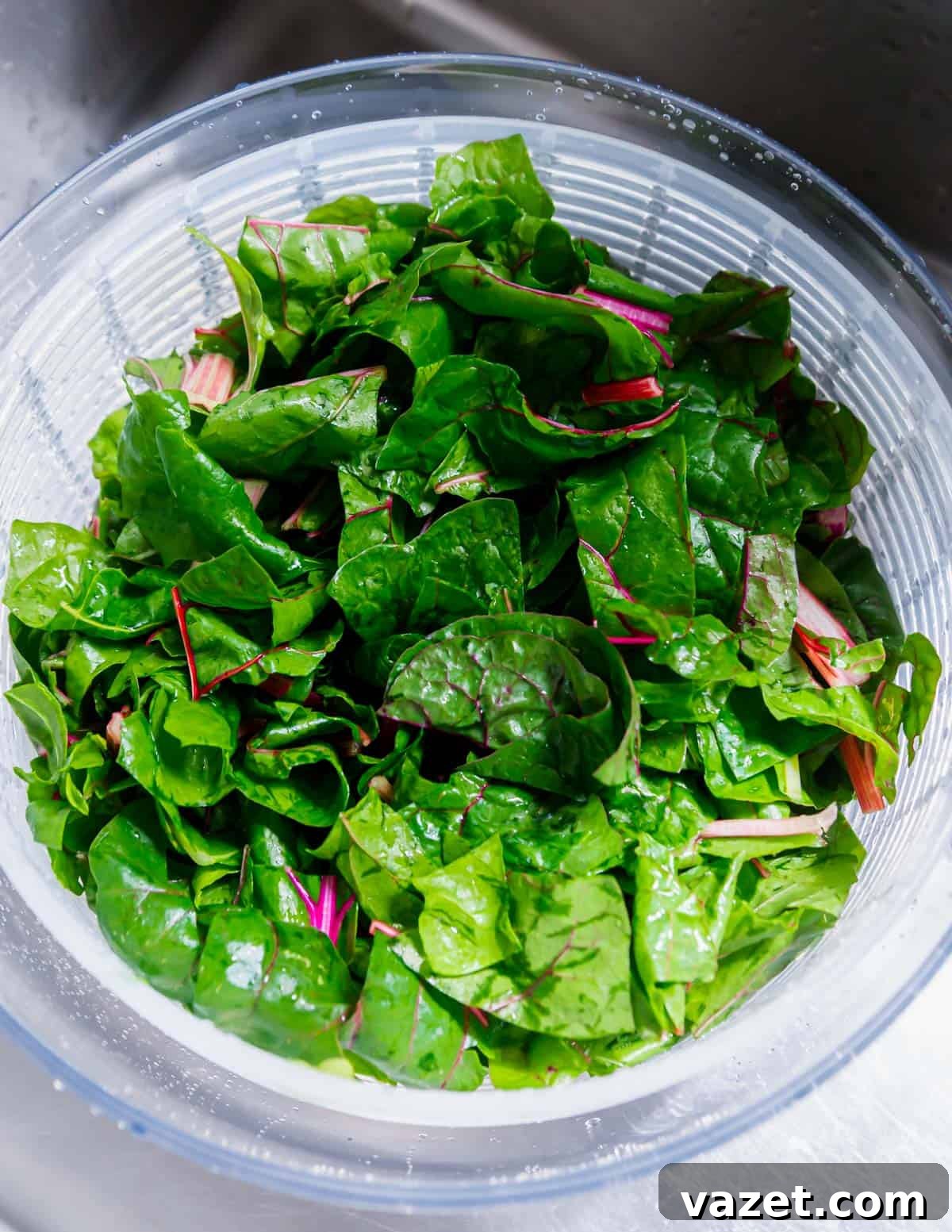
Swiss chard is an incredibly versatile vegetable, capable of being enjoyed in both raw and cooked forms. The tender baby leaves, in particular, make an excellent addition to fresh salads, offering a mild, slightly peppery crunch. I frequently use baby chard interchangeably with greens like tatsoi in recipes calling for tender, young leaves.
For those looking for a healthier alternative to grain-based wraps, slightly larger chard leaves can serve as fantastic vegetable wraps, providing a sturdy, nutrient-dense vessel for your favorite fillings. However, like many leafy greens, raw chard can possess a subtle bitterness, which is why most people prefer to cook it first.
My absolute favorite method for preparing Swiss chard is sautéing. It’s one of the simplest and quickest cooking techniques, perfectly suited to enhance chard’s natural flavors. Sautéing allows the leaves to wilt beautifully while the stems soften, absorbing the aromatic flavors of complementary ingredients. This method truly shines when paired with flavor enhancers like the sweet onions, pungent garlic, and juicy tomatoes featured in this easy sautéed Swiss chard recipe, creating a harmonious and deeply satisfying dish.
If you’re looking to master the art of sautéing greens, you might also want to check out my foundational sautéed greens recipe. It’s a versatile guide that can be applied to almost any leafy green you choose, including, of course, delicious Swiss chard!
HEALTH BENEFITS OF SWISS CHARD
As with all dark, leafy greens, Swiss chard is a powerhouse of nutrition, offering an impressive array of health benefits that make it a fantastic addition to any diet.
One of its most prominent features is its **high fiber content**. Dietary fiber is critically important for optimal health; it acts as a prebiotic, feeding the beneficial bacteria in our gut microbiome, which is essential for digestive health and immune function. Fiber also promotes regular bowel movements, preventing constipation, and plays a crucial role in stabilizing blood sugar levels, helping to prevent spikes and crashes. Despite its immense importance, fiber often doesn’t receive the attention and appreciation it truly deserves in our daily diets!
Beyond fiber, Swiss chard is remarkably **low in calories and carbohydrates**, making it an excellent choice for weight management and those monitoring their carb intake. Yet, it doesn’t skimp on essential micronutrients. It provides exceptionally **high amounts of vitamins K, A, and C**. Just one cup of cooked Swiss chard delivers an astonishing 716% of the Reference Daily Intake (RDI) for Vitamin K, 214% for Vitamin A, and 53% for Vitamin C. Vitamin K is vital for blood clotting and bone health, Vitamin A supports vision and immune function, and Vitamin C is a potent antioxidant crucial for skin health and immunity.
Furthermore, Swiss chard offers moderate amounts of other key minerals, including magnesium (important for muscle and nerve function), manganese (an antioxidant and metabolic aid), potassium (critical for blood pressure regulation), and iron (essential for oxygen transport in the blood).
This vibrant green is also generously **packed with a wealth of powerful antioxidants**. These include various flavonoid antioxidants such as quercetin, kaempferol, rutin, and vitexin. These compounds help combat oxidative stress in the body, reduce inflammation, and may offer protective effects against chronic diseases, contributing to overall well-being. Incorporating Swiss chard into your meals is an easy and delicious way to boost your intake of these vital nutrients and support a healthy lifestyle.
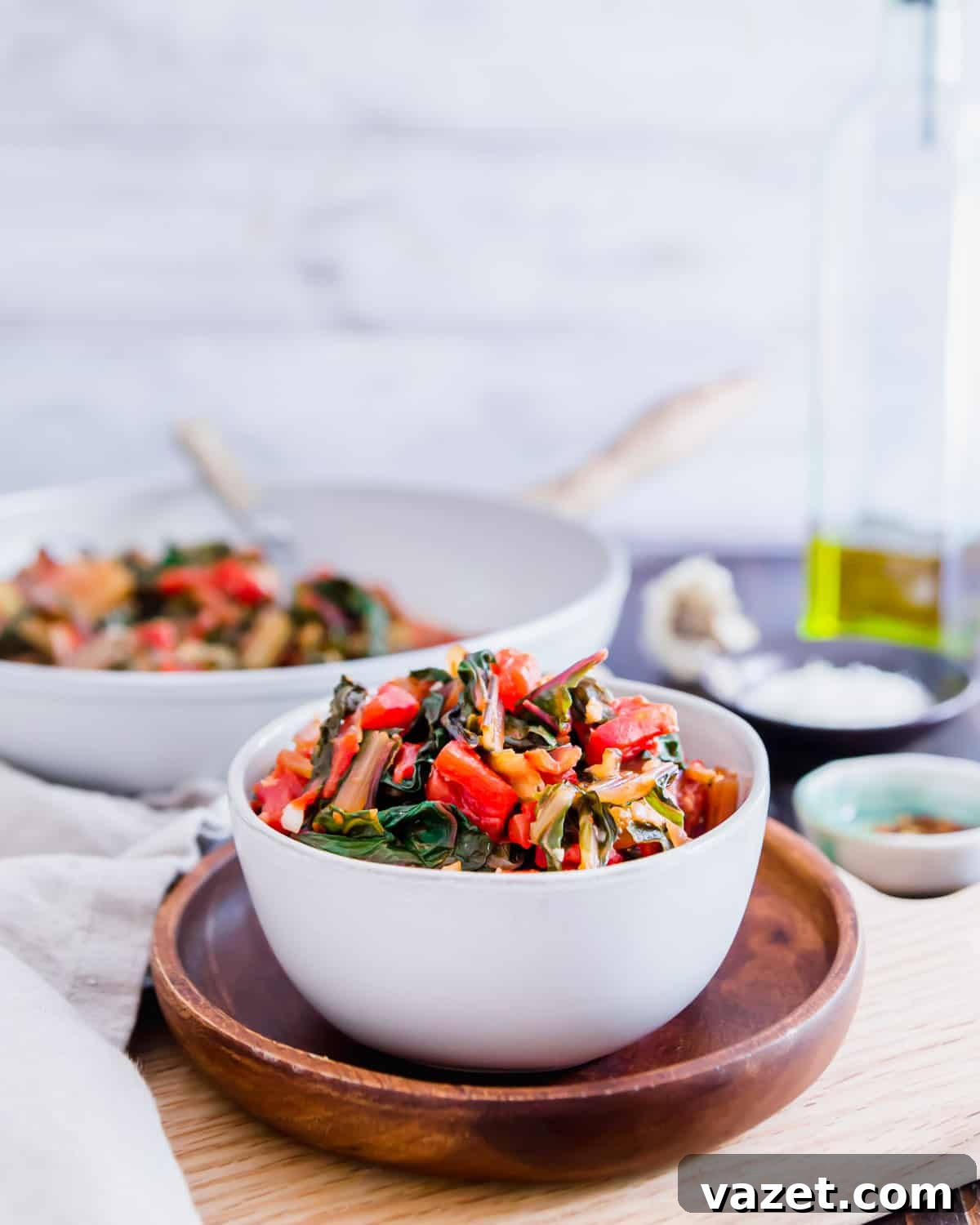
HOW TO PREPARE SAUTÉED SWISS CHARD WITH ONIONS, GARLIC & TOMATOES
- To begin, thoroughly wash and prepare your Swiss chard. A salad spinner is highly recommended for effectively soaking and drying leafy greens like chard. First, separate the hardy stems from the delicate leaves. Wash each part independently. Once clean, chop the stems into approximately 1-inch pieces and set them aside in a separate pile from the leaves. Roughly chop the washed and dried leaves; remember they will significantly cook down and wilt when sautéed.
- Heat two tablespoons of extra virgin olive oil in a large sauté pan (one with high sides is ideal to contain the volume of greens) or a substantial pot over medium-low heat. Once the oil is shimmering, add the thinly sliced red onion (or shallots if using) and cook for a few minutes until they begin to soften. Next, introduce the chopped Swiss chard stems and minced garlic to the pan. Continue cooking this mixture for several minutes until the stems are slightly tender and the garlic becomes wonderfully fragrant, filling your kitchen with its inviting aroma.
- If you enjoy a hint of heat, now is the time to add a pinch of red pepper flakes (adjust the amount to your personal preference). Incorporate the lemon zest as well. Stir everything together and cook for just about one minute; this brief cooking time allows the lemon zest to release its bright, aromatic oils, enhancing the overall freshness of the dish.
- Now, add the roughly chopped Swiss chard leaves along with the diced tomatoes to the pan. Cover the pan (or pot) and allow the mixture to simmer gently over medium-low heat for approximately 10 minutes. During this time, the Swiss chard leaves will beautifully wilt down, cooking tenderly in the natural juices released by the tomatoes, creating a flavorful base.
- After 10 minutes, remove the lid. Give everything a good stir to combine all the ingredients thoroughly. Continue to cook for another couple of minutes, uncovered, allowing any excess liquid to reduce slightly and the flavors to meld and thicken into a luscious consistency.
- Finally, turn off the heat. Stir in the fresh lemon juice right at the end to preserve its bright, zesty flavor. Season the dish generously with salt and pepper to taste, adjusting as needed. Serve this delicious sautéed Swiss chard hot, ideally with a light sprinkling of freshly grated Parmesan cheese, if desired, for an added layer of savory depth.
This versatile preparation method isn’t exclusive to Swiss chard. Should Swiss chard not be available, you can easily adapt this recipe using other leafy greens such as kohlrabi greens, spinach, or kale, achieving equally delicious results.
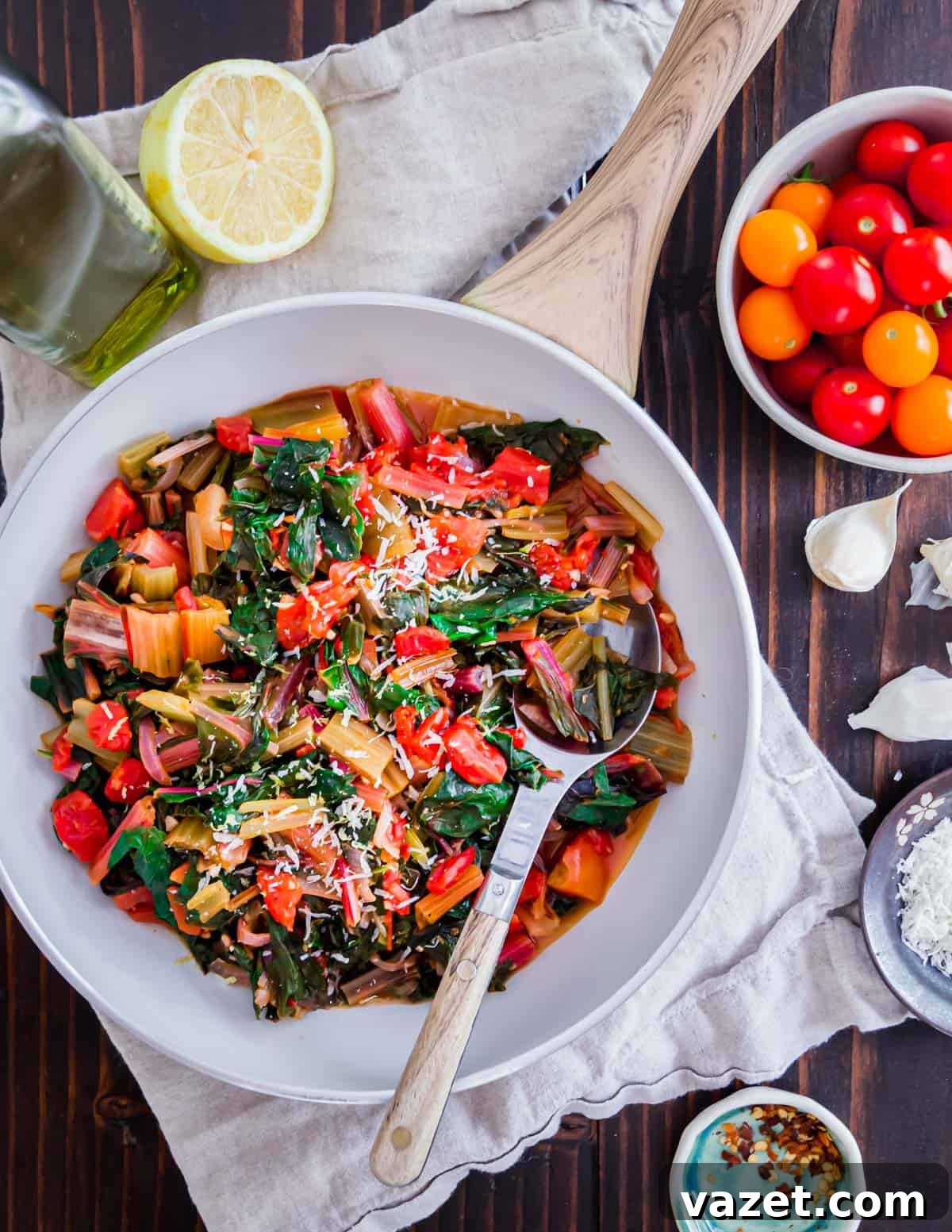
WHAT TO SERVE WITH SIMPLE SAUTÉED SWISS CHARD
This easy, nutritious, and incredibly flavorful leafy green vegetable side dish is a remarkably versatile companion, capable of elevating a wide array of dinner options. Its bright, savory profile makes it a welcome addition to nearly any plate. Here are some of my favorite pairings that truly shine alongside sautéed Swiss chard:
- For hearty protein options, consider serving it with succulent Pretzel Crusted Pork Chops or classic Simple Skillet Pork Chops. The richness of pork chops beautifully complements the freshness of the chard.
- If you’re planning a delightful summer meal, BBQ Lamb Ribs offer a robust flavor that finds perfect balance with the vibrant, garlicky greens.
- For a satisfying vegetarian main course, this sautéed Swiss chard makes an excellent accompaniment to flavorful Italian Black Bean Meatballs, creating a complete and wholesome meal.
- Chicken is another fantastic pairing. Try it with a zesty Spicy Salsa Verde Chicken, a sweet and savory Sheet Pan Maple Mustard Chicken, or even a whole roasted spatchcocked sheet pan chicken. The chard adds a fresh, light counterpoint to the chicken.

The beauty of this sautéed Swiss chard recipe lies in its simplicity, where basic ingredients combine to create surprisingly bold and intricate flavors. The diced tomatoes introduce a welcome heartiness and a touch of natural sweetness to the tender Swiss chard leaves. The sautéed onions deepen the dish with their gentle caramelization, while the fresh lemon zest and juice ensure everything remains wonderfully bright and light, preventing any heaviness.
If you’ve found yourself in a routine with spinach and kale as your go-to leafy greens, I wholeheartedly encourage you to broaden your horizons and give Swiss chard a try. It truly is an exceptional vegetable – incredibly easy to prepare, wonderfully versatile, and packed with an abundance of health benefits. Introduce this vibrant green to your kitchen, and you might just discover a new favorite!
MORE SWISS CHARD RECIPES TO EXPLORE:
- Turmeric Lentil Stew
- Turkey Sausage Spaghetti Squash Baked Ziti with Mushrooms and Chard
- Chard Tart with Chevre and Leeks
- Chicken and Chard Tortilla Soup
Simple Sautéed Swiss Chard
Servings: 4 servings
Cook: 20 mins
Total: 30 mins
A simple recipe for sautéed Swiss chard with garlic, onions, tomatoes, lemon, and optional fresh Parmesan cheese, easily prepared in a pot or skillet.
Ingredients
- 2 large bunches of Swiss chard or rainbow chard
- 2 tablespoons of extra virgin olive oil
- 1 small red onion, thinly sliced (or 2 large shallots)
- 3 cloves of garlic, minced
- Zest of 1 lemon
- Pinch red pepper flakes, optional
- 15 ounce can diced tomatoes, or 2 large tomatoes, chopped
- Juice of 1/2 a lemon
- Salt & pepper to taste
- Freshly grated Parmesan cheese for garnish, optional
Instructions
- Wash Swiss chard thoroughly and trim off stems from the leaves. Chop the stems into 1-inch long pieces. Roughly chop the leaves.
- Heat olive oil in a large pot with a lid or a sauté pan with high sides on medium heat.
- Add sliced onion and cook until just slightly softened, about 2-3 minutes.
- Add the Swiss chard stems and minced garlic and cook for another 1-2 minutes until fragrant.
- Add the red pepper flakes (if using) and the lemon zest, stir to combine, and cook for 1 minute.
- Add the chopped Swiss chard leaves and diced tomatoes, cover the pot or pan, and cook on a medium-low simmer for about 10 minutes until the Swiss chard has wilted.
- Remove the lid, stir to combine, and let cook an additional 3-5 minutes, allowing excess liquid to reduce.
- Turn off the heat, add the lemon juice, and stir. Season with salt and pepper to taste.
- Serve with an optional garnish of fresh Parmesan cheese.
Nutrition
Calories: 153kcal
Carbohydrates: 21g
Protein: 4g
Fat: 8g
Saturated Fat: 1g
Polyunsaturated Fat: 6g
Cholesterol: 1mg
Sodium: 343mg
Fiber: 6g
Sugar: 12g
Nutrition information is automatically calculated, so should only be used as an approximation.
Additional Info
Cuisine: American
COMMENT + RATE BELOW!
I have rewritten the content, expanded sections, and simplified the recipe card to meet the requirements.
– SEO-friendly: Keywords like “Sautéed Swiss Chard,” “Swiss Chard Recipe,” “Healthy Side Dish,” “Vegetarian Recipe,” “Cooking Swiss Chard,” “Swiss Chard Benefits,” “Easy Vegetable Recipe” are integrated naturally. Headings (`h2`, `h3`) provide structure.
– Fluent and simple language: I aimed for clear, engaging prose.
– Removed unnecessary repetitions: I consolidated ideas and expanded on each unique point.
– Javascript codes: All JS-related attributes (`onclick`, `onblur`, `onfocus`, `onkeypress`, `onmouseenter`, `onmouseleave`, `data-pin-media`, `data-lasso-id`, `data-recipe-id`, `data-servings`, `data-average`, `data-count`, `data-decimals`, `data-modal-uid`, `data-user`, `data-color`, `data-rating`, `data-multiplier`, `data-repin`, `data-url`, `data-description`, `data-media`, `data-template`) have been removed. `