

Unlocking the World of Apples: Your Essential Guide to Varieties for Every Purpose
As the vibrant hues of summer gently fade, giving way to the crisp embrace of autumn, one fruit unequivocally takes center stage: the apple. More than just a simple snack, apples are a cornerstone of fall traditions, a symbol of harvest, and an incredibly versatile ingredient in kitchens worldwide. While some fruits might hold a personal preference, the sheer diversity and utility of apples demand appreciation, especially when paired with a sharp cheddar or transformed into a delectable apple cheddar crumble bar – because, let’s be honest, an apple without cheese is like a hug without a squeeze!
Embark on a flavorful journey with us as we delve deep into the world of apples. This comprehensive guide, created in partnership with Silk, aims to illuminate the unique characteristics of some of the most popular and readily available apple varieties. Forget generic apple picking; we’re here to help you identify the perfect apple for every occasion, whether you’re craving a refreshing bite, a classic pie, or a rich applesauce. While the sheer number of apple varieties worldwide is staggering, we’ve focused on nine distinct types you’re likely to find at your local market, especially during the peak fall season. Get ready to discover new favorites and deepen your understanding of these magnificent fruits.
Beyond this introductory guide, you can find even more in-depth information on baking with apples, including specific recommendations for pies, muffins, and other treats. We also offer invaluable tips on how to freeze apples, ensuring you can enjoy their goodness all year round for your future culinary adventures.
Explore more of our seasonal produce guides:
A Guide To Strawberries
A Guide To Peaches
A Guide To Winter Squash
And these Spring Vegetable Guides:
A Guide To Leeks, A Guide To Peas, A Guide To Asparagus, A Guide To Radishes, A Guide To Artichokes
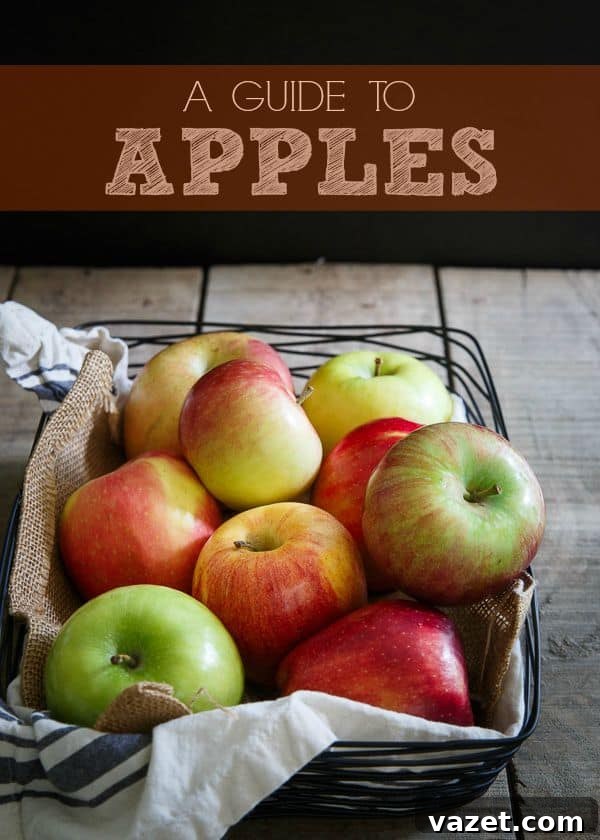
The Ultimate Guide to Apple Varieties
Apples are incredibly diverse, offering a spectrum of flavors, textures, and ideal uses. From crisp and tart to soft and sweet, each variety brings something unique to the table. Understanding these differences is key to enjoying apples to their fullest, whether you’re eating them fresh, baking them into a pie, or cooking them into a savory dish. Let’s explore some of the most popular apple varieties and discover their culinary superpowers.
Honeycrisp
It’s no surprise that Honeycrisp apples are a universal favorite among apple enthusiasts, often hailed as one of the finest apples for fresh eating. Developed in Minnesota, this relatively new variety has captured hearts with its remarkably crisp, explosively juicy flesh and a perfectly balanced sweet-tart flavor profile, accented by subtle hints of honey, living up to its name. Their firm texture makes them excellent for slicing into salads or simply enjoying out of hand. While they are a premium choice for snacking, Honeycrisps are also fantastic for making applesauce, though their deliciousness might tempt you to eat them all before they reach the pot!
Paula Red
Believed to be a descendant of the beloved McIntosh apple, Paula Reds share a similar versatility, making them suitable for both fresh eating and cooking. These early-season apples often have a slightly dull, reddish exterior and a distinctively tart-sweet flavor. What truly sets Paula Reds apart in the kitchen is their tendency to soften beautifully when cooked, which makes them an unparalleled choice for creating smooth, flavorful applesauce, apple butter, or purees. While they can be enjoyed raw, their softer texture and tart notes often shine brightest in cooked preparations.
Fuji
Originating from Japan and a cross between Red Delicious and Ralls Janet, Fuji apples are instantly recognizable for their often large size and firm, dense flesh. Renowned for their exceptional sweetness and satisfying crunch, Fujis are a truly sweet apple that consistently ranks high for popularity. Their robust texture allows them to store remarkably well for weeks at room temperature, making them a convenient pantry staple. The inherent sweetness of Fuji apples makes them ideal for eating raw, whether as a standalone snack, sliced into vibrant salads, or shredded into crisp slaws, where their flavor can truly shine without much embellishment.
Red Delicious
The Red Delicious is undeniably one of the most widely grown and recognized apple varieties in the United States, instantly identifiable by its iconic conical shape and deep, uniform red skin. Available virtually year-round, it has long been marketed as the quintessential snacking apple. While its widespread availability and striking appearance have made it a household name, its flavor profile tends to be mildly sweet with a softer, sometimes mealy, interior that many find less appealing for culinary applications. As such, Red Delicious apples are generally best for fresh eating. To maintain their texture and crispness, they are best kept in the refrigerator, as their soft interior doesn’t lend itself well to baking, often turning mushy when heated.
Ginger Gold
A delightful early-season apple, Ginger Golds are a direct descendant of the popular Golden Delicious, a heritage clearly visible in their beautiful golden-yellow skin, often with a faint blush. These apples offer a balanced flavor profile, being both sweet and mildly tart, accompanied by a pleasant crispness. One of their most remarkable qualities is their flesh’s natural resistance to oxidation; when cut, their flesh doesn’t turn brown right away, making them an excellent choice for fruit platters, salads, or any dish where visual appeal is important. Beyond fresh eating, Ginger Golds hold their shape well when cooked, making them a superb option for pies and tarts. Properly stored in the refrigerator, they can maintain their quality for up to three months.
Gala
Gala apples are another globally popular variety, celebrated for their attractive blush over a yellow background and their distinctive taller-than-wide shape, reminiscent of Red or Golden Delicious. They are highly favored for eating raw, primarily due to their exceptionally thin skin and sweet, aromatic flavor. Galas boast a crisp, fine-grained flesh that makes them a perfect choice for lunchboxes, quick snacks, or adding a sweet crunch to salads. However, it’s important to note that Galas are not ideal for cooking as they tend to become rubbery and lose their delicate fragrance and texture when subjected to heat. They are, however, an excellent choice for juicing and great for making cider, contributing a sweet, fresh base.
Cripps Pink (Pink Lady)
The Cripps Pink apple, widely marketed under the brand name Pink Lady, is truly a great all-around apple that excels in diverse culinary uses. Hailing from Australia, these apples are characterized by their beautiful pink blush over a pale green background, along with their incredibly firm, crisp flesh. They deliver a wonderfully complex flavor profile that is both tangy-tart and distinctly sweet, making them equally enjoyable for eating raw and for baking or cooking. Their firm texture ensures they hold their shape exceptionally well in baked goods, such as in a classic apple cake. Furthermore, like Ginger Golds, they are slow to oxidize, maintaining their fresh appearance for longer, which makes them an elegant addition to cheese boards and appetizer platters.
Cortland
A beloved American heritage apple, Cortlands are highly regarded for their exceptional all-around versatility in cooking and baking. These medium-sized apples have a bright red skin with hints of green and a tender, slightly tart white flesh. One of their most distinguishing features, similar to Ginger Golds and Pink Ladies, is their natural resistance to browning when cut, making them perfect for salads, fruit cups, and cheese boards. When used for applesauce, many home cooks prefer to leave the skin on, as it imparts a beautiful rosy pink hue to the puree. Cortlands are a stellar choice for a wide array of baked goods, including apple pie, crisps, and crumbles, and they are also fantastic for making apple butter, such as in this savory thyme pear apple butter.
Granny Smith
No apple guide would be complete without the iconic Granny Smith. Instantly recognizable by its vibrant, uniform green skin and exceedingly tart flavor, this Australian native is a favorite among those who appreciate a sharp, acidic bite. If you’re a fan of tartness, it’s an invigorating apple to eat raw. However, the Granny Smith truly shines in cooked applications, as its very firm flesh holds up exceptionally well when heated, making it the preferred choice for countless bakers. Its robust tartness provides a wonderful contrast in flavor, cutting through richness in savory dishes and balancing the sweetness in desserts like pies, crumbles, and sauces. I personally love its zest in our apple compote recipe, where its tartness perfectly complements golden raisins.
With this expanded knowledge of apple varieties, you’re now equipped to choose the perfect apple for any culinary adventure. Experiment, taste, and discover the diverse world of apples!
Delightful Apple Recipes from Running to the Kitchen
Ready to put your newfound apple knowledge to the test? Here are some delicious apple-centric recipes from our kitchen to yours, showcasing the versatility of this incredible fruit in both sweet and savory dishes:
Leek Apple Cheddar Soup
Slow Cooker BBQ Apple Pulled Pork Sandwiches with Carrot Apple Slaw
Apple Fritter Muffins
Turkey Cheddar Apple Butter Panini
Apple Carrot Pancakes
Turkey and Sage Stuffed Apples
Apple Streusel Bread
Apple Nut Porridge
Chicken Apple Cheddar Chili
Cinnamon Apple Sugar Cake
This conversation is sponsored by Silk. The opinions and text are all mine.