
Mastering Your Half Marathon: A Personalized Training Journey to PR
We’ve all been there: a spontaneous moment of indulgence that leaves us feeling a little… sluggish. Perhaps a beautiful day spent indoors, savoring generous portions of delicious, albeit greasy, Italian-American comfort food. But instead of dwelling on the temporary lapse, what if that feeling became the unexpected catalyst for something incredible? For many, it’s the perfect spark to ignite a new challenge, like meticulously crafting a half marathon training plan. Transforming guilt into grit, that’s the power of setting a new goal.
It might seem counterintuitive, but the act of mapping out a demanding training schedule can be surprisingly exhilarating. There’s a unique satisfaction in organizing weeks of runs, cross-training sessions, and recovery days. The smile plastered across one’s face during this planning phase is often a testament to the easy part being done. The real challenge, and where the true test of commitment lies, will emerge in the coming weeks and months, especially when tackling those daunting double-digit long runs.
Crafting Your Personalized Half Marathon Plan: More Than Just Running
A well-structured training plan is the runner’s roadmap to success, and this one, in all its detailed glory, is no exception. It’s not just about logging miles; it’s a holistic approach designed to optimize performance, prevent injuries, and most importantly, ensure an enjoyable journey to the finish line. For my second half marathon attempt, I’ve outlined several key objectives, aiming for a smarter, stronger, and more strategic training cycle.
- Optimize Running Frequency to 3 Days a Week: Shifting the focus from quantity to quality, this approach aims to maximize the impact of each run while providing ample recovery time. This strategy helps in preventing mental and physical burnout, a common pitfall in endurance training.
- Integrate Legitimate Speed Work: To truly make each run count and push past previous plateaus, dedicated speed sessions are crucial. This involves incorporating structured intervals and tempo runs to improve pace, running economy, and overall speed endurance.
- Prioritize Diverse Cross-Training: Moving beyond just running, incorporating various forms of exercise is essential for building a well-rounded athlete. Cross-training enhances cardiovascular fitness, strengthens supporting muscle groups, and offers active recovery benefits, all while reducing impact on the joints.
- Continue with Strength Training (NROLFW Stage 2): Strength training is non-negotiable for runners. Following a program like New Rules of Lifting for Women (NROLFW) specifically targets muscle imbalances, builds core stability, and provides the foundational strength necessary to power through miles and prevent common running injuries.
- Surpass Current Personal Record (PR): My existing PR stands at 1:57:16. The ultimate goal for this training cycle is to push beyond this benchmark, setting a new, faster personal best. This objective provides a clear, measurable target to aim for throughout the training.
- Embrace the Joy of Running: While performance goals are important, the overarching aim is to enjoy the process. Running should be a source of pleasure and empowerment, not just a task. Maintaining a sense of fun and enthusiasm is vital for sustained motivation and a positive race day experience.
The Blueprint: Customizing for Success and Preventing Burnout
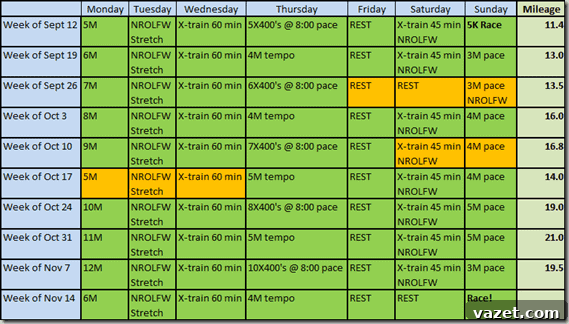
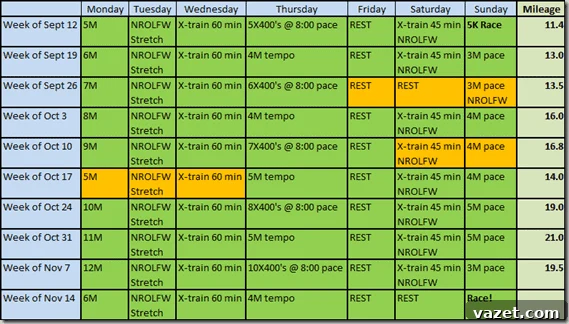
My training blueprint was inspired by the proven framework of Hal Higdon’s intermediate half marathon plan. However, true personalization comes from tailoring any standard plan to individual needs, lifestyle, and unique challenges. I’ve meticulously tweaked and adjusted the schedule, confident that the final version strikes the perfect balance. By limiting dedicated running days to three per week, coupled with two engaging bike rides for cross-training, I anticipate avoiding the dreaded running burnout while still building robust endurance and fitness.
Adapting to Life’s Demands: Flexibility in Training
Life doesn’t pause for training plans, and acknowledging this reality is key to successful long-term adherence. The plan incorporates essential flexibility, with two highlighted periods signifying significant life events: a wedding and an extended work trip. For the wedding week, I’ve strategically rearranged workouts, ensuring continuity without sacrificing important social commitments. The work trip, however, presents a greater challenge, demanding a “play-by-ear” approach. To mitigate potential stress and disruption, I deliberately scheduled a mileage step-back week during this period. The thought of running ten miles on a hotel treadmill is, frankly, a form of torture best avoided, making smart scheduling a paramount consideration for mental and physical well-being.
The Edge: Leveraging Speed Work for a Faster Race
A significant focus of this training cycle is the deliberate integration of speed work, and I’m genuinely excited to witness its impact on my overall performance. Thursdays are earmarked as dedicated speed work days, designed to push my limits and improve my anaerobic threshold. Additionally, Sundays are designated as “pace” runs, meaning these longer efforts will be executed at my target half marathon race pace. My current PR pace is approximately 8:56 minutes per mile, but for this race, I’m ambitiously aiming for an average pace between 8:20 and 8:25 minutes per mile. This would translate to an impressive finish time of around 1:50 for the 13.1-mile distance. While maintaining this pace for the entire half marathon might be a stretch, I’m confident in holding it for 3-5 miles during training, which forms the core of my speed endurance goal.
Understanding the Benefits of Speed Work for Half Marathoners
Speed work isn’t just for sprinters; it’s a vital component for any runner aiming to improve their half marathon time. Incorporating elements like interval training, tempo runs, and hill repeats significantly enhances a runner’s cardiovascular capacity, improves running economy, and increases lactate threshold. By regularly pushing the body outside its comfort zone, runners teach their systems to handle faster paces more efficiently and for longer durations. This not only makes race day feel more manageable but also builds mental toughness, allowing you to dig deeper when fatigue sets in during the final miles of the race. Moreover, varied paces help engage different muscle fibers, leading to a more robust and resilient running physique.
The Perfect Balance: Why the Half Marathon Reigns Supreme
Regardless of the ultimate outcome on race day, the excitement of training and competing in the half marathon distance once again is palpable. This particular distance strikes an unparalleled balance: it’s a serious accomplishment that demands dedication and strategic training, yet it remains achievable without being utterly overwhelming. It offers the thrill of a significant challenge, the satisfaction of consistent effort, and the joy of crossing a finish line, all without the grueling recovery and intense time commitment often associated with a full marathon. It’s the sweet spot for many runners, providing a profound sense of achievement that fuels a passion for the sport.
Beyond the Finish Line: Long-Term Running Motivation
Training for and completing a half marathon offers benefits that extend far beyond race day. The discipline learned, the physical and mental strength gained, and the sheer joy of achieving a significant personal goal can translate into other areas of life. It fosters resilience, improves problem-solving skills (especially when adapting to unexpected training hurdles), and boosts self-confidence. The community aspect of running, whether through training partners or race day camaraderie, also provides invaluable support and motivation. Ultimately, the half marathon journey is about more than just a time on a clock; it’s about personal growth, discovering your own limits, and celebrating the incredible capabilities of the human body.
So, bring on the miles, the sweat, and the exhilarating challenge. The journey has officially begun!
Join the Conversation: Your Running Insights
We’d love to hear from you. Share your experiences and insights on half marathon training and goal setting:
- How many days a week can you run before experiencing burnout? What are your strategies for maintaining freshness and motivation?
- How do you set effective goals for yourself in races? Do you focus on time, completion, or perhaps enjoying the experience?
- Do you find it hard to simply run for fun without a specific race or goal in mind? What keeps your running passion alive when there’s no finish line in sight?